Why Choose a Home Energy Storage Battery?
A Home Energy Storage Battery stores electricity for use when your home needs it. It may charge from rooftop solar panels or, depending on your system and electricity plan, from the grid. During an outage, stored power can keep selected essentials running, such as a refrigerator, a few lights, or a router. The exact result depends on battery capacity, power output, and which appliances you connect. Small details matter. A battery rated for several kilowatt-hours does not necessarily run every household device all night.
For homes with solar panels, storage can help use more self-generated electricity after sunset instead of sending it back to the grid. It can also provide a measure of backup power, though not every system automatically supports outage operation. Ask an experienced installer to explain usable capacity, inverter compatibility, installation requirements, warranty terms, and battery chemistry. Compare those details with your actual energy use, not just a headline capacity figure. A battery is not a universal bill-saving fix; results vary with local rates, weather, household habits, and upfront costs. Brochures make the numbers look tidy. Real homes are messier, and needs can change. Careful sizing and realistic expectations make it easier to judge whether storage suits your home.
What a Home Energy Storage Battery Is
Why Choose a Home Energy Storage Battery?
What a Home Energy Storage Battery Is
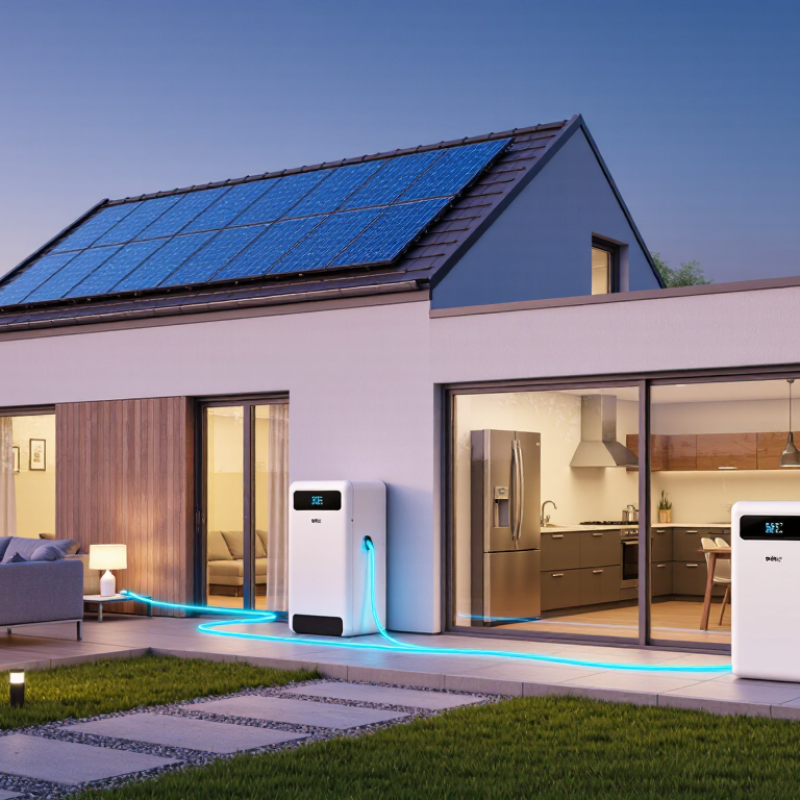
A home energy storage battery stores electricity for use later. It may charge from rooftop solar panels or the grid, then supply selected household circuits when needed. A typical system includes battery cells, an inverter, and controls that manage charging and discharging. The inverter converts electricity into a form household appliances can use. Not a generator. It shifts energy across time; it does not create it.
Capacity and power describe different things. Capacity, measured in kilowatt-hours, indicates how much energy is stored. Power, measured in kilowatts, affects how many appliances can run at once. NREL’s 2024 Annual Technology Baseline models a representative residential system at 5 kW and 12.5 kWh. That is a useful reference, not a guarantee of real-world backup time. Heating, cooking, and repeated appliance starts can drain a battery faster than expected. I used to think capacity alone told the whole story. It doesn’t.
Tips: List essential appliances and their wattage before choosing a system. Check usable capacity, backup coverage, and whether the inverter can handle brief startup surges. A fridge and a few lights are different from an entire home. Check the details.
How a Home Battery Stores and Supplies Electricity
A home energy storage battery holds electricity for use when solar panels produce less than the house needs, such as after sunset. During charging, solar panels generate direct-current electricity, and a charge controller manages how it enters the battery. Inside, chemical reactions store the energy. A battery management system monitors conditions such as cell temperature and voltage. When the home needs power, an inverter converts the stored electricity into alternating current for everyday appliances. The lights come on. Depending on system settings, the battery may also charge from the grid.
Capacity describes how much energy a battery can hold; power describes how quickly it can deliver it. That difference matters when a refrigerator, lights, and a kettle run together. NREL’s 2024 Annual Technology Baseline models lithium-ion battery storage at 85% round-trip efficiency. In that model, 10 kilowatt-hours going in yields about 8.5 kilowatt-hours back; a household system’s actual result can vary. Heat, conversion losses, settings, and battery age all matter. A battery is not a perfect backup: its usable capacity and power limits may leave some appliances offline, and its reserve setting can reduce energy available during an outage.
Key Benefits of Choosing Home Energy Storage
A home energy storage battery can keep essential circuits running when the grid fails. In 2022, U.S. electricity customers experienced an average of 5.6 hours of interruptions, excluding major events, according to the U.S. Energy Information Administration’s Electric Power Annual. A battery can power lights, a refrigerator, and internet equipment, but not necessarily every appliance. Sizing matters. A quick inventory of critical loads helps prevent disappointment.
When paired with solar panels, storage can hold daytime excess for evening use instead of sending it all to the grid. It may also reduce purchases during expensive peak hours, depending on the utility’s tariff. The U.S. National Renewable Energy Laboratory’s residential energy analysis highlights that savings depend on system costs, electricity rates, and household usage. The math is personal. A battery does not guarantee a lower bill, especially where export credits are generous or peak rates are modest.
The International Energy Agency’s Batteries and Secure Energy Transitions report recorded about 42 gigawatts of new battery storage capacity in 2023, over 130% more than in 2022. That signals rapid growth, not a promise of household payback. Check usable capacity, backup power limits, and whether solar can recharge the system during an outage. One detail is easy to miss: some systems need specific equipment to safely disconnect from the grid. A careful installer can explain that setup, though estimates still deserve a second look.
Factors That Affect Cost and Suitability
Why Choose a Home Energy Storage Battery? Factors That Affect Cost and Suitability
A home battery’s suitability depends on the loads you want to keep running. Is it the refrigerator and Wi-Fi, or also a heat pump and cooking appliances? The U.S. Energy Information Administration reported average residential electricity use of about 10,791 kWh per household in 2022. That is roughly 30 kWh daily, but household needs vary widely. Use your own bills and evening usage, not the national average, to estimate capacity. A battery sized for essential circuits may cost less than one intended to power an entire home.
Cost also reflects usable capacity, power output, installation, and backup wiring. The National Renewable Energy Laboratory’s 2024 Annual Technology Baseline models storage costs by system size and duration, illustrating why price per unit alone can mislead. Check usable energy, continuous output, efficiency, and warranty terms together. Roof-mounted solar, electrical-panel condition, and local installation work can change the quote. A tidy estimate may still miss a short evening peak.
Tips: Measure actual use. List the appliances you need during an outage, then note their wattage and likely run time. Ask for an itemized quote that separates equipment, electrical work, and backup circuits. The estimate will not be perfect, but measured loads make it more useful.
Why Choose a Home Energy Storage Battery?
Compare indicative installed-cost estimates by usable battery capacity to see how system size can affect your budget.
How to read this: The bars show illustrative lower and upper estimates using approximately $1,000–$1,500 per usable kWh, before incentives. Actual prices vary by location, equipment, installation complexity, and electrical upgrades. Choose capacity based on the essential loads you want to power, outage duration, battery power output, solar production, and utility rates.
Safety, Maintenance, and Long-Term Performance
A home energy storage battery should be judged by more than its advertised capacity. Safety starts with correct installation, suitable wiring, and a location that follows the manufacturer’s clearances and temperature limits. Use a qualified installer, and keep the user manual where household members can find it. Keep vents unobstructed. Do not open the enclosure or try to repair internal components. If you notice unusual heat, swelling, odor, or warning alerts, stop using the system if it is safe to do so and contact the installer or emergency services as appropriate. Small warning signs matter.
Maintenance is often simple, but it is not zero. Check the system display periodically for error messages, and look from a safe distance for visible damage or blocked airflow. Battery capacity can gradually decline with age, temperature, and usage; actual results vary by chemistry and operating conditions. Heat and repeated deep discharges may affect long-term performance, so follow the system’s recommended settings rather than guessing. Even careful owners miss things. Review service guidance and warranty terms, and arrange professional checks when advised. A battery can provide useful backup, but it cannot guarantee uninterrupted power or perform equally well in every home.

