Back
Contact us

Why Choose an Arm Exercise Machine for Your Gym?

Choosing the right equipment shapes how members train, move, and return to your gym. An Arm Exercise Machine offers controlled resistance for biceps, triceps, and supporting shoulder muscles. It gives beginners a clear starting point. It also helps experienced users isolate muscles after compound lifts.

The World Health Organization recommends muscle-strengthening activities on at least two days each week. This guidance supports the need for accessible resistance-training options. The American College of Sports Medicine’s 2024 Worldwide Survey of Fitness Trends also places traditional strength training among the industry’s leading priorities. These findings reflect a clear demand for practical strength equipment, not short-lived decoration.

Commercial gyms must consider more than appearance. A well-designed Arm Exercise Machine should provide adjustable resistance, stable seating, smooth cable movement, and readable instructions. Members should feel the handle move evenly, without sudden friction or awkward joint angles. Operators should also examine maintenance access, user height adjustment, frame durability, and floor-space efficiency.

The EuropeActive and Deloitte European Health & Fitness Market Report 2024 highlights the sector’s continued professionalization and growing focus on member experience. That trend makes equipment selection a business decision. Better usability can support safer, more consistent workouts.

Still, no machine solves every programming problem. Some users may prefer dumbbells or functional cables. Others may misuse fixed movement paths. Gym managers should test the machine with different body sizes before purchasing. A polished showroom impression is not enough. Real members reveal the weaknesses. A thoughtful Arm Exercise Machine earns its place through comfort, reliability, and repeated daily use.

Why Choose an Arm Exercise Machine for Your Gym?

What Is an Arm Exercise Machine?

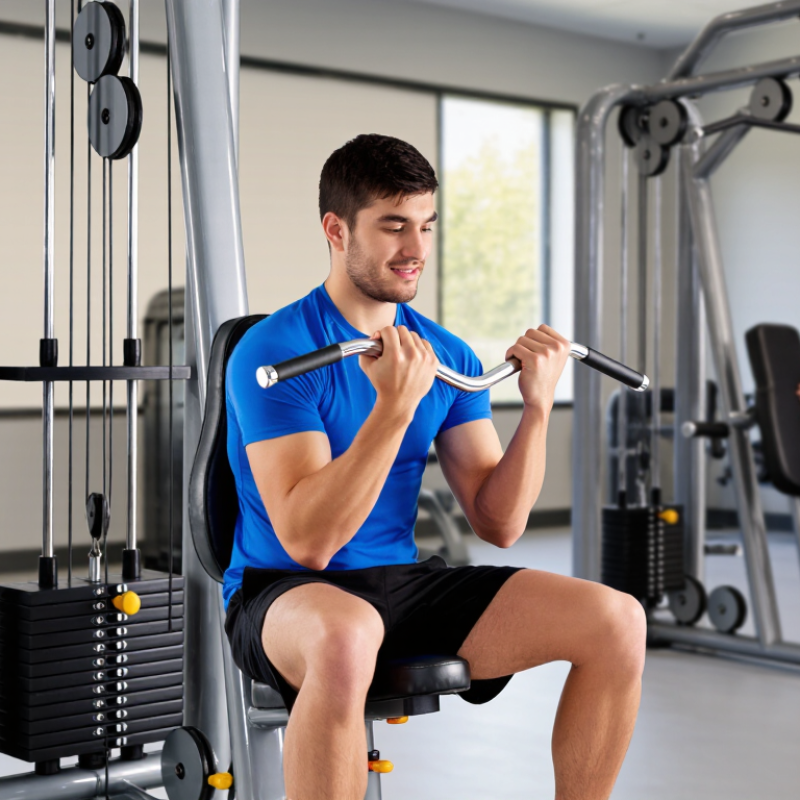
An arm exercise machine is gym equipment designed to train the biceps, triceps, forearms, and supporting shoulder muscles. It usually includes a seat, adjustable resistance, handles, and guided movement. Unlike free weights, the machine controls much of the exercise path. This can help beginners learn proper positioning and reduce unnecessary swinging.

Different machines create different training experiences. A curl machine supports the upper arms while the user bends the elbows against resistance. A press-down or extension machine focuses more directly on the triceps. Adjustable seats and handles matter because a poor fit can strain the wrists or shoulders. In my experience, slow repetitions feel less impressive, but they reveal weak control quickly. The setup is not always perfect. Personal adjustment still requires attention.

Tips: Set the seat so your elbows align with the machine’s pivot point. Start with light resistance and test five controlled repetitions. Keep your wrists straight and avoid locking your elbows sharply. Stop if you feel joint pain, numbness, or sudden weakness. Ask a qualified fitness professional to check your form, especially after an injury. Clean the handles before use, and record the resistance used. Small records help show progress, although they cannot replace careful judgment.

Why Choose an Arm Exercise Machine for Your Gym?

What Is an Arm Exercise Machine?

An arm exercise machine is resistance-training equipment designed to guide movements at the elbow and shoulder while targeting muscles such as the biceps, triceps, and forearm muscles. The chart shows widely used repetition ranges for different resistance-training goals. A guided machine can help users maintain consistent movement and adjust resistance progressively.

General repetition ranges based on resistance-training guidance from the American College of Sports Medicine. Individual programming should be adjusted to training experience, health status, and fitness goals.

Which Muscles Can an Arm Exercise Machine Train?

Why Choose an Arm Exercise Machine for Your Gym?

Which Muscles Can an Arm Exercise Machine Train?

An arm exercise machine can target more than the visible biceps. Curl stations train the biceps brachii, brachialis, and forearm flexors. These muscles bend the elbow and control the handle during each repetition. Press-down and extension machines emphasize the triceps, especially the lateral, medial, and long heads. The long head also crosses the shoulder joint, so shoulder position changes its workload.

Some machines involve the anterior deltoid and chest slightly. This happens during seated presses or assisted dip movements. Grip width matters, too. A neutral grip often increases brachialis and forearm participation, while a supinated grip favors the biceps. It is a small adjustment, but users can feel the difference near the elbow crease. Machines also reduce balance demands, helping beginners focus on movement quality.

The World Health Organization recommends muscle-strengthening activities for major muscle groups on at least two days weekly. ACSM guidance commonly supports two or three resistance sessions, using roughly 8–12 repetitions for many healthy adults. Those figures are useful, not universal rules. A 2024 industry survey from ACSM also kept strength development among major fitness programming priorities. Still, the machine is not magic. Poor seat height can shift stress toward the shoulder. Excessive weight can turn a controlled curl into a painful swing. Trainers should check joint alignment, breathing, range of motion, and recovery. More testing is needed for special populations, because comfortable movement does not always mean safe loading.

How Does an Arm Exercise Machine Support Safer Workouts?

An arm exercise machine can make gym training more controlled and predictable. Its fixed movement path helps reduce unnecessary swinging during curls, presses, and extensions. This matters when fatigue makes technique harder to maintain. A stable seat, supported back, and adjustable handles can also limit awkward wrist and shoulder positions. Small adjustments matter.

Safer workouts still begin with correct setup. Set the seat so your elbows align with the machine’s pivot point. Choose a light resistance and test the movement slowly. Your joints should move smoothly, without sharp pain or sudden pulling. Keep your shoulders relaxed and avoid locking your elbows at the end of each repetition. A trainer can check your posture, especially if the machine feels unfamiliar.

In practice, these machines help beginners learn consistent movement before using free weights. They can also support experienced lifters during controlled accessory work. However, the machine is not foolproof. I still catch myself adding too much weight when the first sets feel easy. That habit can turn a steady exercise into a strained one. Increase resistance gradually, keep the range comfortable, and stop when control disappears. Inspect the seat, cables, and adjustment pins before use. Worn parts or loose settings can create avoidable risks. Fitness guidance should be adjusted for previous injuries, current strength, and individual mobility.

What Features Should Gyms Consider Before Choosing One?

Why Choose an Arm Exercise Machine for Your Gym?

An arm exercise machine can make strength training more controlled and approachable. The right model supports consistent movement, even for beginners learning basic technique. Gym owners should examine adjustability before appearance. Seat height, back support, and handle positions must fit different body sizes. Smooth adjustments reduce awkward setup and improve member confidence. Small details matter.

Movement quality deserves close attention. Test the machine through its full range before purchasing it. Handles should feel secure, with no sharp pressure on the wrists. Resistance should increase gradually without sudden jolts. A stable frame also limits unwanted movement during heavy sets.

I have seen attractive equipment become unpopular because its starting position felt uncomfortable. That mistake is easy to make.

Durability affects daily operating costs. Inspect welds, cables, bearings, upholstery, and moving joints. Ask about cleaning procedures and replacement parts. High-use gyms need surfaces that tolerate frequent disinfection without cracking quickly. A compact footprint helps in crowded training areas, but access around the machine still matters. Check whether wheelchair users or members with limited mobility can approach and adjust it safely. Digital repetition tracking may be useful, though it should not replace sound coaching. Noise levels deserve testing too. Loud cables can disturb nearby classes. No checklist is perfect. A short trial with staff and real members often reveals problems that specifications miss.

How Can Gyms Use Arm Exercise Machines Effectively?

An arm exercise machine gives gyms a controlled way to train biceps, triceps, and forearms. It can support beginners, older adults, and members recovering from limited movement. The fixed path reduces balance demands, so users can focus on elbow position and muscle control. Keep it controlled. Form comes first.

Gym staff should adjust the seat, handles, and resistance for each person. A member’s elbows should stay aligned with the machine’s pivot point. Start with a light load and eight to twelve steady repetitions. Watch for raised shoulders, locked elbows, or swinging movements. These signs often show that the resistance is too high. Staff can demonstrate one slow repetition before the member begins.

Machines also work well in structured programs. A trainer may pair arm exercises with back, chest, or shoulder movements. Recording resistance, repetitions, and discomfort helps guide future sessions. Clean contact surfaces between users, and inspect cables, pads, and adjustment pins regularly. I once assumed heavier resistance meant better progress. That assumption was wrong. Consistent technique usually creates more useful training than rushed loading. Still, the machine has limits. Some users may need free-weight or cable exercises for more natural movement. Trainers should ask about pain, previous injuries, and training goals before choosing the machine. Small adjustments matter.

Why Choose an Arm Exercise Machine for Your Gym? — How Can Gyms Use Arm Exercise Machines Effectively?
Machine Type Primary Muscles Trained Typical Resistance Format Recommended Starting Structure Effective Gym Use Key User Benefit Safety and Setup Focus
Seated Biceps Curl Machine Biceps brachii, brachialis, and forearm flexors Selectorized weight stack or plate-loaded resistance 2–4 sets of 8–15 controlled repetitions Place near other upper-body machines and use for beginner-friendly arm training or biceps-focused sessions. Provides back and upper-arm support, helping users maintain a consistent curling path. Adjust the seat so the elbow joint aligns with the machine pivot. Keep the upper arm supported and avoid swinging.
Triceps Extension Machine Triceps brachii Selectorized weight stack or plate-loaded resistance 2–4 sets of 8–15 controlled repetitions Use as a dedicated triceps movement after pressing exercises or as part of a short arm circuit. Offers a stable pressing pattern that reduces the need for balance and complex coordination. Set the seat and elbow position correctly. Use a full, comfortable range of motion without locking the elbows forcefully.
Preacher Curl Machine Biceps brachii and brachialis Weight stack, cable resistance, or free-weight loading depending on the design 2–3 sets of 10–15 repetitions Include in hypertrophy-focused programs, introductory strength sessions, and supervised technique practice. The angled pad limits shoulder movement and encourages controlled elbow flexion. Keep the upper arms fully supported. Do not lower the resistance rapidly or overextend the elbows at the bottom.
Cable Biceps Station Biceps brachii, brachialis, and forearm muscles Adjustable cable with a weight stack and interchangeable handles 2–4 sets of 8–15 repetitions; vary handle position when appropriate Use for standing curls, single-arm work, supersets, and scalable training for different user heights. Allows multiple angles and unilateral exercises while maintaining continuous cable tension. Set the pulley at a suitable height, maintain a neutral spine, and keep the cable path clear of other users.
Cable Triceps Pressdown Station Triceps brachii Adjustable cable with a straight bar, rope, or individual handle 2–4 sets of 10–15 repetitions Use for warm-up sets, arm circuits, finishing work, or progressive resistance training. Provides adjustable resistance and supports several handle choices for different comfort levels. Keep the elbows close to the torso, avoid excessive shoulder movement, and select a load that allows smooth repetitions.
Assisted Dip Machine Triceps, chest, and anterior shoulders Counterbalanced assistance through a weight stack 2–4 sets of 6–12 controlled repetitions Use to teach the dip pattern, build pressing strength, or progress toward unassisted bodyweight dips. Adjustable assistance makes the exercise accessible to users who cannot yet perform bodyweight dips. Set assistance before mounting, keep shoulders controlled, and avoid descending into painful shoulder positions.
Multi-Function Upper-Body Machine Triceps, biceps, shoulders, chest, and upper back depending on the station Weight stack with adjustable seat, handles, or cable positions 2–3 sets per selected movement, generally 8–15 repetitions Use in compact gyms, supervised circuits, introductory programs, and spaces that need several movement options. Combines multiple upper-body exercises while reducing equipment footprint and setup time. Teach each station separately, verify the correct adjustment for every user, and keep unused attachments secured.
Typical training ranges shown are general programming guidelines for healthy adults. Gyms should adjust load, repetitions, range of motion, and assistance according to user experience, goals, comfort, and professional instruction.