
Back
Contact us

What Are the Top Types of Conveyor Rollers?

Choosing the right conveyor roller affects throughput, product safety, maintenance effort, and operating cost. Yet many purchasing decisions begin with diameter and price alone. That approach can fail.

MHI’s 2024 Annual Industry Report found that 55% of supply chain professionals planned to increase technology investment within the next two years. This shift places greater attention on dependable material-handling equipment, including roller conveyors. The Conveyor Equipment Manufacturers Association (CEMA) also publishes engineering guidance for conveyor components, helping users evaluate load, speed, belt tension, and safety factors more consistently. These references offer a stronger foundation than generic product claims.

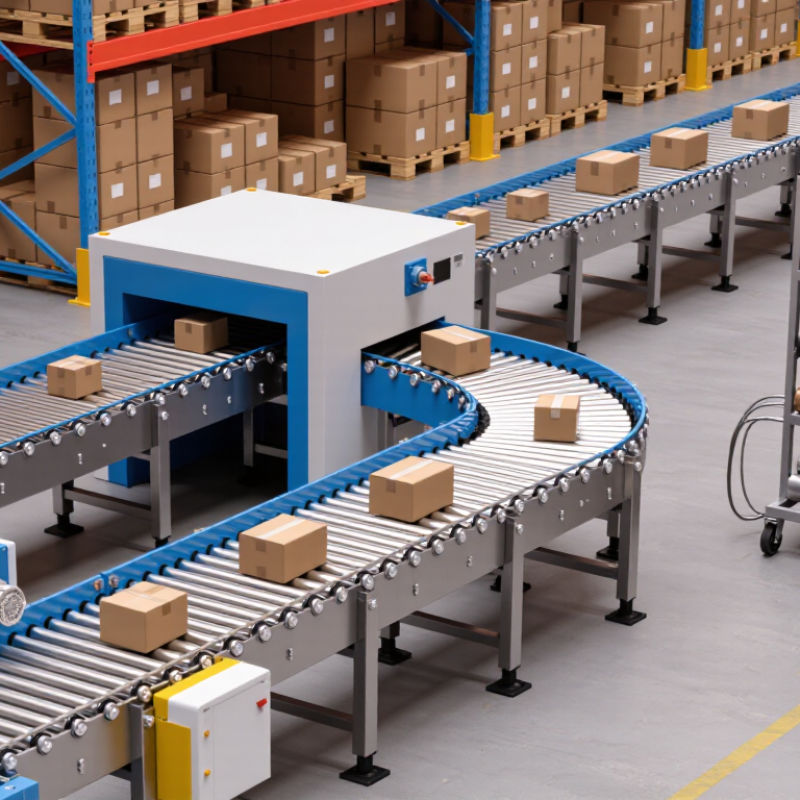
This guide examines the top types of Conveyors Roller used across warehouses, distribution centers, manufacturing plants, and parcel operations. Gravity rollers can move cartons economically across short, level sections. Powered rollers support controlled flow and accumulation. Tapered rollers help packages travel around curves without scraping side frames. Impact rollers protect loading zones where heavy products drop onto the conveyor. Steel, stainless steel, plastic, and coated rollers each suit different environments.

The details matter. A dusty aggregate line needs a different bearing arrangement than a clean food-packaging line. Small cartons may stall between widely spaced rollers. Excessive speed can damage fragile boxes. These points are easy to overlook.

No roller fits every line.

We will compare roller construction, load capacity, surface finish, drive methods, and maintenance needs. The discussion will also consider noise, energy use, washdown exposure, and installation constraints. Some recommendations may remain conditional, because real conveyor performance depends on layout, product shape, duty cycle, and operator practice. That uncertainty deserves attention, not concealment.
What Are the Top Types of Conveyor Rollers?

What Are Conveyor Rollers and How Do They Work?

Conveyor rollers are cylindrical components that support and move products along a conveyor frame. They reduce sliding friction by rotating beneath cartons, totes, pallets, or loose materials. Each roller usually contains a steel or polymer tube, an axle, and bearings at both ends. The bearings allow smooth rotation while carrying a specific load.

Some rollers turn freely. Gravity rollers rely on a slight conveyor slope or manual pushing. Powered rollers use motors, chains, belts, or internal drives to control product movement. Tapered rollers help packages follow curves without excessive edge pressure. Impact rollers, often installed beneath loading points, absorb shock from falling material. Return rollers support the empty belt on belt conveyors.

The working principle is straightforward. A product touches several rollers, and the rollers transfer force along the line. Correct spacing keeps small items from dropping between rollers. A practical check is to keep at least three rollers under the shortest product whenever possible. Load weight, speed, moisture, dust, and temperature also affect performance. A roller selected only by diameter may fail early. That assumption is risky.

Clean bearings matter. Misalignment can create noise, drag, and uneven wear. Operators should inspect loose axles, damaged surfaces, and product buildup during routine maintenance. Real installations are rarely perfect. A slightly uneven frame can change how the load travels. Careful testing with actual products often reveals problems that specifications miss.

What Are the Main Types of Conveyor Rollers?

Conveyor rollers support and move materials across a conveyor frame. The main types include gravity rollers, powered rollers, tapered rollers, grooved rollers, and impact rollers. Each design suits a different operating condition. Gravity rollers rely on a slight incline or manual force. They work well for cartons, totes, and light packages. Powered rollers use motors to control speed and product spacing. They suit automated lines and heavier loads.

Tapered rollers help guide boxes around curves without excessive sliding. Grooved rollers support round products, such as pipes or cables. Impact rollers use rubber rings to absorb force beneath loading areas. This reduces shock to the belt and frame. Steel rollers offer strength in demanding environments. Plastic rollers resist corrosion and may reduce noise. Selection still depends on load weight, width, speed, moisture, and cleaning requirements. A roller can look suitable but fail under repeated impact.

Tips: Measure the product’s contact area before choosing roller spacing. Keep at least three rollers beneath a stable load whenever possible. Check bearings, shafts, and surface wear during routine inspections. Listen for grinding sounds. They often appear before visible failure. Avoid mixing roller diameters without testing the transition. Small gaps can catch edges or unstable packages. In practice, maintenance teams sometimes focus only on the roller shell. That is an easy mistake. Frame alignment and bearing condition matter just as much. Record operating conditions, then review the choice after several weeks.

What Are the Top Types of Conveyor Rollers?

Conveyor rollers are selected according to the material being transported, conveyor layout, and operating conditions. The chart compares common roller types by their primary application and typical tube-diameter range.

Gravity rollers are commonly used for manual or low-speed conveying, while powered rollers support automated movement. Impact rollers protect loading zones, return rollers support the belt’s return side, tapered rollers help guide packages around curves, and grooved rollers are used with round belts.

How Do Gravity and Powered Rollers Differ?

Gravity rollers move cartons through a slight incline, using weight and manual pushing. They need no motor or control system. This makes them practical for packing stations, temporary lines, and light-duty warehouses. However, movement can become uneven when cartons vary in weight. A dampened carton may stop halfway, especially on a poorly aligned frame.

Powered rollers use motors, belts, or chains to maintain controlled movement. They suit longer conveyor routes, heavier loads, and areas requiring steady spacing. Operators can adjust speed and direction more precisely. Still, powered systems require electrical planning, guarding, and regular inspection. A motor does not solve every problem. Incorrect roller spacing can still damage small packages or create unstable transfers.

Tips: Match roller capacity to the load’s weight and base shape. Keep at least three rollers beneath each carton when possible. Check for noise, slipping, and uneven speed during routine inspections. Gravity systems are often simpler, but powered rollers may improve safety when manual pushing becomes frequent. The best choice depends on product flow, incline, package condition, and operator needs. In practice, a mixed conveyor can work well, though its transition points deserve careful testing. Small design assumptions often cause larger delays.

Which Conveyor Roller Materials and Designs Are Available?

Conveyor rollers differ by material, surface profile, and drive method. Steel rollers provide high load capacity for pallets, cartons, and bulk handling. They also tolerate impact better than many plastic alternatives. Stainless steel suits washdown areas and damp production rooms, where corrosion can shorten service life.

Plastic rollers made from polyethylene or other engineered polymers are lighter and resist moisture. They can reduce noise around packing stations. However, plastic may deform under heavy loads or high temperatures. Rubber-coated rollers improve grip on inclined conveyors. Polyurethane surfaces offer controlled traction and lower marking on delicate packages. The right choice depends on load weight, contact pressure, temperature, and cleaning chemicals.

Design matters as much as material. Gravity rollers work well for manually pushed cartons and short accumulation zones. Powered rollers support steady movement over longer distances. Tapered rollers help guide boxes around curves, while grooved rollers can carry belts or round cords. Impact rollers use resilient rings beneath loading points. I have seen poorly matched rollers create flat spots, vibration, and unexpected noise. A specification sheet can miss those details. Inspect the bearing seals, shaft ends, spacing, and frame alignment before ordering. Small gaps can trap labels or fingers, and overly tight spacing may increase drag. Test a representative load in real operating conditions when possible.

What Are the Top Types of Conveyor Rollers? — Available Materials and Designs
Conveyor Roller Type Common Materials Typical Diameter Typical Face Width Key Design Features Typical Applications Main Advantages Important Selection Considerations
Gravity Roller Carbon steel, galvanized steel, stainless steel, or PVC-covered steel 38–89 mm
(1.5–3.5 in)
300–1,500 mm
(12–60 in)
Non-powered roller mounted in a frame; the load moves by gravity or manual pushing Cartons, totes, pallets, accumulation areas, and manual packing lines Simple construction, low energy use, easy maintenance, and relatively low cost Requires a suitable conveyor slope or manual force; roller spacing must support the smallest load
Powered Roller Steel, stainless steel, aluminum, or polymer-coated steel 38–102 mm
(1.5–4 in)
300–1,800 mm
(12–72 in)
Driven by a motorized roller, chain, belt, or line-shaft arrangement Distribution, order fulfillment, sortation, manufacturing, and automated material handling Controlled product flow, positive movement, and suitability for long or complex conveyor lines Requires motor and controls; select the drive system according to load, speed, starting torque, and duty cycle
PVC Roller PVC tube with steel or polymer end components 38–63 mm
(1.5–2.5 in)
300–1,200 mm
(12–48 in)
Lightweight polymer tube with a smooth, non-marking conveying surface Light cartons, plastic containers, retail handling, and clean indoor environments Low noise, corrosion resistance, light weight, and reduced risk of scratching products Usually unsuitable for very high loads, sharp edges, high temperatures, or severe impact
Stainless Steel Roller 304 or 316 stainless steel; stainless bearings and fittings may also be specified 38–89 mm
(1.5–3.5 in)
300–1,500 mm
(12–60 in)
Corrosion-resistant tube and components, available with sealed bearings Food processing, pharmaceutical production, washdown areas, and corrosive environments Strong corrosion resistance, cleanability, and compatibility with hygienic equipment designs Higher purchase cost; bearing seals, surface finish, and drainage requirements are important in washdown areas
Aluminum Roller Extruded or formed aluminum tube with steel or polymer end components 38–76 mm
(1.5–3 in)
300–1,200 mm
(12–48 in)
Lightweight roller body with good dimensional consistency and moderate corrosion resistance Light-duty conveyors, portable systems, packaging areas, and applications requiring low conveyor weight Low mass, easy handling, and good resistance to many indoor environments Generally offers less impact and load capacity than an equivalent heavy-wall steel roller
Tapered Roller Steel, galvanized steel, stainless steel, or polymer-coated steel 50–89 mm
(2–3.5 in)
300–1,500 mm
(12–60 in)
Conical profile, commonly used with multiple rollers to maintain package orientation through curves Powered or gravity curves, cartons, trays, and package routing systems Helps keep loads aligned and reduces the tendency of packages to move toward the outside of a curve Must be matched to package size, curve radius, load stability, and the required conveyor speed
Grooved Roller Steel, aluminum, PVC, or polymer-coated steel 38–89 mm
(1.5–3.5 in)
300–1,500 mm
(12–60 in)
One or more machined or formed grooves guide round belts or help position products Light- and medium-duty belt-driven conveyors, parcel handling, and product positioning lines Supports belt tracking and provides a compact drive or guiding arrangement Groove size and spacing must match the belt profile; incorrect alignment can increase belt wear
Sprocket Roller Steel or stainless steel tube with welded, machined, or fitted sprockets 50–89 mm
(2–3.5 in)
300–1,500 mm
(12–60 in)
Chain-engaging sprockets transfer torque from roller to roller in a chain-driven conveyor Pallet handling, heavy cartons, containers, and applications requiring positive conveying Reliable power transfer and good control of loads in demanding conveyor sections Chain pitch, sprocket position, shaft size, guarding, lubrication, and load distribution must be coordinated
Impact Roller Heavy-wall steel tube with rubber, polyurethane, or other resilient discs 63–127 mm
(2.5–5 in)
450–1,800 mm
(18–72 in)
Shock-absorbing discs or sleeves reduce the effect of material dropped onto the conveyor Loading zones, pallet transfer points, bulk material conveyors, and heavy package lines Reduces impact damage, noise, and localized stress on the roller and conveyor frame Disc hardness, spacing, temperature, abrasion, and chemical exposure should match the material being conveyed
Return Roller Steel, galvanized steel, rubber-covered steel, or polymer 50–102 mm
(2–4 in)
300–1,500 mm
(12–60 in)
Supports the empty return side of a belt conveyor; may be flat, rubber-covered, or self-aligning Bulk material belt conveyors and recycling or aggregate handling systems Maintains belt support and helps control belt sag on the return run Select according to belt width, belt speed, material buildup, alignment needs, and maintenance access
Polyurethane-Coated Roller Steel or aluminum core with bonded or mechanically fitted polyurethane covering 38–102 mm
(1.5–4 in)
300–1,500 mm
(12–60 in)
Resilient, high-friction surface that can be supplied in different hardness levels Glass, sheet metal, finished products, accumulation conveyors, and noise-sensitive areas Good grip, reduced noise, cushioning, and lower risk of marking some products Coating hardness, thickness, temperature range, chemical compatibility, and cleaning method affect service life
Note: The dimensions shown are common industry ranges rather than universal limits. Actual roller selection depends on load weight, load length, roller spacing, conveyor speed, shaft capacity, environment, and the required safety factor.

How Can You Choose the Right Conveyor Roller?

Choosing the right conveyor roller starts with the load, not the catalogue photo. Measure the product’s weight, length, base condition, and contact points. CEMA’s Belt Conveyors for Bulk Materials emphasizes load distribution, belt speed, and material characteristics when sizing conveyor components. A heavy steel crate may need larger-diameter rollers with stronger bearings. Small cartons often run better on closely spaced rollers.

Speed changes the decision. High-speed lines require balanced rollers, accurate shafts, and low-friction bearings. For accumulation zones, use powered rollers or controlled braking. Otherwise, cartons can collide, rotate, or stop beneath scanners. MHI’s 2024 Annual Industry Report reported that 87% of supply-chain professionals expect technology adoption to increase. That trend makes sensor-ready rollers useful, but connectivity should not replace mechanical testing.

Environment matters more than many purchasing teams expect. Dust, moisture, washdown chemicals, and temperature can shorten bearing life. Stainless or sealed components may cost more, yet replacement labor can cost more. Check the roller’s rated load at the actual spacing, not the maximum rating alone. Leave a safety margin. It is easy to over-specify. It is also easy to underestimate impact loads. A practical trial with the heaviest package, peak speed, and real surface conditions can reveal problems that a spreadsheet misses. Small mistakes become noisy, expensive failures.