What is a Towable Boom Lift and How Does it Work?
A Towable Boom Lift is an essential piece of equipment for various industries. These lifts allow workers to reach great heights safely and efficiently. According to a report by Industry Research, the global aerial work platform market is expected to grow substantially, driven by demand in construction and maintenance sectors.
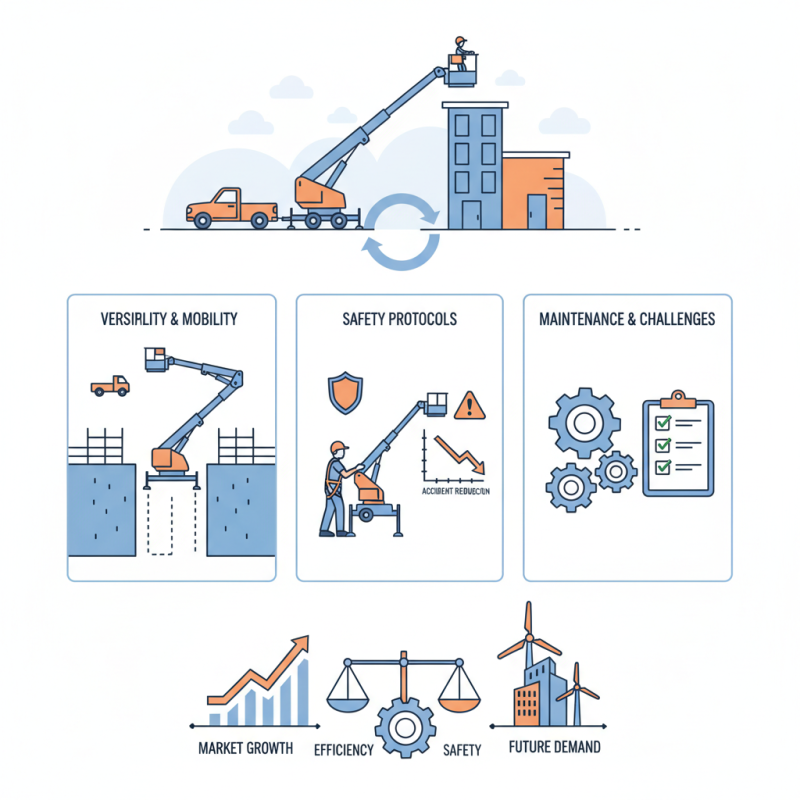
Towable Boom Lifts are versatile. They can be towed by vehicles, making them easy to transport. Their compact design allows access to tight spaces. This mobility is vital, as many jobs require quick relocation. However, safety remains a critical concern. Operators must receive proper training to avoid accidents. Reports show improper use leads to significant injuries each year, highlighting the need for adherence to safety protocols.
Despite their advantages, Towable Boom Lifts come with challenges. Maintenance and inspection are crucial to ensure functionality. Neglecting these aspects can lead to equipment failure. The balance between efficiency and safety is delicate. Finding this balance requires continuous attention and improvement from operators and companies alike.
What is a Towable Boom Lift?
A towable boom lift is a versatile piece of equipment designed for various aerial tasks. It features a foldable boom that can be towed by a vehicle, making it mobile and easy to set up. According to industry reports, the global towable boom lift market is expected to grow at a CAGR of 5.5% from 2022 to 2028. This growth highlights the increasing demand for equipment that ensures safety and efficiency in construction and maintenance work.
This type of lift can typically reach heights between 30 and 45 feet. Their compact design allows access to narrow spaces. However, users should be cautious; improper setup can lead to accidents. The lift’s stability depends on proper leveling before use. Many operators overlook this step, which can be a critical error. Regular inspections and maintenance are essential for safety, yet some users might delay this due to cost or time concerns.
Data from the Rental Equipment Association indicates that roughly 75% of boom lift accidents result from user errors. This emphasizes the importance of training and awareness. Understanding the controls and limitations of a towable boom lift is crucial. A well-informed operator can maximize the lift's benefits while minimizing risks. Proper knowledge increases productivity and safety on job sites, demonstrating the need for ongoing education in the industry.
Towable Boom Lift Performance Comparison
This bar chart illustrates the key performance metrics of a typical towable boom lift. It highlights the maximum working height, horizontal reach, weight capacity, and platform size, providing a quick reference for potential users.
Key Components of a Towable Boom Lift
Towable boom lifts are versatile machines used to reach elevated areas. Their key components play a vital role in their operation. The primary structure is the boom, which extends and rotates. It allows access to hard-to-reach spots. This is essential for tasks like maintenance and installation.
Another crucial part is the trailer. It makes transportation easy. The boom lift can be attached to a vehicle, which enhances mobility. Additionally, the controls are intuitive. Operators can manipulate the lift with ease while remaining safe on the ground. Safety features, like emergency stops and stabilizers, are essential.
However, it is important to reflect on the design. Training operators to use these lifts correctly is often overlooked. Improper use can lead to accidents. Over-reliance on the equipment's features can create a false sense of security. Attention to detail and thorough inspections can ensure safer operations. This enhances both productivity and safety on job sites.
What is a Towable Boom Lift and How Does it Work? - Key Components of a Towable Boom Lift
| Component | Description | Function |
| Boom | Articulated arm that extends to reach heights | Provides vertical and horizontal reach |
| Platform | Working area for operators and tools | Supports personnel and equipment at height |
| Tow Hitch | Connection point for towing vehicle | Facilitates transport of the boom lift |
| Stabilizers | Extendable supports for stability | Ensures a safe and stable operation |
| Controls | User interface for operating the lift | Enables control of movement and operation |
| Power Source | Battery or gas-operated engine | Provides energy for operation |
How a Towable Boom Lift Operates
A towable boom lift is a versatile lifting machine. It combines mobility and efficiency. This equipment allows users to reach high areas without a permanent setup. Its compact design makes it ideal for various job sites, especially in urban settings.
Towable boom lifts operate with a simple mechanism. When connected to a vehicle, the lift can be towed easily. Once at the destination, operators set it up quickly. The hydraulic system raises the platform. According to industry reports, they can extend up to 90 feet in height. However, safety remains a concern. Operators must ensure proper setup to prevent tipping.
Despite their advantages, issues can arise. Weather conditions can impact the lift's performance. For instance, windy days can make the boom unstable. Maintenance is essential for reliability, yet many overlook it. Regular checks can minimize failures. In the end, while towable boom lifts enhance productivity, caution and vigilance are crucial.
Applications and Benefits of Using Towable Boom Lifts
Towable boom lifts are becoming increasingly popular for various applications. These versatile machines offer significant benefits to contractors and maintenance crews. According to a recent industry report, the global boom lift market is expected to reach $15 billion by 2025. This growth highlights the importance of accessibility solutions in construction and maintenance sectors.
One major application is building maintenance. With the ability to reach heights of up to 50 feet, they allow workers to perform tasks like window cleaning and facade renovations safely. Their compact size means they can navigate tight spaces, making them ideal for urban environments. However, some challenges arise when considering their towing requirements. Not all vehicles can safely tow heavy loads, limiting their usability on certain job sites.
Moreover, the benefits extend beyond versatility. Towable boom lifts are often more cost-effective than larger machines. They typically have lower operational costs and require less storage space. A study from the Rental Equipment Register noted that renting these lifts can save companies up to 20% compared to owning larger, stationary options. Still, some operators might not familiarize themselves with proper towing and operation protocols. This negligence can lead to accidents or project delays, highlighting the need for thorough training.
Safety Considerations When Using Towable Boom Lifts
When using a towable boom lift, safety is paramount. This type of equipment allows workers to reach elevated areas but presents unique hazards. Proper training is essential. Understanding the controls and how to maneuver the lift helps prevent accidents.
Before starting any job, inspect the boom lift. Look for any visible damage. Check the tires, brakes, and hydraulic systems. If something seems off, don’t use it. It's crucial to ensure that the equipment is in good working order before taking it out.
Tips: Always wear a safety harness while elevated. This simple action can save lives. Make sure the ground is level where you place the lift. Uneven surfaces can cause it to tip over. Be aware of your surroundings. Look out for power lines and other overhead hazards. Stay focused and keep your workspace clear of distractions. Safety requires vigilance, and each small detail matters.

