
Back
Contact us

Top 10 Power Distribution Strips for Global Buyers?

Global buyers now assess power accessories against rising electrical demand, tighter safety expectations, and varied plug systems. The International Energy Agency reported that data centres, artificial intelligence, and cryptocurrency operations consumed about 460 TWh of electricity in 2022. Their demand could exceed 1,000 TWh by 2026, according to Electricity 2024. That growth makes a dependable Power Distribution Strip more than a desk accessory. It becomes a small but important control point for offices, workshops, server rooms, and retail environments.

This guide reviews the Top 10 Power Distribution Strips for Global Buyers through practical purchasing criteria. These include rated current, surge protection, thermal safety, socket spacing, cable length, grounding, mounting options, and regional certification. IEC 60884-1 provides a useful reference for household and similar plugs and socket-outlets, while buyers should also verify applicable national requirements. UL, CE, UKCA, and other markings do not mean the same thing in every market. Check the documentation.

Real-world use often reveals what product pages omit. A six-outlet strip may become difficult to use when three bulky adapters overlap. A long cable can help under a conference table, yet create a trip hazard without proper routing. Energy-monitoring features may support better control, but they can increase cost and complexity. This ranking is therefore not universal. It reflects evidence from specifications, safety information, user needs, and international purchasing conditions. Some products may look similar. They are not always equivalent. Buyers should still confirm local voltage, frequency, plug compatibility, warranty coverage, and replacement support before ordering.
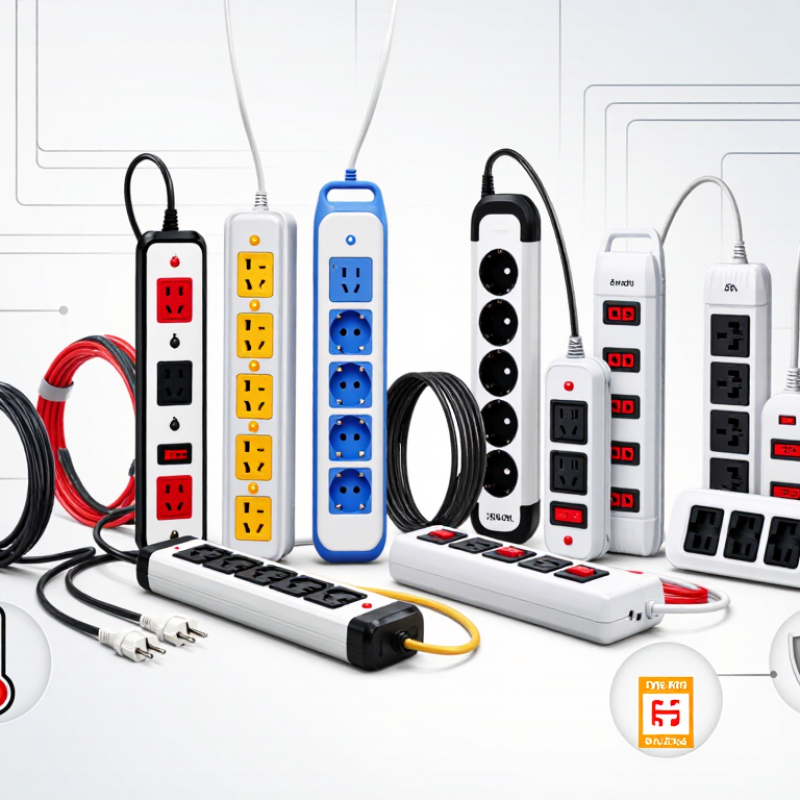
Top 10 Power Distribution Strips for Global Buyers?

What Power Distribution Strips Are and How They Work

Power distribution strips are compact devices that deliver electricity from one wall receptacle to several appliances. Inside, copper conductors connect the outlets in parallel, so each device receives the supply voltage independently. A molded case supports the contacts, while an input cord carries current from the wall. Many models include a switch, indicator light, thermal breaker, or surge-limiting components.

The operating principle is simple. Current enters through the line conductor and returns through neutral, while the grounding path helps carry fault current safely. If connected equipment draws too much current, a resettable breaker may open the circuit.

Surge protection works differently. Protective components divert brief voltage spikes, but they cannot correct poor wiring or continuous overvoltage. This distinction matters when comparing strips for offices, workshops, and temporary workstations.

In practical purchasing tests, I check plug fit, cord flexibility, outlet spacing, heat around the switch, and rating-label clarity. A strip rated for ten outlets is not automatically suitable for ten high-power appliances. Hair dryers, heaters, and kettles can overload a shared circuit quickly. Check the wall circuit too. Global buyers should match voltage, frequency, plug geometry, grounding, and local safety certification. I have seen attractive strips with vague markings; that is a warning, not a minor defect. Even a reliable breaker cannot replace correct load planning. Surge protection can also wear out silently after repeated events, so status indicators and replacement guidance deserve attention.

Key Features Global Buyers Should Evaluate

Top 10 Power Distribution Strips for Global Buyers?

Global buyers should evaluate electrical compatibility before comparing prices. Check rated voltage, frequency, current capacity, plug design, and socket spacing. A strip built for one market may perform poorly elsewhere. Confirm grounding methods and cable specifications with qualified technical staff.

Safety features deserve close attention. Look for overload protection, thermal cutoffs, fire-resistant housing, and durable internal contacts. Surge protection can help sensitive equipment, but it is not a complete defense against every power event. Recognized safety testing and clear compliance documents improve purchasing confidence. Inspect response times, protection ratings, and replacement policies instead of trusting vague claims.

Practical design matters daily. Wide spacing supports bulky adapters, while a stable base prevents accidental movement. A long, flexible cable helps in workshops, offices, and temporary work areas. USB charging ports should provide stated output consistently under load. I have seen attractive models overheat when every socket is occupied. That detail is easy to miss. Buyers should request load-test records, product samples, and traceable inspection reports. Warranty terms, spare-part access, packaging strength, and language-specific instructions also affect total value. Some features sound useful but add cost without improving real performance. Test the strip in the intended environment whenever possible.

Safety Standards and Regional Compliance Requirements

Top 10 Power Distribution Strips for Global Buyers: Safety Standards and Regional Compliance Requirements

Global electricity demand is forecast to grow by about 4% in both 2024 and 2025, according to the International Energy Agency’s Electricity 2024 report. More devices also mean more overloaded sockets. NFPA research places electrical distribution and lighting equipment among the leading equipment categories involved in home fires. A power strip is not merely a plastic housing with sockets. It needs verified thermal protection, conductor sizing, grounding, flame resistance, and reliable strain relief.

During purchasing audits, I check the label before the appearance. North American models commonly require evaluation against UL 1363 or CSA requirements for relocatable power taps. European products may require compliance with the Low Voltage Directive, relevant IEC standards, and RoHS obligations. A CE mark is a conformity declaration, not an independent safety approval. For Australia and New Zealand, buyers should verify applicable AS/NZS requirements, plug configuration, and approval markings. Voltage and frequency must match the destination. A 120-volt strip should never be treated as interchangeable with a 230-volt model.

Regional details can be surprisingly physical. Socket shutters, fuse access, cable temperature ratings, and plug insertion force affect daily safety. Surge protection should be assessed against IEC 61643-11, with clamping data and energy ratings clearly documented. Testing laboratories should hold ISO/IEC 17025 competence. I still see suppliers presenting attractive certificates with no traceable model number. That weakness matters. A certificate without matching test records is only paper.

Top 10 Power Distribution Strips for Different Buyer Needs

Top 10 Power Distribution Strips for Different Buyer Needs

Choosing a power distribution strip depends on the buyer’s environment, not just outlet count. For home offices, compact six-outlet models with USB charging reduce desk clutter. Travelers often prefer lightweight, universal-input designs with replaceable fuses. Families may need child-resistant shutters and spaced outlets for bulky adapters. Surge-protected strips suit computers and televisions, but buyers should check joule ratings and response specifications. USB-C models are useful for newer phones, tablets, and laptops, provided their power output matches the device.

Workshops require grounded strips with rugged housings, thermal protection, and longer cables. For server rooms, rack-mounted units with clear load displays support easier inspection and maintenance. Outdoor users should select weather-resistant products rated for the intended location, never a basic indoor strip. Industrial buyers may need high-current distribution units, locking plugs, and verified temperature limits. Smart strips can control individual outlets, although network dependence creates another failure point. Medical and laboratory settings demand stricter documentation, reliable grounding, and professional electrical review.

In my experience, the safest choice begins with the connected load. Add the wattage of every device, then leave practical headroom. Do not hide a strip under carpets.

That mistake is easy.

Independent safety testing, overload protection, cord quality, and warranty terms reveal more than attractive packaging. One limitation deserves attention: no strip can correct faulty building wiring. Buyers should inspect heat, noise, loose sockets, and damaged cables regularly. A well-designed strip improves distribution, but careful use still matters.

Top 10 Power Distribution Strips for Global Buyers? - Top 10 Power Distribution Strips for Different Buyer Needs

Rank Buyer Need Recommended Strip Profile Typical Market / Plug Standard Socket Capacity Typical Electrical Rating USB Capability Cable Length Important Features
1 General household and office use Standard surge-protected power strip with spaced AC outlets North America; Type A/B plug 6–8 AC outlets 120 V, 15 A, up to 1,800 W Optional USB-A and USB-C, typically 12–30 W total 1.8–3 m Resettable circuit breaker, illuminated switch, overload protection and basic surge suppression
2 European home and office equipment High-capacity strip with Schuko-compatible grounded sockets Most of continental Europe; Type E/F, 230 V 4–8 AC outlets 230 V, 16 A, up to 3,680 W Optional USB-C charging, commonly up to 30–65 W 1.5–3 m Grounded construction, child-protection shutters, thermal overload protection and right-angle plug options
3 Travel across multiple countries Compact universal travel strip with interchangeable or universal input International travel; compatibility varies by destination 2–4 AC outlets Usually 100–240 V, but the maximum current depends on the design USB-A and USB-C, commonly 20–65 W total 1–2 m Plug adapters may be required; a travel strip does not convert voltage and should include clear regional safety markings
4 Home-office computers and networking equipment Surge-protected strip with EMI/RFI filtering and widely spaced outlets North America or Europe, selected according to local plug standard 6–10 AC outlets 120 V/15 A or 230 V/16 A, depending on market USB-C charging is useful but should be specified separately from AC load 1.8–3 m Surge indicator, data-line protection where available, overload breaker and spacing for routers, monitors and adapters
5 USB-C laptop and mobile-device charging Charging-focused strip with USB-C Power Delivery ports Regional AC plug version; Type A/B, E/F, G or I as required 3–6 AC outlets Use the local rating; common examples are 120 V/15 A or 230 V/16 A USB-C PD commonly 65–100 W; shared output may reduce when several devices charge 1.5–2 m USB over-current and over-temperature protection, clearly stated port power allocation and replaceable or fixed cable options
6 Televisions, game consoles and entertainment systems Long-format strip with extra spacing for large power adapters Regional version required; commonly North America or Europe 8–12 AC outlets 120 V, 15 A, up to 1,800 W, or 230 V, 16 A, up to 3,680 W Optional USB-A/C charging ports 2–3 m Surge suppression, coaxial or network protection when compatible, master switch and mounting keyholes
7 Rack, studio and professional equipment 19-inch rack-mount power distribution unit with front or rear outlets IEC or region-specific rack configuration 8–12 outlets is common Depends on inlet and local circuit; often 120 V/15–20 A or 230 V/16 A Usually not included; USB is not a primary requirement 1.8–3 m inlet cable Rack ears, metal chassis, illuminated master switch, circuit breaker and clearly labeled outlet groups
8 Industrial, workshop and commercial environments Heavy-duty strip with a robust enclosure and high mechanical resistance Regional industrial or commercial plug standard 4–8 AC outlets Typically 230 V, 16 A in many markets; verify local certification and circuit capacity Usually omitted to reduce dust, moisture and service risks 2–5 m Impact-resistant housing, strain relief, protected switch, thermal breaker, wall mounting and suitable ingress protection where specified
9 Hospitality, events and temporary installations Portable strip with mounting points, clear status indication and replaceable-style cable options Local venue standard; Type G, E/F, A/B, I and others 4–8 AC outlets Must match the venue supply; common ratings include 230 V/10–16 A Optional USB-C for guest or staff charging 2–5 m High-visibility breaker, reinforced cable, secure mounting, outlet spacing and documented compliance for the destination market
10 Low-cost bulk purchasing and basic extension needs Simple multi-outlet strip with overload protection and a manual switch Country-specific plug and socket configuration 3–6 AC outlets Commonly 120 V/10–15 A or 230 V/10–16 A Usually none, or basic USB-A 1.5–3 m Prioritize local certification, conductor size, grounded construction where required and a clearly stated maximum load

Buyer note: Electrical ratings, plug geometry, grounding requirements and certification rules vary by destination market. A power strip does not convert voltage. Buyers should confirm the local socket standard, maximum current, certification requirements and total connected load before purchase.

How to Select, Purchase, and Use the Right Power Strip

Top 10 Power Distribution Strips for Global Buyers?

How to Select, Purchase, and Use the Right Power Strip

Global buyers should match the strip with local voltage, frequency, plug type, and socket standards. A 120-volt strip is unsuitable for a 230-volt supply unless its rating clearly allows it. Check the label, plug shape, grounding method, and maximum current before purchase. Certification should match the destination market, not only the exporting country. Look for overload protection, thermal cutoff, child protection, and a flame-resistant enclosure. Surge protection is useful, but it does not replace safe wiring.

Capacity needs careful calculation.

Add the wattage of every connected appliance, including hidden adapters. Leave practical headroom instead of operating near the printed limit.

The U.S. National Fire Protection Association reported an average of 32,620 home fires annually involving electrical distribution and lighting equipment from 2015 to 2019. These fires caused about 470 deaths, 1,100 injuries, and 1.3 billion dollars in property damage each year.

The strip may not be the only cause, but poor loading remains a real warning.

Use the strip on a dry, ventilated surface. Never connect one strip to another. Keep heaters, kettles, and other high-load appliances on suitable wall outlets whenever possible. Inspect loose sockets, warm plugs, cracked insulation, or buzzing sounds immediately.

The Electrical Safety Foundation International also warns that power strips add outlets, not electrical capacity.

I once assumed more sockets meant safer distribution. That assumption was wrong.

For international purchasing, documentation, traceable testing, and honest load calculations matter more than extra USB ports.