Back
Contact us

2026 Top Hydronic Heat Transfer Plates Which Should You Buy?

Choosing Hydronic Heat Transfer Plates in 2026 is less about finding the thickest metal and more about matching the plate to the floor, tubing, and heating load. A plate that fits tightly around the pipe can improve contact and help spread heat across the floor. A loose fit may leave uneven warm and cool areas. Small details matter.

John Siegenthaler, P.E., a hydronic-heating educator and author of Modern Hydronic Heating, has long emphasized designing systems around actual building heat loss. In paraphrase: “Match the heat emitter to the room’s real heating load, rather than relying on a catalog assumption.” That principle applies to plates, too. Plate shape, tube diameter, spacing, and subfloor construction all affect how a radiant floor performs. Aluminum plates are common, but material alone does not guarantee good results.

This guide compares plate styles and practical buying factors, including installation access, tubing compatibility, coverage, and cost. It also considers where heavy-duty plates may be worthwhile—and where a simpler option could do the job. Not always. Product descriptions rarely tell the whole story, and published output figures may depend on specific test conditions. Check manufacturer data and confirm the design against your project’s heat-loss calculations. The best choice is the one that fits the assembly and performs predictably, not simply the one with the boldest claims. A careful comparison can prevent costly rework, though no product ranking can replace a sound system design.

2026 Top Hydronic Heat Transfer Plates Which Should You Buy?

What Hydronic Heat Transfer Plates Do in Radiant Floor Systems

What Hydronic Heat Transfer Plates Do in Radiant Floor Systems

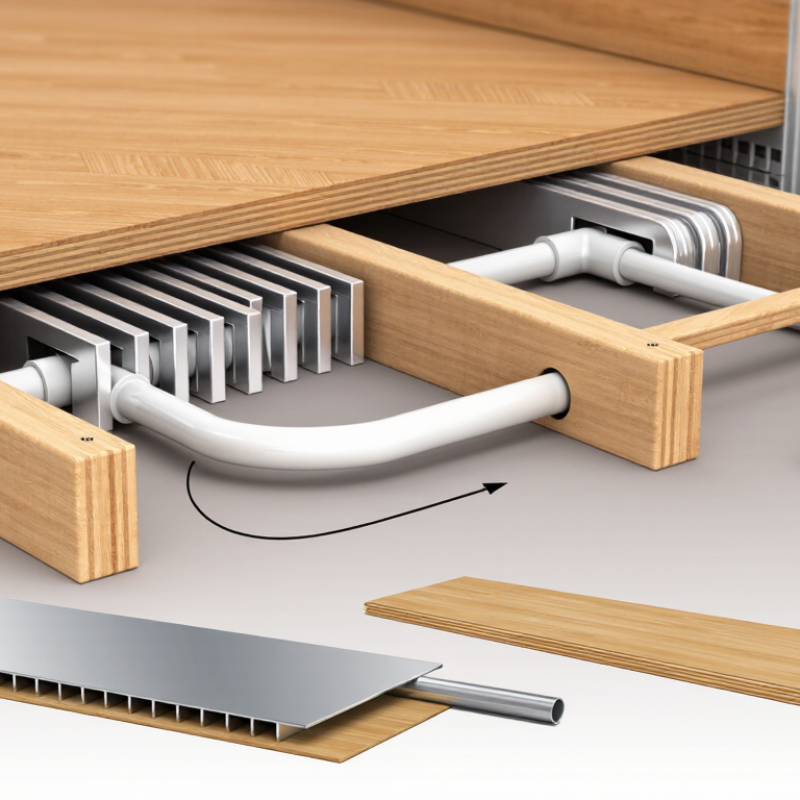
Hydronic heat transfer plates sit between warm water tubing and the floor assembly. Their job is to collect heat from the pipe and spread it across a wider area. Without good contact, heat can remain concentrated near the tubing, leaving cooler stripes between runs. Plates also hold tubing in position. They do not create heat or compensate for poor insulation.

Material matters. The ASHRAE Handbook—Fundamentals reports thermal conductivity near 237 W/m·K for aluminum and 401 W/m·K for copper at room temperature. Both conduct heat well, but a plate’s shape, thickness, and contact with the pipe also affect real-world performance. More metal alone is not a guarantee. Installation details count.

When choosing plates, match their dimensions to the tubing and floor design, then check how firmly they grip the pipe. A loose fit can leave small air gaps, which impede heat transfer. Check the subfloor, insulation, and planned water temperature too; these influence comfort and response time. A warm floor can feel uneven if plate spacing or installation is inconsistent. The less glamorous detail is often the important one: careful fitting takes time, and mistakes can be hard to spot after flooring goes down.

How Plate Design Affects Heat Transfer and Floor Performance

Hydronic heat-transfer plates shape how evenly warmth reaches the floor. A wide, continuous plate spreads heat sideways; narrow strips can leave warmer lines above the tubing and cooler gaps between them. The groove matters, too. Tubing that sits snugly against the metal transfers heat more consistently than tubing that rocks or leaves air gaps. Small details, visible during installation.

Floor comfort has measurable limits. EN 1264 sets a typical maximum floor-surface temperature of 29°C in occupied areas and 33°C in bathrooms. ASHRAE’s Handbook—HVAC Applications explains that radiant output depends on surface temperature, exposed area, and room conditions. These figures help explain why plate coverage and spacing matter: uneven contact can create hot stripes before the whole floor feels warm. Check the subfloor insulation as well; heat escaping downward does not improve room comfort.

When comparing designs, inspect plate width, tubing fit, and coverage—not thickness alone. A reflective plate may look substantial, yet poor contact can undermine its performance. I would treat published output figures as design guidance, not a promise for every floor assembly. Real installations vary. The room, finish flooring, and workmanship all matter.

Common Plate Types and Materials Compared

Stamped aluminum plates are common in hydronic floors. Their curved channels grip tubing and spread heat across the subfloor. Extruded aluminum plates are usually thicker and stiffer, which can help maintain contact, but they cost more and add weight. Copper transfers heat quickly, yet its higher material cost rarely makes it the automatic choice. Steel plates are tougher, though they conduct heat less readily.

The numbers matter. ASHRAE Handbook—Fundamentals (2021) gives typical room-temperature conductivity values of about 205 W/m·K for aluminum, 385 for copper, and 50 for carbon steel. Actual values vary by alloy and temperature. Not the whole story. A plate that fits tightly against the tubing and subfloor may perform better than a more conductive plate with gaps. Check channel size, plate thickness, tubing spacing, and fastening method against the floor design. I would not choose by conductivity alone; installation details are easy to underestimate, and product data may not reflect a real floor assembly.

2026 Top Hydronic Heat Transfer Plates Which Should You Buy? - Common Plate Types and Materials Compared

Plate Type Common Material Approx. Thermal Conductivity at Room Temperature Tube Contact and Heat Distribution Typical Use Advantages Limitations and Buying Checks
Formed channel (C-shaped or omega-style) plate Formed aluminum sheet About 205–237 W/m·K for common aluminum alloys Channel grips or partly surrounds the tube; heat spreads into the plate and adjacent floor material. Between-joist and staple-up radiant floor installations; available for common tube diameters such as 1/2-inch and 5/8-inch PEX. Lightweight, widely used, and generally offers good heat spreading for its thickness. Confirm the channel matches the tube’s actual outside diameter. Fit, plate thickness, spacing, and tight contact with the subfloor affect performance.
Full-coverage or wide sheet plate Aluminum sheet, often formed with tube channels About 205–237 W/m·K for common aluminum alloys Covers a broader area than a narrow channel plate, spreading heat across more of the underside of the floor. Joist-bay and other suspended-floor systems where broader plate coverage is part of the design. Broad coverage can help reduce concentrated heat patterns and distribute heat across the bay. Requires suitable bay dimensions and a layout compatible with the tubing plan. A larger plate does not by itself guarantee higher system output.
Extruded channel plate Extruded aluminum About 205–237 W/m·K for common aluminum alloys A rigid, shaped channel holds the tube; the extrusion’s cross-section provides a defined heat-spreading path. Installations needing a more rigid channel or a specific tube-retention profile. Maintains its shape well and can provide consistent tube seating when correctly sized. Usually bulkier than thin formed sheet. Check the tube profile, plate dimensions, fastening method, and compatibility with the floor assembly.
Galvanized steel channel plate Zinc-coated carbon steel About 45–60 W/m·K for carbon steel; coating and grade vary Holds the tube in a channel; heat spreads less readily through the plate than through aluminum of similar geometry. Some suspended-floor or retrofit applications where steel plates are specified or readily available. Steel is mechanically robust and can be suitable where the plate design and system details account for its properties. Lower thermal conductivity than aluminum. Inspect the coating for damage and follow the manufacturer’s guidance for damp or corrosive environments.
Copper channel or sheet plate Copper About 385–400 W/m·K for common copper grades Very high material conductivity can spread heat effectively, but overall performance still depends on plate geometry and tube contact. Specialty applications where copper is specified and its cost and material compatibility are acceptable. Higher thermal conductivity than aluminum, carbon steel, or stainless steel. Typically a specialty choice rather than the default. Check cost, availability, joining details, and compatibility with nearby metals and system conditions.
Stainless-steel channel plate Stainless steel About 14–17 W/m·K for many common stainless grades Provides tube support, but spreads heat less readily than aluminum or copper at comparable dimensions. Special environments or designs where stainless steel is specifically required. Can offer corrosion resistance in suitable grades and environments. Thermal conductivity is relatively low. Verify the stainless grade, plate design, and system requirements rather than choosing on corrosion resistance alone.

Buying note: For many conventional suspended-floor installations, a correctly sized formed-aluminum plate is a practical starting point. Compare tube fit, plate coverage and thickness, fastening method, floor construction, and the system designer’s heat-output requirements. Conductivity figures are approximate material properties, not ratings of finished heating-system performance.

Key Factors for Choosing Plates for Your Heating Project

Choosing hydronic heat transfer plates starts with the tubing, not the catalog photo. Confirm the plate profile matches the tube diameter and holds it firmly without pinching. A loose fit can leave air gaps; a tight, distorted channel can make installation frustrating. Fit matters.

Material and contact area affect how evenly heat moves into the floor. Aluminum plates are common because they spread heat efficiently, but thickness alone does not guarantee better performance. Check the plate’s width, shape, and intended installation method. For example, a plate designed for a grooved subfloor may not sit properly against joists.

Match the layout to the project. Joist spacing, floor finish, insulation, and room heat loss all influence plate spacing and system output. In a small bathroom, close, consistent tube contact may help reduce cool strips under tile. In a larger room, a heat-loss calculation is more useful than simply adding plates by guesswork. Measure twice. Also check whether the plates suit the chosen tubing material and installation conditions. One detail is easy to overlook: sharp edges can catch gloves or tubing during fitting. Compare installation guidance, dimensions, and compatibility before buying, and leave room to revise the layout when the real framing differs from the drawing. That happens.

2026 Top Hydronic Heat Transfer Plates: Which Should You Buy?

Compare representative thermal conductivity by plate material—a useful starting point when choosing plates for your heating project.

Copper transfers heat most readily among these materials, followed by aluminum. Stainless steel has much lower conductivity. Values are representative figures near room temperature in W/(m·K); actual values vary with alloy and temperature. Plate fit, contact with the tubing and subfloor, thickness, and the complete system design also affect heating performance.

How to Compare Top Hydronic Heat Transfer Plates in 2026

When comparing hydronic heat transfer plates in 2026, look beyond material labels. Aluminum spreads heat readily, but plate width, thickness, and tube fit determine how much contact actually occurs. Fit matters. A loose channel can leave a tube partly unsupported, while narrow plates may create uneven warm and cool strips across the subfloor.

Compare complete floor assemblies, not isolated plate claims. The U.S. Energy Information Administration’s 2020 Residential Energy Consumption Survey reports that space heating accounts for about 42% of household energy use. That makes efficient heat delivery worth careful attention. ASHRAE’s Handbook—HVAC Systems and Equipment explains that radiant-system output depends on surface temperature and construction. Check published output data at the intended water temperature, tube spacing, floor covering, and subfloor type. Small gaps matter.

For a retrofit, inspect plate dimensions against joist spacing and confirm the tube diameter fits the channel without forcing it. For new work, compare continuous coverage, fastening details, and whether the manufacturer provides assembly-level test data. A thicker plate may feel more substantial, but it does not automatically deliver better room performance. I would treat unqualified “higher output” claims cautiously; test conditions are often the missing detail. The floor finish can also limit heat transfer, even with well-fitted plates.