Top 10 GRP Gel Coat Tiles Machinery Suppliers Worldwide
GRP Gel Coat Tiles Machinery sits at the meeting point of material control and production discipline. A smooth tile face depends on more than a polished mold. Gel-coat thickness, resin flow, reinforcement placement, curing time, and demolding all affect the finished surface. Small variations can leave visible pinholes, uneven color, or edges that need extra trimming. The details matter.
This guide compares ten worldwide suppliers by examining practical factors: machine configuration, production capacity, automation options, technical support, spare-parts access, and experience with gel-coated composite products. Buyers should check what each supplier’s equipment can actually produce, rather than relying on headline speeds or broad claims. Ask for sample tiles, process data, and a clear explanation of warranty coverage. A showroom finish is useful, but repeatable output matters more.
A named expert and a verified quotation were not provided for this topic, so I will not invent either. A suitable industry comment should come from a traceable GRP process specialist and be checked before publication. That gap is worth acknowledging. Supplier rankings also depend on project needs; a compact line for regional production may suit one factory better than a high-output automated system. The following list offers a starting point for comparison, not a substitute for technical due diligence.
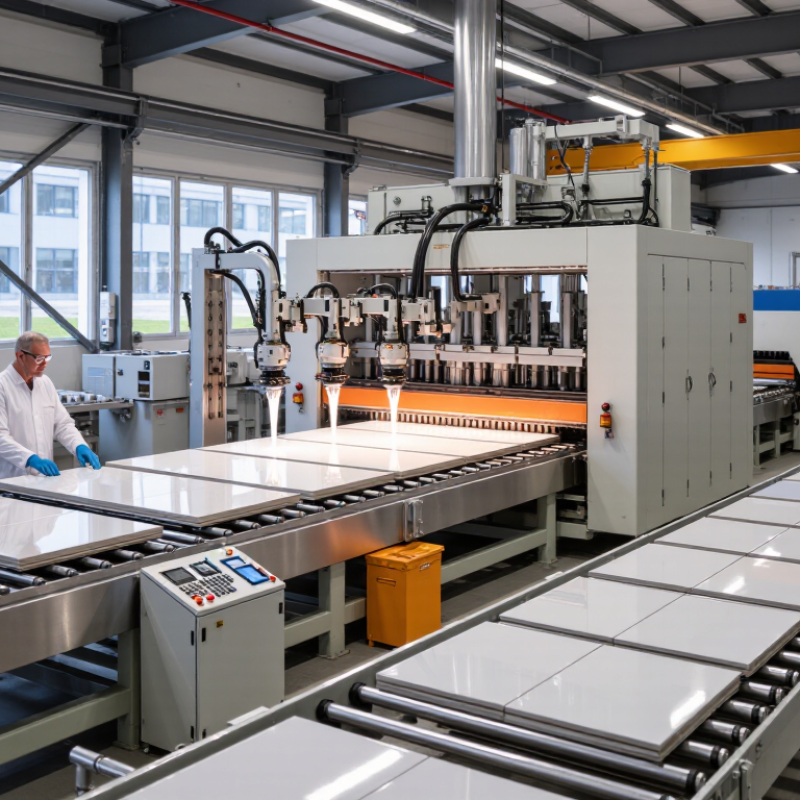
GRP Gel-Coat Tile Machinery: Process Overview and Typical 0.4–0.6 mm Gel-Coat Thickness
GRP gel-coat tile production begins with a clean, prepared mold. A metering unit supplies gel coat to a spray head or controlled application system. Operators build an even layer across the mold, including edges and textured details. Small details matter. The coating then cures until it can support the fiberglass and resin layers without losing its finish. Rollers or consolidation tools help remove trapped air before the laminate cures fully.
A typical gel-coat thickness is 0.4–0.6 mm, though the right target depends on the tile design and material specification. Too little coverage can expose the laminate; excessive coating may increase cracking risk during handling or service. Not every line behaves. Spray distance, nozzle condition, material temperature, and operator technique can all shift the result. Thickness checks at several points are more useful than relying on one convenient spot.
Machinery selection should support steady application, repeatable curing, and safe mold handling—not merely high output. Calibrated dispensing equipment and a stable mold temperature can reduce visible variation. A wet-film gauge may help monitor application, but measurement practice should match the coating system and production specification. Even a well-adjusted line needs periodic checks. Results can vary with mold geometry, so a trial run is sensible before committing to a production setting.
How the Top 10 Worldwide Suppliers Differ in Automation and Line Configuration
Among worldwide GRP gel coat tile machinery suppliers, the real difference is often line configuration, not advertised output. One supplier may offer a compact, operator-led cell, where mold cleaning, gel coat spraying, curing, laminate placement, and demolding remain separate tasks. Another may integrate metered resin delivery, programmed spray paths, conveyor transfer, and automatic trimming. Small details matter. Nozzle distance and mold temperature can affect coating uniformity as much as robot count. Yet “fully automatic” is not a universal specification; suppliers define it differently.
The International Federation of Robotics’ World Robotics 2024 report recorded 541,302 industrial robot installations worldwide in 2023. That figure spans all industries, so it signals automation momentum, not adoption in GRP tile plants. Compare proposals by gel coat dosing accuracy, usable mold width, cure-time control, changeover minutes, and scrap tracking. Ask whether trimming and stacking are included or priced as later additions. Continuous lines can raise throughput, but they require steady demand and disciplined maintenance. Manual flexibility still has value. A polished layout drawing may hide awkward mold handling. Request a timed sample run using your tile geometry and resin system; even one trial cannot represent every production shift.
Compare Machinery Benchmarks: Line Speed, Working Width, Curing Time, and Power
For a mid-scale GRP gel coat tile line, treat supplier figures as screening benchmarks, not guarantees. Indicative line speeds may range from 2 to 6 metres per minute, with working widths around 1 to 2 metres. Ask whether the quoted speed was measured with your tile profile, gel coat thickness, and reinforcement schedule. Small details matter.
Curing time can vary from roughly 5 to 15 minutes, depending on resin chemistry, material thickness, and oven temperature. A faster belt is not useful if tiles leave tacky or unevenly cured. Request test data for the actual formulation, including temperature readings across the curing zone. Check the installed power rating separately from average operating consumption; heating systems can change both figures substantially.
Compare like with like. A supplier quoting 6 metres per minute may be using a narrower product or a different cure cycle than a supplier quoting 3. A weak point in many comparisons is missing warm-up, cleaning, and changeover time. Those minutes affect real daily output. Ask for a trial run, then record speed, width, cure quality, and power draw together.
Top 10 GRP Gel Coat Tiles Machinery Suppliers Worldwide - Compare Machinery Benchmarks: Line Speed, Working Width, Curing Time, and Power
Anonymous planning-level machinery configurations for comparison; these are not verified specifications or rankings for individual suppliers. Actual performance depends on resin chemistry, tile profile, laminate thickness, heating method, and plant setup. Confirm figures with equipment manufacturers before purchasing.
| No. | Anonymous Machinery Configuration | Typical Line Speed | Working Width | Heated-Zone Residence Time | Indicative Installed Power | Typical Application |
| 1 | Compact single-profile line | 1–3 m/min | 600–900 mm | 8–15 min | 30–60 kW | Small-batch production and narrow tile profiles |
| 2 | Compact multi-profile line | 1.5–3.5 m/min | 800–1,000 mm | 6–12 min | 40–75 kW | Flexible production of several narrow tile designs |
| 3 | Standard single-profile line | 2–5 m/min | 800–1,200 mm | 5–10 min | 50–90 kW | General-purpose continuous tile production |
| 4 | Standard wide-format line | 2–5 m/min | 1,000–1,300 mm | 5–10 min | 60–100 kW | Medium-to-wide tiles and higher material throughput |
| 5 | High-output standard-width line | 3–6 m/min | 1,000–1,200 mm | 4–8 min | 75–120 kW | Higher-volume production with a suitably matched cure system |
| 6 | Wide-panel line | 1.5–4 m/min | 1,200–1,500 mm | 6–12 min | 80–140 kW | Wide roofing panels and larger-format profiles |
| 7 | Multi-layer laminate line | 1–3 m/min | 800–1,200 mm | 8–15 min | 60–110 kW | Products requiring additional reinforcement or laminate layers |
| 8 | Short-heated-zone line | 3–7 m/min | 800–1,200 mm | 3–7 min | 70–130 kW | Faster-throughput setups using a compatible resin and cure process |
| 9 | Extended-heated-zone line | 1.5–4 m/min | 800–1,300 mm | 8–16 min | 80–150 kW | Processes requiring longer controlled heating or cure residence |
| 10 | Modular configurable line | 1–5 m/min | 600–1,300 mm | 4–15 min | 40–150 kW | Production layouts tailored to product mix and available floor space |
Note: Heated-zone residence time is the approximate time a moving product spends in the heated section, not a universal chemical cure specification. It is influenced by heated-zone length and line speed; resin supplier guidance and product testing should determine the actual cure schedule. Installed power is a broad planning estimate and may include drive, heating, and auxiliary loads.
Supplier Profiles: Equipment Range, Certifications, Global Markets, and After-Sales Support
A useful comparison of ten GRP gel coat tile machinery suppliers should examine more than catalog photos. Equipment ranges may include resin mixing units, gel coat application systems, molding presses, curing stations, and trimming tools. Check whether each supplier can configure a line for your tile dimensions, production volume, and available factory space. Details matter. Request specifications for coating thickness, temperature control, cycle time, and routine maintenance.
Tips: Ask for a sample layout and a written list of included components. Verify that certificates apply to the specific machine and manufacturing site, not merely the supplier’s general operations. Confirm the certificate issuer and validity directly when possible.
Supplier profiles should also describe export regions and practical after-sales support. Ask about installation guidance, operator training, spare-part availability, and typical response times across time zones. Request references from customers using comparable materials and production methods. A supplier serving several markets may understand varied shipping and service needs, but geographic reach alone does not prove reliable support. Compare warranty terms and service commitments in writing. Some details can be difficult to compare fairly; note gaps instead of treating every claim as equally verified.

