Back
Contact us

Top Geomembrane Liner Manufacturers for Global Buyers

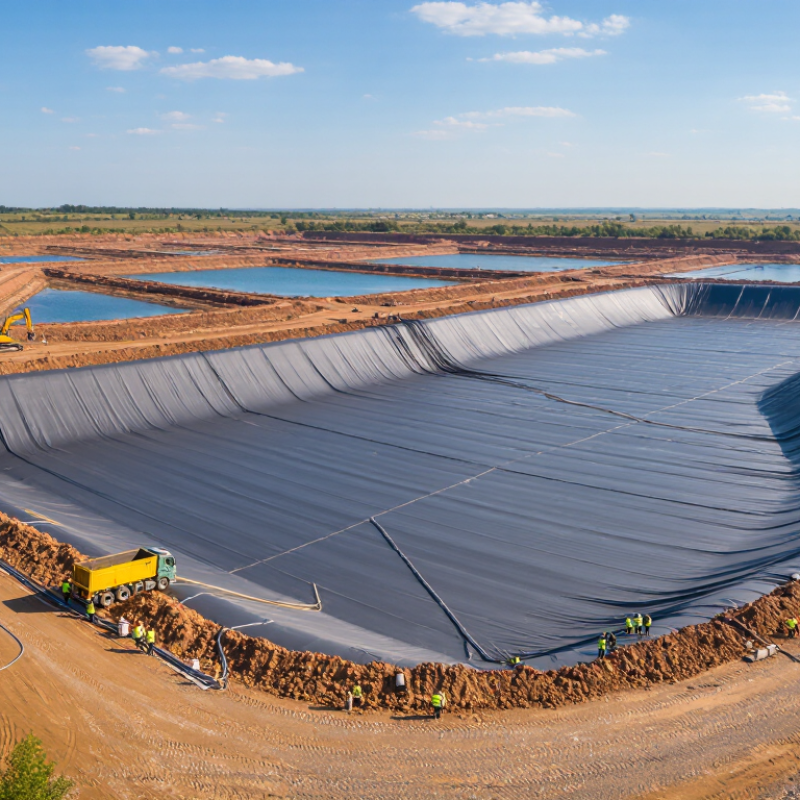
Global infrastructure is increasing demand for reliable containment, drainage, and environmental protection systems. Geomembrane Liner technology now supports mining ponds, landfill cells, aquaculture farms, reservoirs, and wastewater facilities.

Industry reports indicate steady market expansion. Grand View Research’s Geomembrane Market Size, Share & Trends Analysis Report identifies infrastructure development and stricter environmental controls as major growth drivers. MarketsandMarkets also links geosynthetic demand to water management, mining, and waste containment projects. Forecast figures vary between reports, because market definitions and regional coverage differ. That uncertainty deserves attention.

A qualified manufacturer must offer more than competitive pricing. Buyers should examine resin quality, thickness consistency, tensile strength, puncture resistance, chemical compatibility, and seam performance. For example, a 1.5-millimeter HDPE Geomembrane Liner may appear suitable on paper. However, poor fusion welding can still create weak points around penetrations and corners.

Details matter.

Leading producers usually provide factory quality records, technical data sheets, welding guidance, and traceable batch information. Independent testing and compliance with recognized standards, such as GRI-GM13 or relevant ASTM methods, strengthen purchasing confidence. Site experience matters too. A supplier familiar with desert heat, freezing cycles, or aggressive leachate can recommend more practical specifications.

No manufacturer is perfect. Even strong suppliers may have regional delivery limits, limited customization, or inconsistent technical support. Global buyers should compare verified production capacity, quality systems, project references, warranty terms, and after-sales responsiveness. This guide evaluates leading Geomembrane Liner manufacturers through those practical criteria, rather than relying only on rankings or marketing claims.
Top Geomembrane Liner Manufacturers for Global Buyers

Geomembrane Liners Explained: HDPE, LLDPE, PVC, and EPDM Materials

For global buyers, geomembrane selection starts with the site, not a product catalog. HDPE offers strong chemical resistance and high tensile strength. It suits landfill cells, mining ponds, and large containment areas. Its welded seams can perform reliably when surfaces are clean and fusion temperatures are controlled. However, HDPE is relatively stiff. Complex corners may demand careful detailing and trained installers. Small wrinkles can become expensive problems.

LLDPE is more flexible than HDPE. It follows settlement and uneven subgrades with less stress. This flexibility helps in reservoirs, irrigation basins, and covers with irregular geometry. The trade-off is lower stiffness, so handling and anchoring deserve close attention. PVC liners remain practical where flexibility and easy fabrication matter. They can fit tight details and prefabricated sections well. Yet plasticizer migration and compatibility require checking, especially around oils or aggressive chemicals. Field records matter.

EPDM provides excellent elasticity and weather resistance. It performs well in exposed ponds, decorative water systems, and applications needing movement tolerance. It is not the automatic choice for every chemical environment. Compatibility charts and immersion testing should guide decisions. Experienced buyers also inspect thickness, seam methods, surface preparation, and repair procedures. Ask for factory test data and independent quality records. Do not rely on a low price alone. I have seen specifications look complete while omitting subgrade drainage, which later caused preventable rework. A sound design still needs site inspection, skilled welding or bonding, and documented leak testing.

Global Manufacturer Selection Criteria: Thickness, Strength, and GRI-GM13 Compliance

Global buyers should treat geomembrane selection as a performance decision, not a price comparison. The United Nations Environment Programme reported 2.3 billion tonnes of municipal solid waste in 2023. That volume increases pressure on containment systems, especially at landfills, reservoirs, and industrial storage sites.

Thickness is the first visible specification, but it cannot stand alone. A 1.5-millimeter liner may suit one site, while sharp subgrade, heavy equipment, or settlement may require a thicker design. GRI-GM13 evaluates thickness, tensile strength, elongation, tear resistance, puncture resistance, carbon black content, and oxidative induction time. Buyers should request lot-specific certificates, test methods, and independent laboratory verification. A catalogue value is not installation evidence.

Strength needs field context. The World Bank’s What a Waste 2.0 projected global waste generation could reach 3.40 billion tonnes annually by 2050. That growth makes long-term seam reliability increasingly important. Require welding trial records, destructive seam tests, and documented non-destructive inspection procedures. GRI-GM13 compliance should be confirmed against the current specification edition, not a vague “GM13 equivalent” claim. A perfect datasheet is not a perfect installation. I have seen strong materials underperform when wrinkles, poor subgrade preparation, or rushed welding were ignored. Buyers should also examine weathering exposure, storage conditions, and installer competence before approving a manufacturer.

Top Geomembrane Liner Manufacturers for Global Buyers - Global Manufacturer Selection Criteria: Thickness, Strength, and GRI-GM13 Compliance
Selection Dimension Recommended Procurement Benchmark Typical HDPE Geomembrane Data Relevant Test Method or Standard What Global Buyers Should Verify
Material Type High-density polyethylene for demanding containment applications HDPE resin with ultraviolet stabilizers, carbon black, and antioxidant protection GRI-GM13; ASTM D1505; ASTM D7466 where applicable Confirm resin grade, recycled-content policy, additive package, and suitability for the intended chemical and temperature environment.
Nominal Thickness 1.0–3.0 mm Common project selections: 1.5 mm, 2.0 mm, and 2.5 mm ASTM D5199 for smooth sheet; ASTM D5994 for textured sheet Check average thickness, minimum measured thickness, thickness tolerance, and whether the specification applies to smooth or textured geomembrane.
Textured Surface Specified when higher interface friction or slope stability is required Single-sided or double-sided textured surfaces produced by co-extrusion or extrusion texturing ASTM D7466; project-specific interface shear testing Request texture height, texture uniformity, coefficient of friction, and direct-shear results using the actual adjacent soils or geosynthetics.
Tensile Yield Strength Typically about 16–22 kN/m for 1.5–2.0 mm HDPE sheet GRI-GM13 commonly specifies a minimum value near 16 kN/m for many standard thickness categories ASTM D6693, Type IV specimen Compare machine-direction and cross-machine-direction results, yield strength, break strength, and the applicable thickness-specific requirement.
Tensile Break Strength Typically about 27–40 kN/m for 1.5–2.0 mm HDPE sheet Higher thickness generally provides greater tensile capacity, but formulation and manufacturing quality also affect performance ASTM D6693, Type IV specimen Require certified test results from the production lot rather than relying only on marketing values or nominal thickness.
Elongation at Break At least approximately 700% for many GRI-GM13 HDPE grades High elongation helps the liner accommodate localized settlement and installation stresses ASTM D6693 Review both yield elongation and break elongation, and ensure the reported values are generated using the correct specimen type and test speed.
Tear Resistance Approximately 187 N minimum is a common GRI-GM13 reference value for standard HDPE categories Actual requirements depend on nominal thickness and the applicable edition of the specification ASTM D1004 Verify minimum tear resistance in both principal directions and assess whether site handling, aggregate, or wind uplift requires a higher value.
Puncture Resistance Approximately 480 N minimum is a common GRI-GM13 reference value for standard HDPE categories Thicker liners and properly selected protective geotextiles generally improve puncture performance ASTM D4833 Check puncture results together with subgrade preparation, protective cushion design, and the expected construction traffic.
Carbon Black Content Approximately 2.0–3.0% by mass Carbon black supports ultraviolet and weathering resistance when properly dispersed ASTM D1603 or ASTM D4218 Confirm carbon black content, dispersion rating, and consistency across production lots; excessive or poorly dispersed carbon black can reduce performance.
Carbon Black Dispersion Uniform dispersion, commonly meeting GRI-GM13 category 1 or category 2 limits Well-dispersed particles reduce weak points and improve long-term weathering behavior ASTM D5596 Request microscopic dispersion records and verify that the reported rating meets the contract specification.
Oxidative Induction Time Standard OIT: commonly at least 100 minutes; high-pressure OIT: commonly at least 400 minutes where specified OIT evaluates antioxidant protection and is not, by itself, a complete prediction of service life ASTM D3895; ASTM D5885 Identify whether standard OIT or high-pressure OIT is required, and review results before and after oven aging when long service life is critical.
Dimensional Stability Typically controlled to approximately ±2% in each principal direction Controlled shrinkage reduces wrinkles, stress concentration, and installation problems ASTM D1204, elevated-temperature exposure Confirm testing temperature, exposure time, direction of measurement, and the maximum permitted dimensional change.
Seam Strength Welds should meet or exceed the project-specified percentage of parent-sheet strength Double-track fusion welding is widely used for field joining of HDPE geomembranes ASTM D6392; ASTM D5820; ASTM D6214 Review destructive seam-test results, peel and shear performance, trial-weld procedures, and installer qualification records.
Leak Detection Compatibility Compatible with electrical leak-location surveys when the system design requires them Conductive or semi-conductive layers may be used in specially designed systems; standard liners require suitable test conditions ASTM D7002; ASTM D7007; project-specific electrical leak-location procedure Confirm liner conductivity, subgrade and cover requirements, testing method, and acceptance criteria before installation.
GRI-GM13 Compliance Required where specified Compliance should cover the applicable thickness, physical properties, durability tests, and quality-control requirements Current GRI-GM13 specification and referenced ASTM methods Request a signed compliance statement, current technical data sheet, independent laboratory reports, and lot-specific certificates of analysis.
Quality Documentation Full traceability from raw material to finished roll Roll number, production date, resin batch, test results, dimensions, and inspection status Project quality plan; ISO 9001-based document control where applicable Confirm certificate format, retention period, nonconformance procedure, calibration records, and availability of third-party inspection.
Global Delivery Readiness Export packaging and documentation suited to the destination country Rolls commonly supplied with protective wrapping, identification labels, packing lists, and shipping marks Contract requirements; Incoterms; destination import regulations Verify roll dimensions, container loading plan, moisture protection, customs documentation, lead time, and replacement policy for transit damage.
Note: The values shown are procurement benchmarks and commonly referenced ranges for HDPE geomembrane selection. Final acceptance should be based on the current contract specification, the applicable edition of GRI-GM13, thickness-specific requirements, and certified test results for the supplied production lot.

Leading Geomembrane Producers Compared by Capacity, Certifications, and Markets

Global buyers should compare geomembrane producers through capacity, certifications, and market experience, not price alone. Grand View Research estimates the global geomembrane market reached about USD 2.2 billion in 2023, with infrastructure, mining, and water treatment driving demand. This growth favors producers with multiple extrusion lines, resin-testing laboratories, and documented production capacity. Yet capacity figures can be difficult to verify. Ask for audited output, not attractive website claims.

Certification separates dependable suppliers from inconsistent ones. ISO 9001 supports controlled manufacturing, while ISO 14001 indicates structured environmental management. For landfill and containment projects, buyers should also request test results aligned with GRI-GM13, including tensile strength, puncture resistance, carbon black dispersion, and oxidative induction time. Technical evidence matters. A certificate alone cannot prove field performance. Independent laboratory reports, batch numbers, and weld-testing procedures provide stronger assurance.

Market coverage also reveals practical experience. Producers serving North America and Europe often understand strict documentation requirements, while suppliers active in Asia, Africa, and Latin America may offer valuable logistics and climate experience. The World Bank reports that water security and sanitation investment remain major development priorities, supporting long-term liner demand. However, regional familiarity is not enough. Compare thickness ranges, maximum roll dimensions, delivery records, and technical support after installation. One overlooked weakness remains: published capacity rarely shows how much material is available during peak construction seasons.

Quality Testing Standards: Tensile Strength, Seam Peel, Puncture, and OIT Data

Top Geomembrane Liner Manufacturers for Global Buyers

Quality testing separates a dependable geomembrane from a visually impressive sheet. Global buyers should request complete laboratory data, not only a product brochure. Tensile strength testing, commonly performed under ASTM D6693, measures strength and elongation in both directions. These values reveal how the liner may respond to stretching, settlement, and installation stress. Direction matters.

Seam performance deserves equal attention. ASTM D6392 evaluates peel and shear resistance for fusion-welded seams. A strong sheet can still fail because of poor welding, contamination, or uneven pressure. Inspectors should review test temperature, welding speed, specimen preparation, and failure mode. Peel failure through the seam is different from separation at the weld interface. The report should make that difference clear.

Puncture resistance, often tested under ASTM D4833, helps assess damage from stones, tools, and construction traffic. It cannot replace careful subgrade preparation. OIT data adds another layer of confidence. ASTM D3895 or ASTM D5885 testing estimates oxidative stability from the resin and additive package. Higher OIT values may support durability, but they do not predict every field condition. Heat, ultraviolet exposure, stress, and chemicals interact in complicated ways. A neat certificate is not proof of perfect performance. Buyers should compare test methods, sample dates, laboratory competence, and specification limits. Small reporting gaps can become expensive surprises.

Buyer Evaluation Framework: Thicknesses from 0.5–3.0 mm, Warranty, and Logistics

Top Geomembrane Liner Manufacturers for Global Buyers

Thickness should match the site, not a sales brochure. For light-duty water containment, 0.5–1.0 mm may reduce cost and freight weight. Mining ponds, landfill cells, and chemical storage often require 1.5–3.0 mm liners, depending on puncture risk and installation conditions. Grand View Research’s 2024 geosynthetics market analysis projects approximately 6% annual growth through 2030, reflecting stronger demand for engineered containment systems. That growth makes technical comparison more important.

Ask for test results, not only certificates. Review tensile strength, tear resistance, carbon black dispersion, oxidation induction time, and seam-peel performance. ASTM and GSI guidance can support these checks. The Geosynthetic Institute’s durability research separates warranty length from actual service life; buried HDPE systems may perform for more than 100 years under controlled conditions. A 20-year warranty does not promise 20 years without inspection. That distinction is easy to miss.

Logistics can quietly change the project budget. Confirm roll width, maximum roll weight, packaging, container loading, port handling, and customs documents. A 3.0 mm roll needs more lifting capacity and storage space than a 0.75 mm roll. Request spare material, batch traceability, and installation guidance before shipment. I would not trust a low quotation without a seam plan. Site access, rain, and local welding skills often matter more than a small price difference. The framework is useful, but never perfect.

Top Geomembrane Liner Manufacturers for Global Buyers

Buyer evaluation framework: thickness, material efficiency, warranty, and logistics planning.

How to read this chart: Estimated material mass is calculated using a representative HDPE density of 940 kg/m³. Increasing thickness raises material usage, shipment weight, and handling requirements almost linearly.

Warranty checkpoint: Commercial geomembrane warranties commonly fall within a 10–30 year range, but coverage depends on material specifications, installation quality, site conditions, and permitted use. Buyers should request the complete written warranty before placing an order.

Logistics checkpoint: International freight quotations should be based on actual roll dimensions, gross weight, packing method, destination, Incoterms, and production lead time. Confirm roll width, roll length, loading plan, and replacement policy with each supplier.

Article Source: