Top 5 Actuator Valve Types You Need to Know?
In today’s industrial landscape, understanding actuator valve types is crucial. These valves play a vital role in controlling fluid flow and pressure. With various designs available, knowing which actuator valve suits your needs can enhance efficiency and reliability.
Actuator valves vary significantly in mechanics and applications. Some are simple on-off types, while others offer precise control. This diversity can make it challenging to choose the right one. Each has unique features and operational benefits. Misunderstanding these differences could lead to improper usage.
Familiarizing yourself with the top actuator valve types is essential. It can prevent costly mistakes and improve system performance. Yet, it is easy to overlook certain aspects. The right actuator valve can mean the difference between smooth operation and potential failure. Understanding these components helps ensure effective decision-making in any project.
Types of Actuator Valves and Their Applications
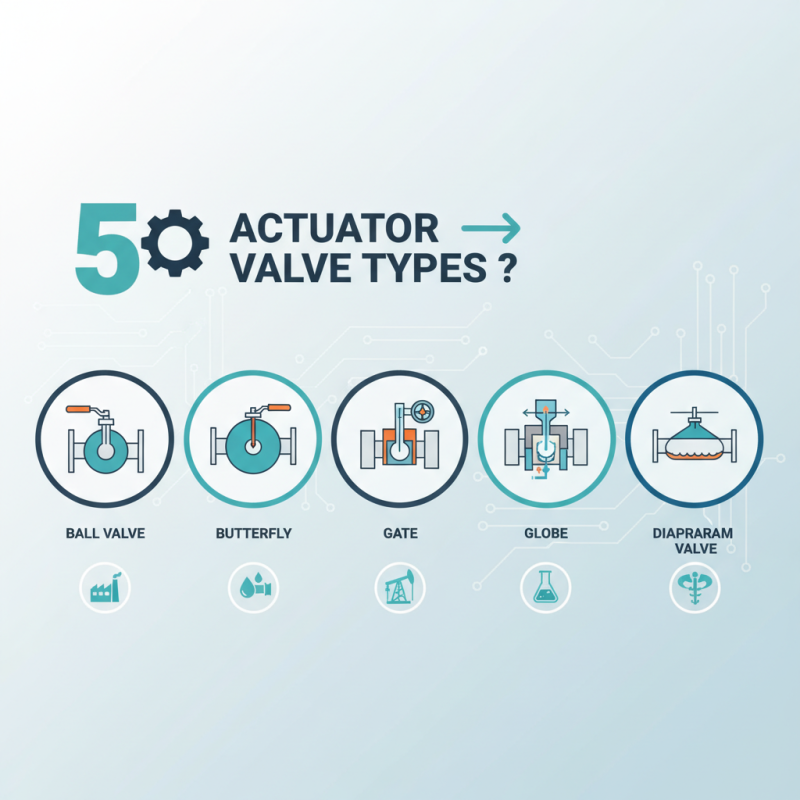
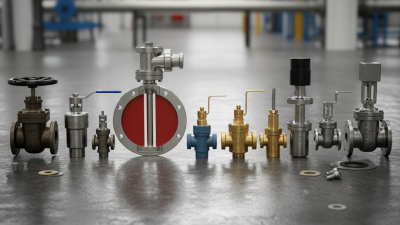
Actuator valves play a vital role across various industries. There are several types, each with unique features and applications. Ball valves, known for their reliable sealing properties, are often used in high-pressure applications. They can handle fluids, gases, and vapors with ease. According to a recent industry report, the global ball valve market is expected to grow by 7% annually through 2025.
Another popular type is the gate valve. Gate valves are preferred for on/off control and provide minimal flow restriction. They are frequently utilized in oil and gas industries. A study highlighted that gate valves account for about 20% of the total valve market due to their widespread usage. However, they may not perform well in throttling operations, leading to potential inefficiencies.
Butterfly valves offer an alternative that combines compact design with quick operation. They are commonly used in water treatment and HVAC systems. Their disk design allows for rapid opening and closing, enhancing performance. However, attention must be given to the materials used, as improper choices can lead to corrosion issues. Additionally, proper installation is critical to avoid leaks. Overall, understanding the various actuator valve types is essential for optimizing system performance.
Top 5 Actuator Valve Types You Need to Know
| Valve Type |
Actuation Method |
Applications |
Advantages |
| Electric Actuator Valve |
Electric Motor |
Water treatment, HVAC systems |
Precise control, easy automation |
| Pneumatic Actuator Valve |
Compressed Air |
Oil and gas, food processing |
Fast operation, high force |
| Hydraulic Actuator Valve |
Hydraulic Fluid Pressure |
Heavy machinery, industrial processes |
High torque, reliable in harsh conditions |
| Manual Actuator Valve |
Hand Crank/Lever |
Small scale installations, emergency use |
Simplicity, no power required |
| Smart Actuator Valve |
Smart Technology Integration |
Building automation, energy management |
Enhanced control, data monitoring |
Understanding Electric Actuator Valves: Benefits and Features
Electric actuator valves play a crucial role in modern automation systems. They offer precise control over fluid flow. This precision is essential in industries like water treatment and chemical processing. According to industry reports, electric actuators enhance efficiency by reducing response time by up to 30%. This quick action can significantly impact operational productivity.
One of the key benefits of electric actuator valves is their energy efficiency. They consume less power compared to pneumatic actuators. A study found that electric actuators can reduce energy costs by as much as 20%. This reduction is attractive in an era where energy expenses are soaring. Furthermore, they provide easier integration with control systems, facilitating real-time monitoring and adjustments.
However, there are challenges. The initial installation cost can be higher. Maintenance may also require specialized knowledge. Not all systems benefit equally from electric actuators. Each application needs careful evaluation to ensure compatibility and efficiency. Understanding these factors is essential for making informed decisions in industrial settings.
Pneumatic Actuator Valves: Mechanisms and Use Cases
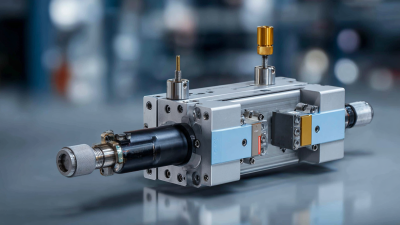
Pneumatic actuator valves play a vital role in various industries. These devices use compressed air to control valve operations effectively. Their mechanism relies on converting air pressure into mechanical movement. This allows for quick and efficient valve actuation.
In applications like manufacturing, pneumatic actuators shine. They can quickly open or close valves, making them effective for controlling liquids and gases. Nevertheless, not all systems may benefit from this technology. Factors like air supply and maintenance requirements need careful consideration. In high-pressure applications, the potential for leaks is a concern.
Another aspect to ponder is the compatibility with existing systems. Some older setups might not work optimally with pneumatic actuators. This mismatch can lead to more problems than solutions. Assessing the infrastructure is crucial before implementation. Without this reflection, users may find themselves facing unexpected challenges.
Hydraulic Actuator Valves: Key Characteristics and Advantages
Hydraulic actuator valves are essential components in various industrial applications. They convert hydraulic energy into mechanical movement. This technology is crucial in sectors like manufacturing and energy production. According to a recent industry report, the global hydraulic valves market is projected to grow at a CAGR of 5.7% from 2021 to 2028.
These valves offer several key characteristics. They provide high force output, crucial for heavy-duty applications. They can operate under high pressure, increasing their reliability. Additionally, they respond quickly to changes in the hydraulic signal, which enhances system efficiency. However, their complexity can lead to challenges in maintenance and troubleshooting.
One notable advantage of hydraulic actuator valves is their ability to handle large loads. This makes them popular in mobile equipment and stationary systems. Yet, users must be cautious. Improper installation can lead to system failures. Regular maintenance is vital but can be overlooked. Addressing these challenges is significant for maximizing their benefits and extending their operational life.
Comparative Analysis of Actuator Valve Types for Specific Applications
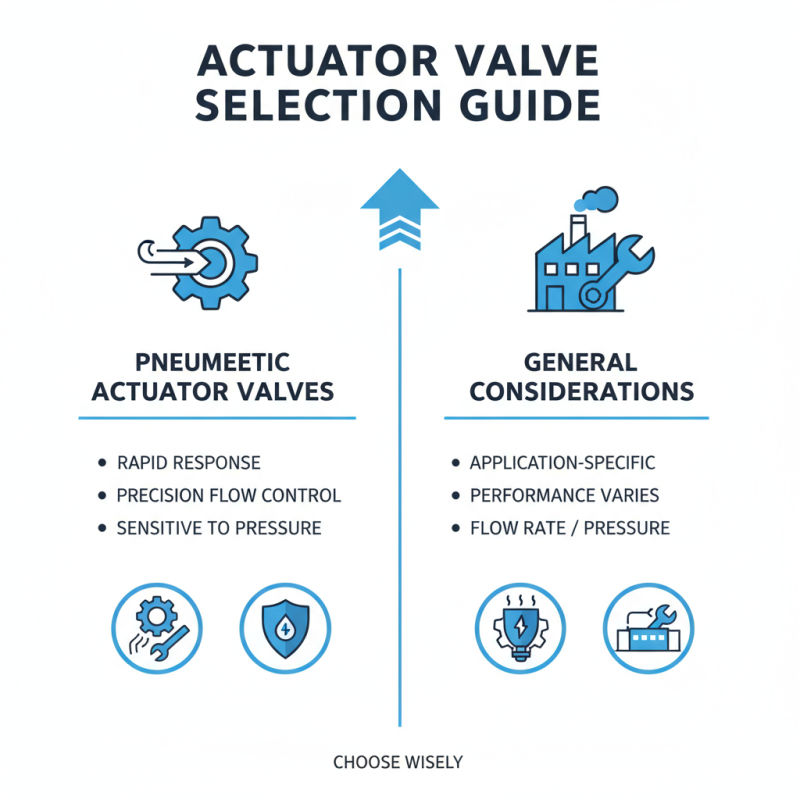
When selecting actuator valves, it’s crucial to consider your specific application. Different types serve unique purposes, and their performance can vary significantly. For example, pneumatic actuator valves are often used in environments requiring rapid response and precision. They excel in controlling flow rates but can be sensitive to pressure fluctuations.
On the other hand, electric actuators are favored in applications needing consistent torque. They can be integrated with smart systems, allowing for remote management. However, they may require more maintenance, which can be a drawback. Hydraulic actuators, while powerful and efficient, can be bulky, making them unsuitable for smaller spaces.
This landscape is filled with challenges. Each type has its strengths and weaknesses. The choice often involves trade-offs that must be evaluated closely. Users might overlook the implications of valve size or material compatibility. Yet, understanding these nuances is key to optimal performance in your systems.