Back
Contact us

Top 10 Rotomolding Machines for Global Buyers

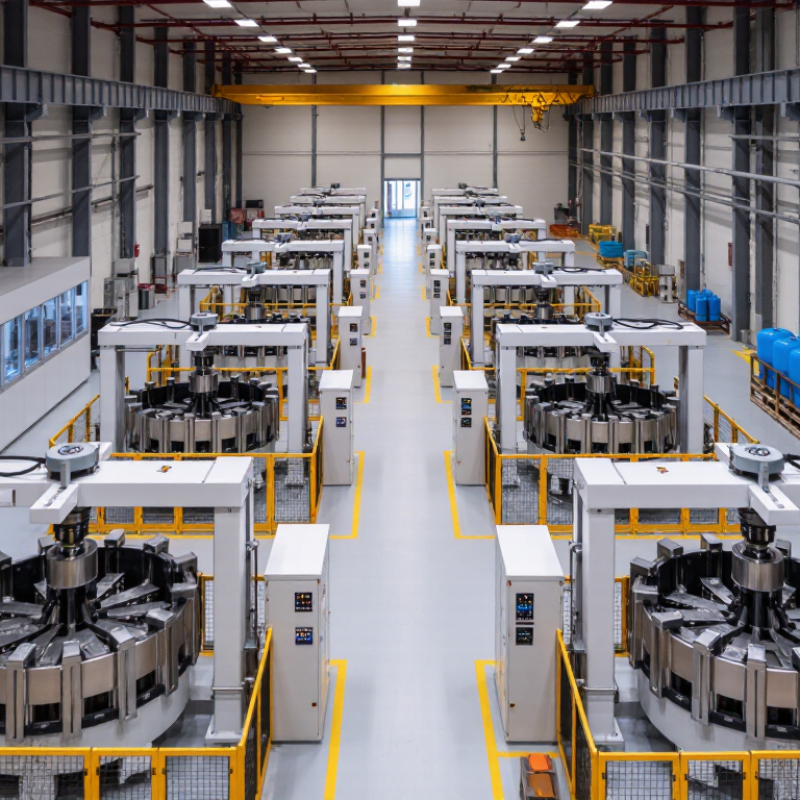
Rotomolding Machines support the production of durable, hollow plastic parts, from water tanks and kayaks to medical housings and industrial containers. Global buyers increasingly compare equipment by energy use, automation, mold capacity, cycle stability, and after-sales support. The process looks simple from a distance. It is not.

Recent market reports from Grand View Research and MarketsandMarkets indicate steady growth in the rotational molding sector, with projected annual growth generally reported in the mid-single digits. Their findings connect demand with infrastructure upgrades, water storage, automotive components, and recyclable polymer applications. Exact market values vary between reports. That difference matters. Buyers should examine methodology, reporting year, currency, and regional coverage before accepting a headline number.

This guide reviews ten Rotomolding Machines for international purchasing teams. Each option is considered through practical criteria, including heating efficiency, cooling control, PLC capability, arm configuration, mold-changing time, and production consistency. Factory experience also matters. A machine may show impressive specifications, yet perform poorly with thin walls, complex inserts, or frequent color changes. ARM technical guidance and supplier documentation can help validate those claims, while factory visits and sample trials reveal the less visible details.

No ranking is perfect. Real production is messier.

A reliable shortlist should include verified cycle records, service response times, spare-parts access, electrical compatibility, and operator training. Buyers should also request independent safety documentation and clear warranty terms. The following selection is designed as a practical starting point, not a substitute for engineering validation. Sometimes, the cheaper machine wins. Sometimes, it becomes the expensive one later.

Top 10 Rotomolding Machines for Global Buyers

What Is a Rotomolding Machine and How Does It Work?

A rotomolding machine forms hollow plastic parts by heating and rotating a mold. Operators load measured polymer powder into the mold. The closed mold then enters a heated chamber, often reaching 250–350°C, depending on the resin and wall thickness. Two axes rotate continuously, spreading softened material across every internal surface.

After heating, the mold moves into a cooling station. Air or water mist removes heat while rotation continues. This prevents sagging, uneven walls, and trapped air. Workers then open the mold and remove the finished part. Shuttle, carousel, clamshell, and rock-and-roll machines suit different production volumes and product shapes. Cycle time commonly ranges from 20 minutes to several hours.

Grand View Research’s 2024 rotational molding market analysis reported steady market expansion through 2030, supported by demand for tanks, containers, playground equipment, and industrial housings. PlasticsEurope’s Plastics—The Fast Facts 2023 recorded global plastics production at about 400 million tonnes in 2022. These figures show scale, but they do not guarantee machine suitability. A smaller buyer may value temperature control and mold-change access more than maximum output. That judgment is often missed. A perfect specification sheet can still produce inconsistent parts if powder quality, mold temperature, or cooling airflow varies. Reliable buyers should inspect cycle records, energy data, safety systems, and sample wall-thickness results before selecting among the top ten machines.

Top 10 Rotomolding Machines for Global Buyers - What Is a Rotomolding Machine and How Does It Work?

A rotomolding machine heats and rotates a hollow mold around two axes so that polymer powder coats the inside of the mold. After heating, the mold is cooled while rotation continues, producing seamless hollow plastic parts.

Rank Machine Type Typical Oven or Mold Envelope Typical Payload per Arm Typical Cycle Time Automation Level Best-Fit Applications Main Advantages Important Buying Considerations
1 Large Shuttle Rotomolding Machine Oven diameter: approximately 4.5–7.0 m
Typical mold envelope: up to 3.5 × 3.0 × 2.5 m
Approximately 1,500–4,000 kg 20–60 minutes, depending on part size and resin Medium to high; recipe control, automatic temperature monitoring and programmable cooling are commonly available Large tanks, containers, agricultural products, playground equipment and industrial housings Handles large molds, supports flexible production and allows loading and unloading outside the oven Requires substantial floor space, high thermal capacity, heavy-duty foundations and suitable material-handling equipment
2 Medium Shuttle Rotomolding Machine Oven diameter: approximately 3.0–4.5 m
Typical mold envelope: up to 2.5 × 2.0 × 1.8 m
Approximately 500–1,500 kg 18–45 minutes Medium to high; PLC-based recipes and automatic cooling options are typical Water tanks, waste containers, road barriers, kayaks and medium-sized industrial parts Good balance of flexibility, production capacity and investment cost Verify oven clearance, arm reach, maximum mold weight and access for mold changes
3 Three-Arm Carousel Machine Oven diameter: approximately 3.0–5.0 m
Typical mold envelope: up to 2.5 × 2.0 × 1.8 m
Approximately 300–1,200 kg 15–40 minutes Medium; automated indexing and process recipes are widely used Repeat production of tanks, bins, pallets, toys and medium-sized hollow components Efficient use of oven, cooling and loading stations with good repeatability Arm movement and station timing must match the heating and cooling requirements of each product family
4 Four-Arm Carousel Machine Oven diameter: approximately 3.0–5.0 m
Typical mold envelope: up to 2.3 × 1.8 × 1.6 m
Approximately 200–1,000 kg 12–35 minutes Medium to high; independent station programming is available on many configurations High-volume production of smaller tanks, containers, toys and consumer products High potential throughput because heating, cooling, loading and unloading can occur concurrently Best suited to stable product schedules; changing between very different mold sizes may reduce efficiency
5 Independent-Arm Carousel Machine Oven diameter: approximately 4.0–6.0 m
Typical mold envelope: up to 3.0 × 2.5 × 2.0 m
Approximately 500–2,500 kg 15–50 minutes High; each arm can typically use separate speed, temperature and station settings Mixed-product manufacturing, contract production and plants requiring frequent changeovers Flexible scheduling and the ability to process different molds or cycle requirements at the same time Higher capital cost and control-system complexity; operator training and maintenance capability are important
6 Rock-and-Roll Rotomolding Machine Oven length: approximately 4–12 m
Designed for long, narrow molds rather than large spherical envelopes
Approximately 300–2,000 kg 20–60 minutes Medium; programmable rocking angle, rotation speed and heating profiles are common Long tanks, pipes, road cones, marine products and other elongated hollow parts Efficient for long products and can require less rotational travel than a conventional full-axis system Not ideal for compact, wide or highly complex shapes; mold balance and powder distribution are critical
7 Clamshell Rotomolding Machine Oven diameter: approximately 2.0–4.0 m
Typical mold envelope: up to 2.0 × 1.6 × 1.5 m
Approximately 100–800 kg 15–40 minutes Medium; fixed or programmable rotation and temperature control are available Small and medium containers, water tanks, covers, ducts and general-purpose molded parts Compact layout, straightforward mold access and comparatively simple operation Check mold-opening clearance, seal design, thermal uniformity and access for maintenance
8 Swing-Arm Rotomolding Machine Oven diameter: approximately 2.0–4.0 m
Typical mold envelope: up to 2.2 × 1.8 × 1.6 m
Approximately 150–1,000 kg 15–45 minutes Medium; automated arm positioning and process monitoring may be included Medium-sized industrial parts, bins, tanks, furniture components and specialty products Good mold accessibility and a practical layout for moderate production volumes Confirm swing radius, maximum arm load, cooling arrangement and the number of usable stations
9 Compact Single-Arm Shuttle Machine Oven diameter: approximately 1.8–3.0 m
Typical mold envelope: up to 1.5 × 1.2 × 1.2 m
Approximately 100–500 kg 15–40 minutes Basic to medium; manual loading with programmable heating and cooling is common Start-up operations, small-batch manufacturing, custom parts and regional production facilities Lower space requirement, simpler installation and useful flexibility for varied molds Throughput is limited by a single arm; assess future capacity needs before selecting this configuration
10 Laboratory and Pilot-Scale Rotomolding Machine Oven diameter: approximately 0.8–1.8 m
Typical mold envelope: up to 0.8 × 0.6 × 0.6 m
Approximately 5–50 kg 10–35 minutes Medium to high; precise speed, temperature and data-recording functions are often available Material development, mold trials, product research, education and small prototypes Low material consumption, quick experimentation and easier process development Limited production capacity; pilot results should be validated on a larger machine before commercial launch

Data note: The specifications shown are typical industry ranges for comparing machine configurations. Actual capacity, cycle time, power consumption and mold envelope vary with machine design, polymer type, wall thickness, mold material, part geometry and cooling method. Buyers should request a machine layout, load calculation, utility schedule and sample-part trial before final selection.

Key Criteria for Comparing Rotomolding Machines Worldwide

Comparing the top 10 rotomolding machines requires more than checking advertised capacity. Experienced buyers examine oven temperature uniformity, arm balance, mold changeover time, and cooling control. A small temperature drift can create thin corners, trapped air, or uneven wall thickness. Those defects may appear only after several production cycles.

Market Demand Market reports indicate steady global demand. Grand View Research estimates the rotational molding market will grow at roughly 4% annually through the decade. Mordor Intelligence also identifies infrastructure, water storage, and industrial containers as major demand areas. However, these reports use different definitions and regional data. Their figures should guide planning, not replace factory trials. A practical test should record cycle time, energy use per kilogram, scrap rate, and output consistency.

Control & Service Control systems deserve close attention. Recipe storage, alarm history, and remote diagnostics can reduce operator errors. Yet automation is not always better. Complex software may slow maintenance when local technicians lack training. Energy performance also needs measurement at the machine level, including the oven, motors, and cooling system. The U.S. Department of Energy notes that efficient industrial motor systems can deliver meaningful energy savings, but actual results depend on load and operating hours. Service access matters. Spare-part availability matters more. Buyers should request independently verifiable data, inspect weld quality, and review references from similar climates. Brochures rarely show the difficult details.

Top 10 Rotomolding Machines by Design, Capacity, and Application

Top 10 Rotomolding Machines for Global Buyers

Top 10 Rotomolding Machines by Design, Capacity, and Application

Selecting a rotomolding machine starts with product shape, wall thickness, and expected output. A single-arm shuttle suits small and medium molds. A bi-axial shuttle improves control for complex tanks. Carousel machines support higher production volumes. Rock-and-roll systems fit long products, such as kayaks and pipes. Clamshell machines offer practical access for large, deep molds.

For heat-sensitive materials, electric-heated machines provide cleaner temperature control. Gas-fired machines often deliver strong heating performance in larger workshops. Open-flame systems can support simple production, but they require careful process supervision. Compact laboratory machines help engineers test powders, molds, and cycle times. Automated multi-arm systems suit facilities needing repeatable, high-capacity production. Capacity should match the mold envelope, oven size, cooling area, and available labor. A large machine is not automatically better. I have seen oversized equipment create unused space and higher operating costs.

Tips: Check the oven clearance before ordering. Measure the mold, frame, and loading path. Review temperature records from similar applications. Ask for cycle data, energy estimates, and maintenance access. Do not judge performance from brochures alone. Sample testing can reveal warpage, uneven walls, or poor release behavior. Also, leave room for improvement; early production assumptions are often wrong.

Automation, Energy Efficiency, and Production Performance

Top 10 Rotomolding Machines for Global Buyers

Automation, Energy Efficiency, and Production Performance

The best rotomolding machines combine repeatable heating, accurate cooling, and dependable mold movement. Global buyers should inspect the full production system, not only the machine frame.

Servo-driven arms can improve positioning accuracy and reduce adjustment time. Automated recipe control also helps operators repeat temperature, rotation speed, and cycle settings. Useful systems record alarms, energy use, and production data. These records support maintenance decisions and quality audits.

Energy efficiency depends on more than burner ratings. Insulated ovens, balanced airflow, and responsive temperature sensors can reduce wasted heat. Variable-speed motors may lower power consumption during lighter movements. However, actual savings require testing under real production loads. A smaller machine is not always more efficient.

Cycle performance matters on the factory floor. Check heating uniformity across corners, cooling consistency, mold-change time, and daily uptime. A machine producing fast cycles may still create defects if cooling control is weak. That assumption can fail.

Operators also need safe access, clear controls, and practical training. Remote diagnostics can shorten service delays across borders, but they cannot replace skilled inspection. Ask suppliers for documented test results, spare-part plans, and references from similar applications. No machine wins every test. In some facilities, manual adjustments remain more reliable than full automation. That trade-off deserves honest review before purchase.

Buying, Installing, and Maintaining a Rotomolding Machine

Buying a rotomolding machine requires more than comparing oven size and arm count. MarketsandMarkets estimates the global rotational molding market could grow from about USD 5.2 billion in 2023 to USD 7.1 billion by 2028. That expansion increases equipment choices, but it also increases purchasing mistakes. Ask for verified cycle times, mold capacity, temperature uniformity, energy consumption, and local service coverage. A machine should fit your product mix, not just your current order.

Installation needs a level foundation, safe electrical supply, clear ventilation, and enough space for mold loading. Measure the doorway before delivery. It sounds obvious. It is often missed. During commissioning, record oven temperature, cooling time, arm rotation, and material weight. The first production trial should use a simple mold. This makes defects easier to trace. Independent testing should confirm wall thickness and impact performance.

Maintenance begins with daily cleaning around burners, sensors, and cooling ducts. Inspect bearings, seals, drive chains, and thermocouples at planned intervals. The Plastics Industry Association highlights process consistency as a major factor in reducing manufacturing waste. That principle matters here. Keep digital records for alarms, temperature curves, repairs, and rejected parts. In my experience, buyers sometimes underestimate operator training and spare-part planning. I would reconsider that decision before installation. A cheaper machine can become expensive when one sensor stops production.

Typical Rotomolding Cycle Stages for Global Buyers

The chart shows common processing-time ranges for a rotational molding cycle. Actual times vary with polymer type, part wall thickness, mold material, oven temperature, cooling method, and machine configuration.

For purchasing, compare machine capacity, oven heating performance, arm payload, cooling controls, and energy use. During installation, allow sufficient space for mold loading, ventilation, utilities, and safe operator access. Regular inspection of burners or heaters, bearings, drive systems, cooling fans, and safety interlocks helps maintain consistent production.