Essential Tips for Choosing Electric Forklift Battery Options?
When selecting an Electric Forklift Battery, insights from industry experts can guide you toward the best choice. John Doe, a well-respected battery technology specialist, emphasizes, "The right battery can enhance productivity and reduce long-term costs." With various options available, understanding the benefits and limitations of each type is crucial.
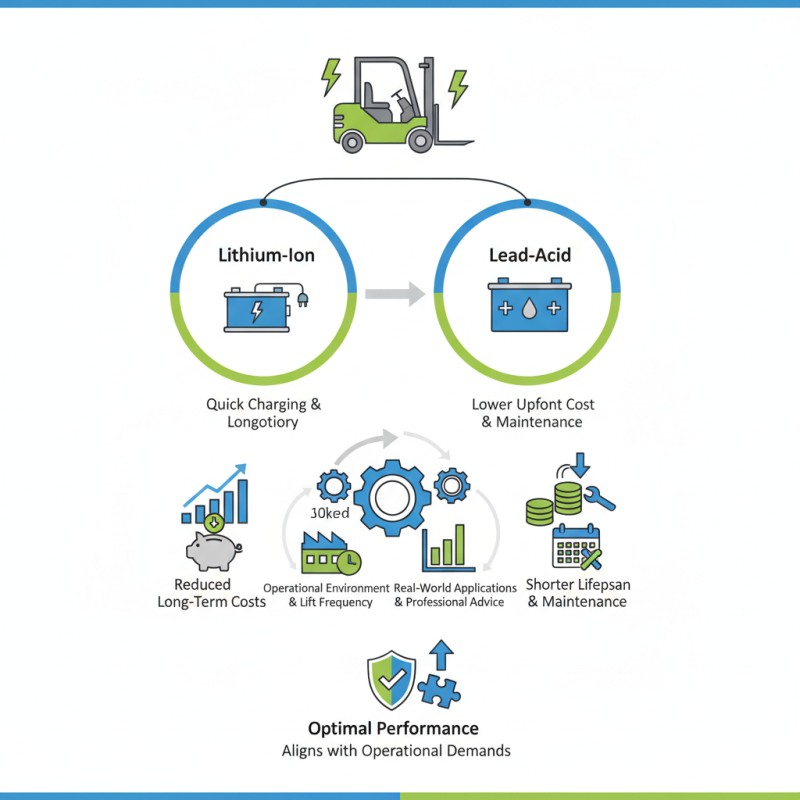
Electric Forklift Batteries come in multiple chemistries, sizes, and capacities. Factors like operational environment and lift frequency influence your decision. While lithium-ion batteries offer quick charging and longevity, lead-acid batteries are more economical upfront. However, their lifespan and maintenance needs can be challenging. Each option has pros and cons that should be weighed thoughtfully.
Choosing an Electric Forklift Battery isn't just about prices and specs. It's about finding a solution that aligns with your operational demands. Consider real-world applications and seek advice from professionals. By doing so, you can avoid common pitfalls and ensure optimal performance for your electric forklift.
Understanding Different Types of Electric Forklift Batteries: An Overview
When selecting an electric forklift battery, it’s crucial to understand the various types available. There are lead-acid, lithium-ion, and nickel-cadmium batteries, each with unique characteristics. Lead-acid batteries are the most common. They are cost-effective but heavier and require regular maintenance. Lithium-ion batteries are gaining popularity for their light weight and efficiency. However, they come at a higher price point and may be more complex to manage.
Understanding the pros and cons of each type can be difficult. It’s essential to consider the operational demands of your business. Lead-acid batteries might seem sufficient for short shifts, but they can fall short for intensive operations. The rapid charging capability of lithium-ion batteries can reduce downtime but may not be suitable for every application.
Investing in the right battery involves more than just looking at the upfront cost. You might need to analyze the total cost of ownership over time. Sometimes, the cheapest option might lead to higher maintenance costs down the road. Reflecting on your specific needs can guide you toward the right choice.
Key Factors in Selecting the Right Capacity for Electric Forklift Batteries
Selecting the right capacity for electric forklift batteries is crucial. It directly impacts performance and operational efficiency. Battery capacity needs depend on the specific applications and the duration of use. For example, a study by the Material Handling Industry of America indicates that electric forklifts can run efficiently for about 5–8 hours on a single charge, depending on the battery size.
When assessing battery capacity, consider the workload. Heavier loads typically require batteries with higher amps to sustain longer operating times. In many cases, batteries with 48 volts and over 600 amp-hours are common choices for mid-capacity applications. However, it’s crucial to avoid over-sizing. An oversized battery may lead to inefficiencies in energy use and increased costs.
In addition, consider temperature impacts. Usage in cold environments can reduce battery efficiency by 20% or more, according to research from the International Energy Agency. Balancing capacity with environmental factors ensures reliable performance. Keep in mind that consistent monitoring of battery health and capacity can prevent unexpected downtimes. This ongoing assessment is essential for maintaining optimal performance in varying operational scenarios.
Evaluating Battery Cycle Life: Importance and Impact on Operations
When selecting electric forklift batteries, cycle life is critical. Cycle life refers to the number of charge and discharge cycles a battery can undergo before its capacity diminishes significantly. Understanding this metric helps businesses estimate their battery longevity and plan for replacements. A shorter cycle life can lead to more frequent downtimes and additional costs.
An electric forklift’s performance heavily relies on its battery efficiency. Batteries with longer cycle lives ensure smoother operations and reduce the need for constant charging. Unexpected battery failures can disrupt workflows. For a logistics company, this can mean delayed shipments and lost revenue. Investing in batteries that deliver stable performance over many cycles is essential.
Consider the specific requirements of your operation. If your forklifts have heavy workloads, prioritize batteries with a higher cycle life. However, newer technologies may claim better performance but can be costly. It’s worth examining the balance between price and expected lifecycle. A penny-wise approach could backfire, leading to higher total costs over time. Assessing real-world examples and insights from experienced operators can provide valuable perspectives.
Assessing Charging Options: Fast Charge vs. Standard Charge for Forklifts
When evaluating charging options for electric forklifts, understanding the difference between fast charge and standard charge is crucial. Fast charging provides a quick way to power up batteries, usually completing a charge in under two hours. This method suits operations needing rapid turnaround times. However, it may lead to thermal stress on batteries, reducing their lifespan. Consider the need for durable batteries that can handle the increased wear and tear.
On the other hand, standard charging takes longer, typically ranging from 6 to 8 hours. Many operators prefer this method for its reliability. It allows for a full charge overnight, ensuring the forklift is ready for the next day. This is a safer option for battery health, preserving performance over time. Yet, it may not suffice for businesses with high usage demands.
Evaluating your operational requirements can help make this decision clearer. Are there peak times when fast charging could save money? Or would a consistent standard charge reduce overall maintenance? Finding the right balance is essential for both efficiency and battery longevity.
Cost-Benefit Analysis: Investment in Quality Batteries for Electric Forklifts
When considering electric forklift batteries, a cost-benefit analysis is crucial. Quality batteries significantly impact operational efficiency and maintenance costs. According to the Battery Council International, investing in high-quality batteries can reduce replacement frequency by up to 30%. This means longer intervals between purchases, saving companies money in the long run.
Analysts recommend evaluating total cost ownership (TCO) when selecting battery options. A study from the Electric Power Research Institute shows that premium batteries have a lower cost per cycle. While they may have a higher upfront price, the return on investment becomes clear with decreased downtime. Furthermore, industry reports highlight that quality batteries enhance energy efficiency, leading to savings of up to 20% in energy consumption.
However, not all businesses can afford top-tier options. A common mistake is undervaluing long-term savings versus initial costs. Some entities opt for cheaper alternatives that lead to higher maintenance demands. This approach often results in increased operational costs over time. Balancing immediate budget constraints with future operational efficiency is vital for a successful selection process.
Cost-Benefit Analysis of Electric Forklift Batteries
This chart represents the cost and average lifespan of various electric forklift battery options. It highlights the significant investment required for higher-quality batteries such as Lithium-Ion, which, despite higher upfront costs, offer longer service lives.

