
Back
Contact us

10 Tips to Choose an Air Conditioner Making Machine

Choosing an Air Conditioner Making Machine is not simply a price comparison. It is a decision about production stability, product quality, and long-term service costs. A machine may look impressive on a showroom floor, yet struggle with thin aluminum tubes, inconsistent brazing, or frequent mold changes. Real factory conditions reveal the truth.

HVAC educator John Barba emphasizes, “The best system is the one that is properly selected, properly installed, and properly maintained.” The same principle applies to manufacturing equipment. A dependable Air Conditioner Making Machine should match your coil dimensions, refrigerant designs, output targets, and available floor space. Check forming accuracy, welding consistency, control-system access, and spare-part availability. Ask for documented testing results, not only attractive photographs. Better evidence matters.

Consider the operator’s daily experience. Can one trained worker adjust the machine safely? Are alarms clear? Does the supplier provide installation training and responsive technical support? Examine energy use during a full production shift, not during a short demonstration. That detail is often missed. Sometimes, the cheapest machine creates expensive delays.

This guide explores ten practical tips for evaluating suppliers, machine construction, automation, maintenance, safety features, and future expansion. It also recognizes an uncomfortable reality: no machine is perfect. Your first specification may be incomplete. Recheck it against actual orders, rejected parts, workshop temperatures, and maintenance records. A careful choice combines expert advice with measurable factory evidence.
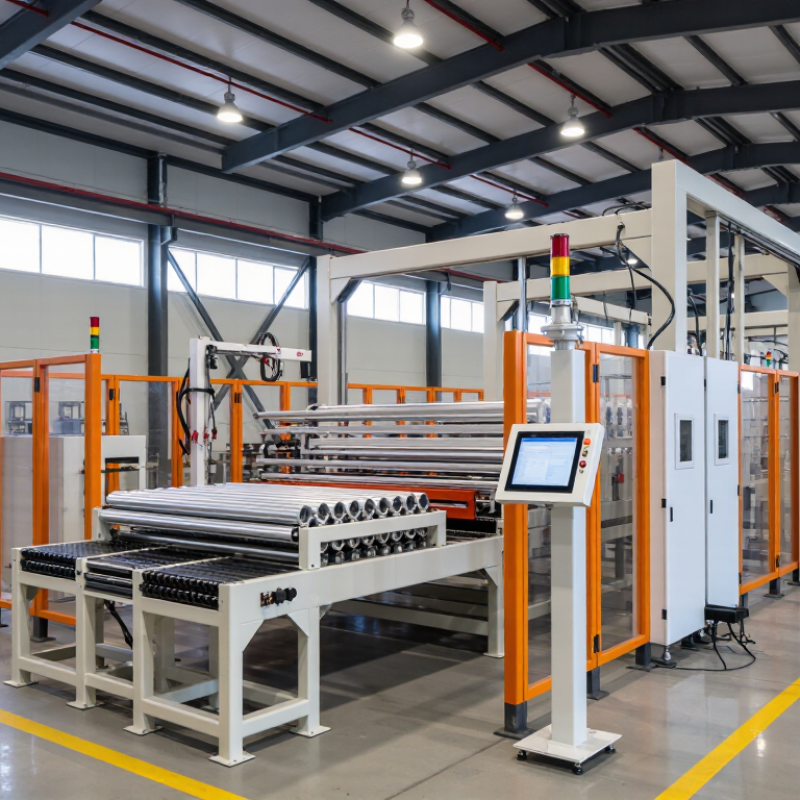
10 Tips to Choose an Air Conditioner Making Machine

Identify Your Required Air Conditioner Production Capacity

10 Tips to Choose an Air Conditioner Making Machine

Identify Your Required Air Conditioner Production Capacity

Production capacity should match real orders, not optimistic forecasts. The International Energy Agency reported about 2.2 billion cooling appliances in use worldwide in 2018. It also expects cooling demand to rise sharply by 2050. This growth creates opportunity, but excess machinery can drain cash and floor space.

Tip 1: Calculate daily output from confirmed orders. Divide monthly demand by working days, then add a controlled buffer of 10–15%. For example, 120,000 units monthly across 25 days requires 4,800 units daily. A 15% buffer raises the target to 5,520 units. Check this number against available labor, testing stations, and warehouse capacity.

Tip 2: Measure the complete production cycle. One machine may process 30 units per hour, yet changeovers, maintenance, and quality checks reduce actual output. A practical utilization rate often sits below the theoretical maximum. I have seen plans fail because they trusted catalog speed too much. That assumption deserves review.

Tip 3: Separate seasonal demand from baseline demand. Energy-efficiency regulations and hotter weather may increase future orders, but forecasts remain uncertain. The IEA’s The Future of Cooling report highlights strong long-term market pressure. Still, buying a line twice as large today may be wasteful. Consider modular equipment, extra shifts, or parallel expansion.

Ask the supplier for verified run data, uptime records, and sample-test results. Confirm whether capacity applies to one model or several designs. Production figures without product specifications can mislead purchasing decisions.

10 Tips to Choose an Air Conditioner Making Machine - Identify Your Required Air Conditioner Production Capacity
Tip Production Planning Dimension Typical Requirement Recommended Machine Configuration Key Selection Check
1 Define the target output 50–100 units per shift Basic semi-automatic assembly line with manual material loading and inspection Confirm that the rated output is based on the same product type, shift length, and working hours as your plan.
2 Match the machine to annual demand 10,000–25,000 units per year Flexible production cells with quick-change tooling and limited automation Calculate annual demand using working days, shifts per day, planned downtime, and seasonal demand.
3 Choose the correct product category Residential split, window, portable, or light commercial air conditioners Use dedicated fixtures for the selected cabinet size, heat exchanger design, compressor layout, and refrigerant circuit Machines designed for one product family may require tooling changes or upgrades for another product family.
4 Allow for peak-season demand Plan capacity at 110%–125% of average demand Modular stations that can support overtime, an additional shift, or future parallel equipment A moderate capacity reserve helps absorb seasonal orders without permanently over-sizing the line.
5 Evaluate line balance Target cycle time = available production time ÷ required units Balanced stations for coil assembly, brazing, leak testing, evacuation, charging, electrical testing, and final inspection The slowest workstation limits the complete line output, so bottleneck time must be checked separately.
6 Check automation level Manual, semi-automatic, or automatic operation according to volume and labor availability Compare labor savings, maintenance skills, changeover time, quality requirements, and return on investment.
7 Confirm utility requirements Electrical power, compressed air, cooling water, ventilation, and exhaust capacity Provide machine utilities according to the supplier's technical specification and local safety regulations Verify voltage, frequency, peak electrical load, air pressure, air consumption, and ventilation requirements before installation.
8 Plan factory space Allow production area plus 20%–30% for material flow, inspection, and maintenance access Compact modular line for limited space, or straight-line and U-shaped layouts for higher throughput Include incoming material storage, work-in-process inventory, finished goods, operator aisles, and emergency exits.
9 Set quality and traceability requirements Leak testing, vacuum verification, refrigerant charge accuracy, electrical safety, and final performance checks Integrate digital gauges, barcode or serial-number recording, data logging, and automatic pass/fail alarms where required Make sure test accuracy, calibration intervals, data storage, and rejected-unit handling match the quality system.
10 Plan future expansion Prepare for 25%–50% additional output when market growth is expected Scalable line with spare control capacity, standardized fixtures, expandable conveyors, and available floor connections Ask whether extra stations, tooling, software licenses, and test capacity can be added without replacing the complete line.
Capacity planning note: Actual output depends on product size, process sequence, operator skill, changeover frequency, material availability, machine utilization, planned maintenance, and quality requirements. Before purchasing, validate the supplier's rated capacity through a product-specific production trial.

Compare Machine Types and Their Manufacturing Processes

Choosing an air conditioner making machine starts with the component it must produce. Cabinet panels often suit roll forming or CNC bending, while copper coils need tube bending, expanding, and brazing equipment. Sheet metal stamping is fast for repeated shapes, but dies can be costly to change. Injection molding fits insulated plastic parts and requires controlled temperature, pressure, and cooling. Start with the process.

Compare actual cycle time, not the supplier’s ideal figure. Check frame rigidity, servo accuracy, tooling life, and material compatibility through sample runs. A reliable machine should record pressure, temperature, speed, and fault history. Ask for dimensional reports from trial parts. Energy use matters, especially during long production shifts. However, I have sometimes overvalued speed and undervalued changeover time. That mistake can quietly reduce yearly output.

Automated lines improve consistency across forming, assembly, leak testing, and inspection. Standalone machines usually cost less and offer easier layout changes, but they require more labor and manual checks. Examine emergency stops, guarding, noise levels, maintenance access, and operator training features. Software should support traceability without making basic adjustments confusing. Pilot testing reveals unstable feeding, burrs, poor seals, or difficult cleaning. Do not skip trials. Choose equipment that matches present demand, future product variation, and the skill level of the production team.

Evaluate Key Technical Specifications and Performance

When choosing an air conditioner making machine, evaluate measurable performance before attractive features. The International Energy Agency reports that cooling accounts for about 10% of global electricity consumption. Its The Future of Cooling report also projects global air-conditioner stock could reach 5.6 billion units by 2050. These figures justify investing in efficient, stable production equipment.

Check rated output, cycle time, and actual throughput across three shifts. A machine producing 300 units hourly may slow when operators change coils or refill materials. Ask for repeatability data, not only maximum speed. For refrigerant charging, verify filling accuracy in grams and confirm the leak-test pressure range. Vacuum stability matters too. Small pressure losses can create large quality problems. Review motor power, standby consumption, and compressed-air demand. The International Energy Agency’s Energy Efficiency 2023 report emphasizes efficiency improvements as a major way to control industrial energy demand.

Request factory acceptance testing with your materials and operators. Measure rejects, unplanned downtime, noise, temperature drift, and maintenance minutes. OEE is useful, but suppliers sometimes calculate it too generously. Check the formula. Controls should record alarms, calibration history, and production changes. Safety interlocks must match applicable local requirements and recognized standards such as ISO 12100. A perfect datasheet is not enough. I would still question impressive figures measured under ideal conditions. Test the machine on a difficult day, when humidity rises and production pressure is real.

10 Tips to Choose an Air Conditioner Making Machine

Compare throughput, dimensional accuracy, leak-test capability, energy use, automation, safety, maintenance access, changeover time, data traceability, and after-sales support before selecting equipment.

The chart shows indicative non-brand reference capacities for common air-conditioner manufacturing stations, measured in finished-unit equivalents per hour. Actual performance depends on product size, process design, staffing, tooling, and quality requirements. Always validate cycle time, accuracy, reject rate, and energy consumption using a representative production trial.

Check Material Compatibility, Automation, and Safety Features

10 Tips to Choose an Air Conditioner Making Machine

Check Material Compatibility, Automation, and Safety Features

Tip 1: Match tooling with copper, aluminum, steel, and approved polymer components. Small mismatches matter. Incompatible materials can cause scratches, corrosion, or poor brazed joints.

Tip 2: Confirm compatibility with refrigerants and lubricants used in your system. Check seals, hoses, coatings, and cleaning fluids. Do not guess.

Tip 3: Request sample production before purchase. Inspect tube deformation, fin alignment, and joint quality under real operating conditions.

Tip 4: Choose automation that controls pressure, temperature, speed, and feeding accuracy.

Tip 5: Require sensors for misalignment, material shortage, and abnormal force.

Tip 6: Select software with traceability, alarm history, and adjustable recipes. Automation improves consistency, but it can also repeat a wrong setting very quickly.

The IEA’s The Future of Cooling report projects cooling electricity demand could reach about 6,200 TWh by 2050.

Tip 7: Install physical guards, emergency stops, and door interlocks.

Tip 8: Check electrical protection and safe access for maintenance.

Tip 9: For systems using lower-flammability refrigerants, review ventilation, leak detection, and ignition-control provisions.

Tip 10: Verify documented testing against applicable international safety standards.

UNEP’s Global Cooling Watch 2023 reports that cooling demand could more than triple by 2050.

That growth makes reliable equipment valuable, yet purchase teams should still challenge optimistic production claims. No checklist catches every issue. Include operator training, spare-part access, and a practical factory acceptance test.

Assess Supplier Reliability, Maintenance, and Total Cost

10 Tips to Choose an Air Conditioner Making Machine

Tip 1: Verify the supplier’s operating history and completed installations. Ask for customer references, production records, and response-time data. Tip 2: Check technical documentation carefully. Clear drawings, electrical specifications, and safety instructions show professional control. Tip 3: Confirm spare-parts availability before signing. A missing sensor can stop an entire production line. Tip 4: Request realistic delivery and commissioning schedules. Promises without measurable milestones deserve caution.

Tip 5: Examine the maintenance plan in practical detail. It should cover lubrication, calibration, cleaning, software updates, and inspection intervals. Tip 6: Ask who will train operators and technicians. Training should include fault diagnosis, not only basic startup. Tip 7: Inspect service access during a factory visit. Filters, belts, and control cabinets should be reachable without dismantling half the machine. Tip 8: Clarify warranty exclusions and emergency support hours. Small wording differences can create large repair bills. This matters.

Tip 9: Calculate total cost, not only purchase price. Include energy use, tooling, labor, consumables, downtime, installation, and future upgrades. Tip 10: Compare performance under your actual materials and output targets. A machine may look efficient during a short demonstration, yet struggle after continuous operation. Ask for test results with similar loads. I have seen buyers overlook maintenance labor because it seemed minor. That assumption was not entirely reasonable. A spreadsheet with conservative energy and downtime estimates gives a more dependable decision.