Back
Contact us

How to Choose the Best Smart Speaker for Your Needs?

Choosing a Smart Speaker is less about buying the loudest device and more about matching it to everyday routines. A compact speaker beside a kitchen counter may handle timers, recipes, and music. A larger model might better fill an open living room. Privacy settings, sound quality, accessibility, and compatibility with existing devices also deserve attention. Small details matter.

Industry data show why this choice is relevant. NPR and Edison Research’s 2023 Smart Audio Report estimated that 35% of U.S. adults owned a smart speaker. Adobe Analytics’ 2019 voice report found that 48% of surveyed consumers used voice assistants for general web searches. These figures describe different behaviors, but they point to a broader shift: voice interfaces are part of how many people access information and entertainment. Adoption alone, however, does not make every device suitable for every household.

A useful comparison starts with practical questions. Does the assistant work with your phone and preferred streaming services? Can you hear it clearly across the room? Are microphone controls easy to find and understand? A low price can be appealing, yet a device that struggles with your smart-home setup may create more friction than convenience. That sounds simple. It is not always. Product specifications rarely show how reliably a speaker understands commands in a noisy kitchen or how comfortable its privacy controls feel over time. The best choice depends on those real-world details, not just a feature list.
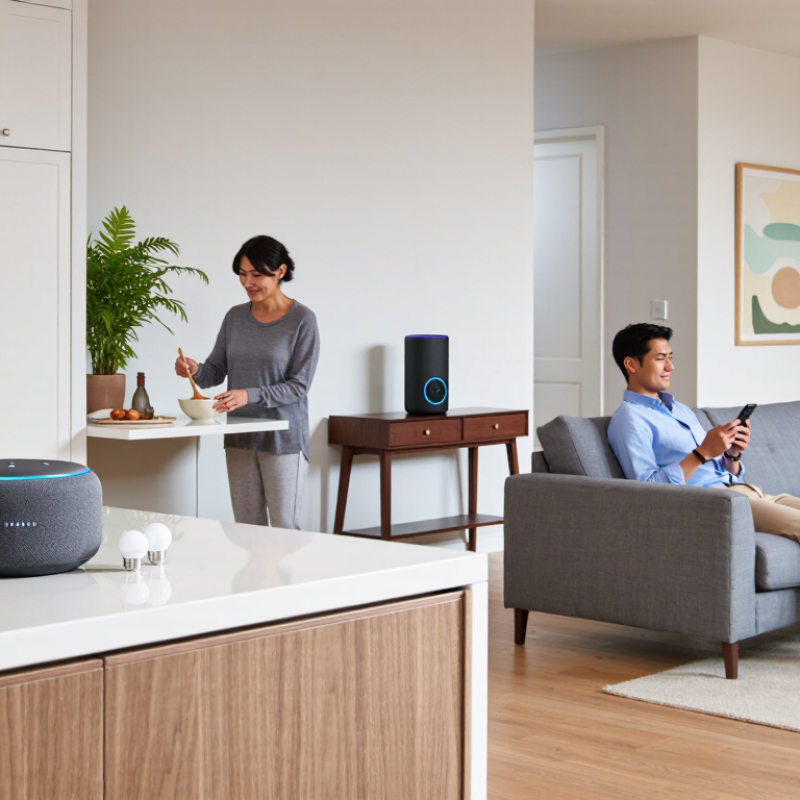
How to Choose the Best Smart Speaker for Your Needs?

Identify Your Main Uses and Listening Habits

Before comparing features, notice what you actually do in the room. Do you play music while cooking, follow podcasts on a commute, set timers, or ask quick questions? The 2024 Infinite Dial report from Edison Research found that 35% of Americans aged 12 and older owned a smart speaker. Ownership alone says little about fit, though. A speaker used for quiet bedtime listening has different needs from one filling an open kitchen.

Track your routine for a few days. Note whether you listen to spoken audio or music, how loud you prefer it, and whether you use voice commands with wet hands or across a noisy room. NPR and Edison Research’s Smart Audio Report documents everyday listening and voice-assistant habits; its findings are a useful reminder that these devices often serve several roles. If clear speech matters most, prioritize intelligibility at low volume. For music, consider room size and whether you want stereo pairing or multiroom playback. Check microphone controls and physical mute options if privacy matters to you.

Be honest about what you’ll use. A long feature list can look impressive, then gather dust. I’d also test voice recognition from the spot where you usually sit, if possible; showroom demos are not your kitchen. Small detail. Your habits—not a spec sheet—should set the shortlist.

Compare Voice Assistants and Connected Device Compatibility

A smart speaker is only useful when its voice assistant understands your routines and can reach the devices you own. Parks Associates’ 2024 smart-home research puts U.S. smart-speaker ownership at roughly four in ten internet households. That scale makes compatibility more than a technical detail. Check whether the assistant can control your lights, thermostat, and door sensors, not just answer questions. Small gaps matter. A spoken command that turns on a lamp but misses the hallway light can become frustrating fast.

Look for support for the same connection standards across your devices. The Connectivity Standards Alliance reported more than 1,000 Matter-certified products and software components by 2024, reflecting wider cross-device support. Still, certification does not guarantee every feature works with every assistant. Read the device’s compatibility list, and check whether setup requires a separate app or hub. Try a simple test: ask the speaker to switch on a specific room’s lights, then confirm the result. I still check twice; product descriptions can be vague. Also compare privacy controls, microphone mute options, and how easily you can remove a connected device when your setup changes.

Evaluate Sound Quality and Fit for Your Room

A smart speaker can sound clear in a shop and muddy at home. Room shape, hard surfaces, and distance from walls all affect what you hear. The ITU-R BS.1116 listening-room standard uses a reverberation-time range of 0.2 to 0.4 seconds across key frequencies. That is a controlled listening reference, not a home requirement, but it shows why room echo matters. In a tiled kitchen, claps may ring; in a carpeted bedroom, sound can feel less lively.

Listen for more than loudness. Try spoken voices, a bass-heavy track, and a quiet passage at your usual volume. Check whether speech stays distinct from across the room, and whether bass turns boomy near a corner. Move the speaker before judging it; even a small shift can change the result. Personal taste matters, too. I would not treat one quick demo as proof.

Tips: Measure the room and note the nearest wall. Start with the speaker on a stable shelf, away from corners and soft obstructions. Test from your usual seat, not directly beside it. If sound feels harsh, add soft furnishings or change the angle. If bass overwhelms voices, move the unit farther from the wall. Keep expectations realistic: one compact speaker may not fill a large, open room evenly.

Review Privacy, Controls, and Connectivity Options

A smart speaker sits close to private conversations, so inspect its controls before comparing sound quality. Look for a physical microphone switch, a clear recording-deletion option, and settings for voice recognition and purchase permissions. NIST’s NISTIR 8259A baseline highlights data protection, access control, and secure software updates as core IoT device capabilities. These are useful questions to ask, not guarantees of perfect privacy. A mute button may disable the microphone, but check the device manual to confirm what it actually mutes. Small details matter.

Connectivity affects daily use. Edison Research’s Infinite Dial 2024 reports that 36% of Americans aged 12 and older own a smart speaker, making compatibility with existing home setups worth checking. Confirm that the speaker supports your Wi-Fi band, your phone’s operating system, and the audio services you use. If you plan to move it between rooms, test how reliably it reconnects after a weak signal. Test it at home. A crowded kitchen can expose dropouts that a quiet showroom hides. I would also check whether guests can play audio without gaining access to personal settings; that distinction is easy to overlook, and product descriptions do not always make it obvious.

Balance Essential Features Against Your Budget

A smart speaker can seem inexpensive until extra features enter the decision. Set a firm price limit before comparing models. Then list what you will use weekly: timers, music, voice-controlled lights, or calls. If you mainly need kitchen timers and weather updates, a clear microphone matters more than powerful bass. Small room, simple needs. Paying for a display or stronger speakers may add little value in that case.

For music in a larger room, listen for balanced sound rather than impressive volume alone. Check whether the speaker works with your phone, home network, and existing smart devices. A mismatch can turn a bargain into a frustrating purchase. Also review privacy controls, such as microphone muting and voice-history deletion. These features should be easy to find, not buried in settings. Consider whether any services you want require separate fees, and include those costs in your budget.

I would leave a little flexibility in the budget for better sound or simpler controls, but not for features you cannot name a use for. Product descriptions can make every upgrade seem essential. They are not. Sound is also difficult to judge in a noisy shop, so my preference might be wrong for your room. Think about where the speaker will sit, how far away you usually are, and whether quiet speech needs to be heard over a running tap.

How to Choose the Best Smart Speaker for Your Needs? — Balance Essential Features Against Your Budget

Compare typical smart-speaker price tiers and features before you buy. Actual specifications and prices vary by model and region.

Buying Dimension Entry-Level
Under $50
Mid-Range
$50–$150
Premium
Over $150
Typical best fit Voice commands, timers, weather, and basic smart-home control. A balance of clearer music playback, useful controls, and smart-home features. Room-filling sound, more detailed listening, or a speaker designed for a larger space.
Typical audio performance Usually suited to spoken audio and casual background listening; bass and maximum volume are generally limited. Often provides fuller sound and better balance than compact entry-level speakers. Generally offers stronger output and fuller bass, though room size and speaker placement still matter.
Voice assistance Commonly supports voice requests, alarms, reminders, and compatible smart-home controls. Usually offers the same core voice functions; some models add more microphones or physical controls. Typically includes core voice functions, but premium sound does not guarantee better recognition in every room.
Smart-home compatibility Check that the speaker supports the devices and connection standards you already use. May support a broader set of device connections; confirm compatibility before purchasing. May include additional smart-home connectivity, but support differs by model and can require setup or a hub.
Multi-room and stereo use Some models can join compatible speakers in a multi-room group; check whether the feature is supported. Multi-room playback or pairing two compatible speakers may be available. Often a stronger option for multi-room listening or stereo pairing, subject to model compatibility.
Connectivity and power Typically uses Wi-Fi and mains power; Bluetooth availability varies. Typically uses Wi-Fi and mains power; check for Bluetooth, auxiliary input, or other desired connections. Typically uses Wi-Fi and mains power; some models offer extra inputs or playback options.
Privacy and controls Look for a microphone-mute control and review voice-history and privacy settings. Check for a physical mute switch or button, plus app-based privacy controls. Confirm that the privacy controls suit your household; extra cost does not necessarily mean stronger privacy.
What to prioritize Reliable voice control, clear spoken audio, and compatibility with your devices. Sound quality, microphone performance, and the connections you will actually use. Listening quality, room coverage, placement, and confirmed compatibility with your setup.

Practical tip: Check current local pricing, supported services, Wi-Fi requirements, and smart-home compatibility for the exact model. A less expensive speaker may be the better choice if it meets your listening and control needs.

Article Source: