What Is Embossed Aluminum Sheet Used For?
Embossed Aluminum Sheet is a flat metal product with raised patterns pressed into its surface. These patterns can improve stiffness, surface grip, and visual appeal. Common designs include five-bar, diamond, stucco, and corrugated finishes.
Its applications span construction, transportation, refrigeration, and industrial equipment. In commercial buildings, embossed panels often cover walls, ceilings, columns, and service areas. Their textured surfaces can hide minor scratches and reduce visible wear. In factories, patterned sheets may support walkways, equipment platforms, stair treads, and protective guards. However, surface texture alone does not guarantee safe footing. Slip resistance still depends on alloy, pattern depth, contamination, installation angle, and testing conditions.
Industry demand supports aluminum’s expanding role. The International Aluminium Institute’s Aluminium Sector Greenhouse Gas Pathways to 1.5°C highlights aluminum’s importance in transport, buildings, and renewable-energy systems. The U.S. Geological Survey’s Mineral Commodity Summaries 2025 also identifies aluminum as a major global industrial material. These reports show strong long-term relevance, but they do not prove every embossed product is suitable for every environment.
Material selection requires practical judgment. ASTM B209 and EN 485 provide recognized references for aluminum sheet specifications. Buyers should verify alloy, temper, thickness, pattern height, flatness, corrosion exposure, and load requirements. A bright mill finish may suit interior decoration, while anodized or coated surfaces may better tolerate moisture and cleaning chemicals. Recycled content also matters. European Aluminium’s circularity guidance emphasizes collection, sorting, and remelting efficiency. Still, recycling claims need supplier documentation. Embossed Aluminum Sheet is versatile, but choosing it responsibly requires more than comparing appearance and price.
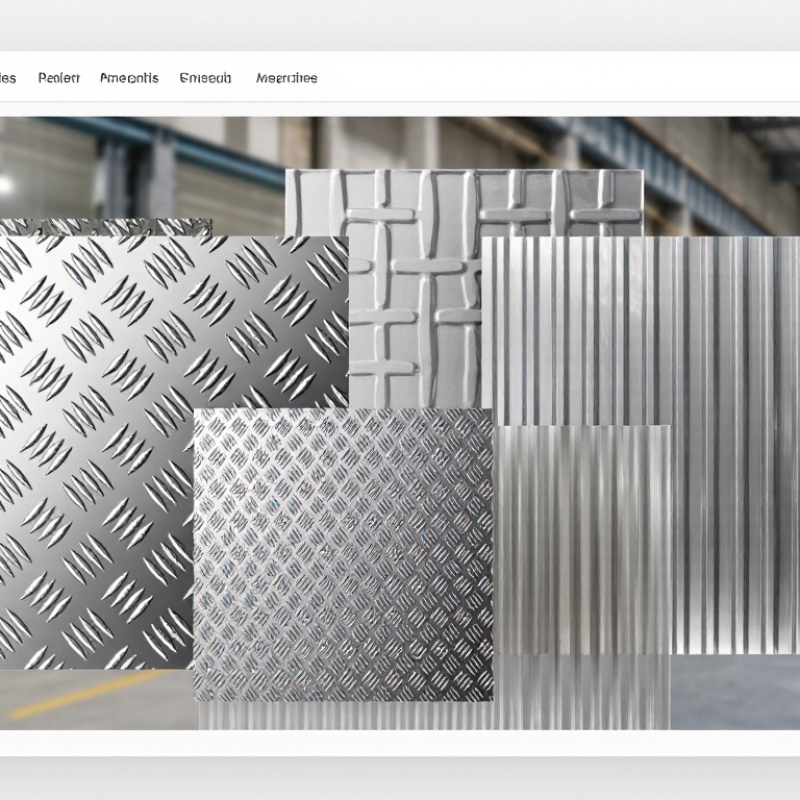
Definition and Key Features of Embossed Aluminum Sheet
Embossed aluminum sheet is a flat aluminum panel with a raised or recessed pattern. Common designs include diamond, stucco, and ribbed textures. The pattern increases visual depth and can improve surface stiffness without adding much weight. Aluminum also offers good corrosion resistance, thermal conductivity, and easy fabrication.
According to the U.S. Geological Survey’s Mineral Commodity Summaries 2024, global aluminum production reached about 70 million metric tons in 2023. This large supply supports applications in construction, transport, equipment, and industrial interiors. Embossed sheets are used for stair treads, wall panels, vehicle flooring, machine guards, HVAC coverings, and protective enclosures. Their textured surface can hide minor scratches and reduce visible dirt. However, embossed aluminum is not automatically slip-proof. Oil, water, footwear, and pattern depth still affect traction. That detail is often underestimated.
Tips: Select the alloy, thickness, and pattern together. Check ASTM B209 requirements when suitable. For walking surfaces, request tested slip-resistance data. Confirm the forming direction before cutting. A raised pattern may change bending behavior. It is not magic. Surface coating and drainage also matter, especially outdoors. I would avoid choosing by appearance alone; a bright panel may look durable but still suffer dents, galvanic corrosion, or poor support spacing.
How Embossed Aluminum Sheet Is Manufactured
Embossed aluminum sheet is used for wall panels, vehicle flooring, insulation cladding, and protective equipment covers. Its raised pattern improves grip and hides minor scratches. It can also scatter light across ceilings and decorative surfaces. Choosing the wrong pattern may increase cleaning difficulty. That practical issue is often overlooked.
Manufacturing begins with a suitable aluminum alloy, commonly selected for strength, formability, and corrosion resistance. A cast slab is heated and reduced through rolling mills until it reaches the required thickness. The sheet then passes between patterned rollers. Pressure transfers diamonds, lines, or other textures onto one surface. Tension must remain stable during this stage. Otherwise, the pattern can become uneven near the edges.
Annealing may follow embossing. It softens the metal and reduces internal stress, but excessive heat can weaken the sheet. Quality teams check thickness, pattern depth, flatness, surface defects, and mechanical performance. The International Aluminium Institute reports that recycling aluminum uses about 95% less energy than primary production. This supports recycled content, although recycled feedstock still needs careful sorting and alloy control. World Aluminium reported global primary aluminum production at roughly 70 million tonnes in 2023, showing the scale of this manufacturing chain.
Tips: Match the pattern to the application. Deeper textures improve traction but may collect dirt. Confirm alloy, temper, thickness, and coating requirements before production. Inspect sample sheets under angled light; shallow defects are easy to miss.
What Is Embossed Aluminum Sheet Used For? — How It Is Manufactured
Embossed aluminum sheet is used for anti-slip flooring, vehicle and toolbox panels, insulation cladding, wall and ceiling systems, and decorative surfaces. The sheet is typically produced by uncoiling, cleaning, annealing, roll embossing, leveling, cutting, and finishing the aluminum.
Typical industry specification ranges are shown in millimeters; actual thickness depends on the alloy, embossing pattern, strength requirements, and end-use design.
Main Types and Surface Patterns of Embossed Aluminum Sheet
Embossed aluminum sheet is used where a light, rigid surface needs better grip or visual texture. Its raised pattern can hide minor scratches and reduce the appearance of dents. Common applications include stair treads, vehicle flooring, wall panels, equipment covers, and decorative ceilings. In wet areas, the pattern may improve underfoot traction, but it cannot replace proper safety design.
The main types differ by thickness, alloy, temper, and embossing depth. Diamond plate has repeated rhombus shapes and is widely selected for walkways, toolboxes, and loading platforms. Five-bar sheet uses grouped raised lines, creating a more directional appearance.
Stucco embossed sheet has a fine, irregular texture that softens reflections and disguises surface marks. Orange-peel patterns offer a similar effect with a tighter, granular finish. Some sheets are embossed on one side, while others have texture on both sides.
Surface treatment also changes performance. Mill-finish aluminum keeps a bright metallic appearance, while anodized or coated surfaces provide added color and environmental resistance. Pattern depth should match the working load and cleaning method. Deep grooves may improve grip, yet they can trap dirt and moisture. In fabrication work, I have found that a visually attractive pattern is not always the most practical choice. Sheet thickness, edge finishing, drainage, and fastener selection deserve equal attention. Small errors in measurement can make installation surprisingly difficult.
Common Industrial, Commercial, and Architectural Uses
What Is Embossed Aluminum Sheet Used For?
Common Industrial, Commercial, and Architectural Uses
Embossed aluminum sheet is widely used where surface texture matters. Its raised pattern can improve grip, reduce visible scratches, and add modest stiffness without greatly increasing weight. The International Aluminium Institute estimates that buildings consume about one quarter of global aluminum demand. This explains its strong presence in facades, ceiling panels, wall protection, and roofing details. A patterned surface also catches light differently, creating a controlled architectural finish. It is practical, but not automatically structural.
In industrial settings, embossed sheets appear on equipment covers, machine guards, walkways, ramps, and vehicle interiors. Diamond and five-bar patterns are common on platforms because they help improve traction around oil, dust, or light moisture. Fabricators also use them for storage boxes and protective panels. USGS Mineral Commodity Summaries 2024 reported global primary aluminum production near 70 million metric tons in 2023. That scale supports steady sheet availability, although alloy and temper still require careful checking.
Commercial projects often use embossed aluminum around loading areas, service corridors, elevators, and shop interiors. It resists corrosion better than many uncoated steels, especially with suitable finishing. Yet cleaning chemicals can damage the surface. Outdoor exposure can also reveal weak coating choices. One overlooked issue is flatness after cutting and forming. The pattern may hide small dents, but it can complicate precise joining. Engineers should verify thickness, slip performance, fire requirements, and maintenance conditions before specification. Fancy texture is not a substitute for testing.
Benefits, Limitations, and Selection Considerations
Embossed aluminum sheet is valued for its raised pattern, low weight, and clean metallic appearance. The texture can hide minor scratches, fingerprints, and surface marks better than a smooth sheet. It also improves visual depth on wall panels, ceilings, equipment covers, vehicle interiors, and decorative enclosures. In practical fabrication, installers appreciate aluminum because it cuts easily and resists rust in many indoor and outdoor environments.
The pattern has limitations. Deep embossing can reduce flat contact with fasteners or gaskets. Dust may collect in narrow grooves, especially in food-service or industrial areas. Thin sheets can still dent, despite their textured surface. Forming may also flatten the pattern near bends. A polished finish may look excellent on a sample, yet show scratches clearly under strong lighting. The attractive texture is not a substitute for structural strength.
Selection should begin with the working environment. Choose the alloy and temper according to bending, cutting, and load requirements. Check sheet thickness, embossing depth, surface finish, and allowable tolerances. For humid or chemical areas, confirm corrosion resistance with reliable technical data. Sample testing matters. It is easy to overestimate durability from appearance alone. Fabricators should inspect a full-size piece, test fasteners, and review cleaning methods before ordering. Pattern direction can affect reflections, panel alignment, and visual consistency. Small mistakes become obvious across a large wall.
What Is Embossed Aluminum Sheet Used For? - Benefits, Limitations, and Selection Considerations
| Application Area | Typical Uses | Relevant Characteristics | Main Selection Considerations |
| Flooring and Walkways | Industrial platforms, vehicle steps, ramps, service walkways, and loading areas. | Raised patterns can improve traction and help conceal minor surface scratches. | Choose a pattern and thickness suitable for the expected foot traffic, equipment loads, span, and local slip-resistance requirements. |
| Wall and Ceiling Panels | Interior cladding, decorative wall panels, suspended ceilings, and protective lining. | Low density, corrosion resistance, and a textured appearance provide both functional and decorative value. | Consider surface finish, reflectivity, cleaning requirements, panel flatness, and compatibility with the supporting structure. |
| Transportation Equipment | Trailer floors, truck bodies, vehicle interiors, access steps, and equipment enclosures. | Aluminum offers a high strength-to-weight ratio and does not require painting for basic corrosion protection. | Check forming requirements, vibration exposure, impact risk, joint design, and galvanic compatibility with steel components. |
| Industrial Equipment | Machine guards, tool cabinets, equipment covers, partitions, and protective panels. | The embossed surface can add visual texture and may increase resistance to minor denting compared with a flat sheet of the same nominal thickness. | Verify actual stiffness, impact resistance, bend allowance, edge treatment, and any required electrical or thermal properties. |
| Cold-Storage and HVAC Systems | Protective jacketing, insulation covers, duct surfaces, and mechanical-room panels. | Light weight, corrosion resistance, and a textured finish can provide a durable outer covering. | Specify the operating temperature, moisture exposure, insulation system, joint sealing method, and cleaning chemicals. |
| Architectural and Decorative Work | Feature walls, signage backgrounds, furniture panels, interior partitions, and decorative trim. | Embossing creates repeating visual patterns and can improve the perceived depth of the surface. | Match pattern scale, color, reflectivity, grain direction, tolerances, and finish consistency across panels. |
| Factor | Benefits | Limitations or Risks | Practical Guidance |
| Weight | Aluminum is substantially lighter than steel, which can simplify handling and reduce dead load. | A lighter sheet may require additional supports or a thicker gauge for the same structural performance. | Base calculations on the specified alloy, temper, nominal thickness, embossing depth, and support spacing. |
| Corrosion Resistance | A naturally forming oxide layer helps protect aluminum in many atmospheric environments. | Salt, strong acids, strong alkalis, and contact with dissimilar metals can cause localized or galvanic corrosion. | Review the chemical environment and isolate aluminum from incompatible metals where necessary. |
| Slip Resistance | Raised patterns may improve traction compared with smooth sheet under suitable dry conditions. | Performance varies with water, oil, ice, footwear, contamination, pattern geometry, and wear. | Use application-specific slip testing or applicable building and workplace safety requirements rather than relying on appearance alone. |
| Formability | Many aluminum sheet alloys can be cut, drilled, and formed with standard metalworking equipment. | Embossing changes the effective geometry and can complicate tight bends, deep forming, and dimensional control. | Confirm minimum bend radius, tooling clearance, bend direction, and whether the pattern may flatten or distort. |
| Thermal Performance | Aluminum conducts heat efficiently and can reflect radiant energy when given a suitable bright finish. | It is not a substitute for insulation, and thermal expansion can affect joints and fasteners. | Allow for movement and specify the complete insulation, ventilation, and fire-performance system. |
| Maintenance | The textured finish can hide minor marks and usually requires only routine cleaning. | Pattern recesses may retain dirt, and abrasive cleaners can damage the surface finish. | Use a cleaning method compatible with the alloy and finish, and inspect areas exposed to chemicals or standing water. |
Selection Checklist: Specify the alloy and temper, nominal thickness, embossing pattern and height, sheet dimensions, surface finish, flatness, forming requirements, load conditions, corrosion environment, applicable standards, and required certificates before purchase.

