
Back
Contact us

Why Choose Disc Glass Insulators for Power Lines?

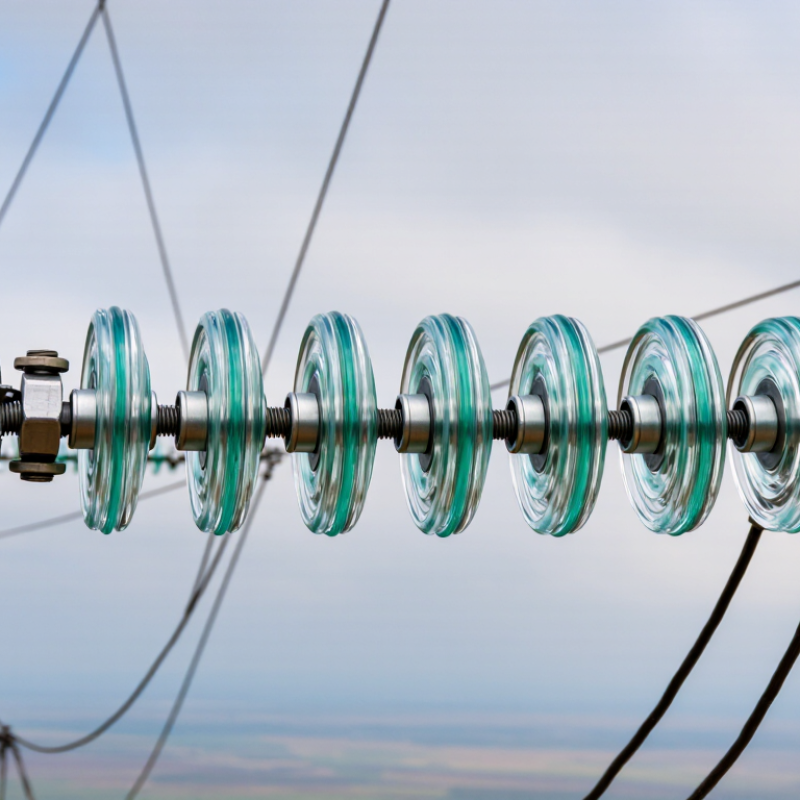
Disc Glass Insulators remain a familiar sight on transmission lines, where each glass unit helps separate an energized conductor from its supporting structure. Their appeal is practical: toughened glass resists weathering, and damage can often be spotted during a visual inspection. A cracked shell looks different from an intact, clear disc. That visibility can help maintenance crews identify trouble, though it does not replace scheduled testing or careful inspection.

Why Choose Disc Glass Insulators for Power Lines? The answer depends on the line’s voltage, climate, mechanical loads, and maintenance plan. Glass offers useful electrical and mechanical performance, but no insulator suits every site. Pollution, salt spray, ice, and switching surges all matter. So does correct installation. Engineers compare these conditions before selecting a string length and configuration.

A note on expertise: no source or verified expert quotation was provided, so I cannot responsibly attribute a direct quote to a named industry specialist. The engineering principle is clear, however: reliable insulation comes from matching the insulator to the service environment and inspecting it consistently. Small details matter. A chipped disc deserves attention, not guesswork.
Why Choose Disc Glass Insulators for Power Lines?

Define Disc Glass Insulators Under IEC 60305 for Lines Above 1 kV

Disc glass insulators are cap-and-pin units used in strings on overhead power lines. For lines with a nominal voltage above 1 kV, IEC 60305 specifies characteristics for glass and ceramic units. It also provides standard dimensions and mechanical and electrical requirements. This gives utilities and engineers a shared basis for comparing units.

A typical glass disc has a toughened-glass body, a metal cap, and a pin. Cement joins the fittings to the insulating body. Several units connect into a string, with the string length chosen for the line’s voltage and conditions. The glass surface is easy to inspect from the ground, though a close inspection may still be needed to assess damage.

The standard defines the unit, not every detail of a complete line design. Selection still depends on factors such as pollution, wetting, altitude, and mechanical loading. A rating on paper cannot describe every site. That limitation matters. Engineers should check the relevant standard edition, project specifications, and inspection results before approving a string. A small chip or unclear test record deserves attention, even when the unit appears serviceable.

Trace Mechanical Load Through a Typical 70 kN U70B Unit

A disc glass insulator earns its place by combining electrical insulation with a visible, testable mechanical load path. In a typical suspension string, conductor tension passes through the clamp and connecting hardware into each cap-and-pin unit. On a U70B disc, the metal fittings and cement joint transfer that force through the glass shell to the next unit. The glass is doing real structural work. IEC 60305 classifies U70B units at a nominal electromechanical failing load of 70 kN. That figure describes a test rating, not a recommended continuous working load. The distinction matters.

In service, steady conductor weight is only part of the picture. Wind, uneven span loading, and hardware movement can add changing forces to the string. IEC 60383-1 provides test requirements for glass and ceramic insulators, including mechanical and electromechanical checks. Those tests help verify performance, but field inspection still counts: crews look for cracked or punctured shells, corrosion, and loose fittings. A clean surface is not proof of a sound cement joint. The drawing is tidy; field loading is not. Disc glass can also make damage easier to spot, since a broken shell is generally visible from the ground or during close inspection. That practical advantage is useful, though it does not replace testing.

Determine String Length from System Voltage and Insulation Coordination

Why Choose Disc Glass Insulators for Power Lines?

Determine String Length from System Voltage and Insulation Coordination

Disc glass insulators are chosen for their mechanical strength and because some shell damage is visually apparent during inspection. But string length is not determined by nominal system voltage alone. Start with the highest operating voltage, then assess insulation coordination: expected lightning and switching surges, grounding conditions, and required withstand levels. Each disc adds insulation, yet the required count depends on the unit’s electrical rating and the line’s actual environment.

Pollution, salt spray, dust, and altitude can change performance. Engineers may account for these conditions by specifying greater creepage distance or adjusting the string arrangement. They should also check clearances, hardware, and mechanical loading. Use applicable standards and project-specific studies; a simple voltage-to-disc count can be a useful estimate, not a final design. A tidy calculation can still miss a harsh site condition. That deserves a second look.

Tips: Confirm the system’s maximum voltage, pollution severity, and surge protection assumptions before setting string length. Compare calculations with field conditions and inspection records. Glass helps reveal certain defects, but it does not replace electrical testing or qualified inspection.

Compare Glass, Porcelain, and Polymer Using IEC 60383 Test Criteria

IEC 60383 provides a useful comparison framework for glass and porcelain disc insulators, but the exact tests depend on the insulator type and rating. Its procedures include visual and dimensional checks, alongside specified mechanical and electrical tests. On a test bench, this can mean checking dimensions, applying mechanical load, and verifying electrical performance against the relevant requirements. Glass may reveal chips or cracks during inspection; porcelain’s opaque body can make some defects harder to see. Neither observation alone proves service life.

Polymer insulators should not be judged by simply applying the same IEC 60383 results. IEC 61109 and IEC 62217 address composite-insulator requirements and tests, including concerns such as housing condition, interfaces, and resistance to tracking and erosion. That distinction matters when comparing materials: a pass under one material-specific test does not equal a pass under another. Not quite a level playing field. In field assessments, engineers also consider pollution, wetting, mechanical loads, and inspection access. Glass offers visible clues, yet surface appearance is not a full diagnosis. Standards guide decisions; they cannot remove every uncertainty.

Why Choose Disc Glass Insulators for Power Lines? — Compare Glass, Porcelain, and Polymer Using IEC 60383 Test Criteria

Comparison dimension Disc glass Porcelain Polymer composite Relevant standards and test context
Typical construction Toughened glass insulating body with metal fittings; commonly supplied as units for suspension strings. Glazed electrical porcelain insulating body with metal fittings; used in suspension strings and other line-insulator designs. Fiberglass-reinforced resin core, polymer housing and metal end fittings; commonly supplied as a complete composite insulator. IEC 60383-1 covers ceramic and glass insulators for overhead lines. Composite insulators use their applicable composite-insulator standards instead.
IEC 60383 applicability Within the ceramic-and-glass product scope, subject to the applicable product type and standard edition. Within the ceramic-and-glass product scope, subject to the applicable product type and standard edition. Not covered as a polymer product by IEC 60383; IEC 61109 and IEC 62217 are relevant standards for applicable composite line insulators. IEC 60383 is not a single cross-material rating system. A meaningful comparison uses the relevant standard and test requirements for each product type.
Mechanical performance verification Mechanical or electromechanical strength is verified using the applicable tests and specified failing-load requirements for the unit or assembly. Mechanical or electromechanical strength is verified using the applicable tests and specified failing-load requirements for the unit or assembly. Mechanical performance is assessed under composite-insulator requirements, including product-specific mechanical tests; IEC 60383 failing-load criteria should not be assumed to apply directly. Check the specified mechanical rating, test method, fittings, and assembly configuration. Results from different product standards are not automatically interchangeable.
Electrical performance verification Electrical tests are selected according to the insulator type and applicable specification; string performance also depends on unit count and arrangement. Electrical tests are selected according to the insulator type and applicable specification; string performance also depends on unit count and arrangement. Electrical and environmental test requirements are addressed through the applicable composite-insulator standards and product specification. Compare the required voltage tests and acceptance criteria for the actual product and application; do not treat different standards’ test results as a direct material ranking.
Temperature-cycle considerations Applicable temperature-cycle testing checks the response of the glass unit and its fittings to specified thermal conditions. Applicable temperature-cycle testing checks the response of the porcelain unit and its fittings to specified thermal conditions. Thermal and environmental performance is evaluated under composite-insulator requirements appropriate to the design and materials. Use the relevant standard’s procedure and acceptance criteria. Test conditions should be checked against the exact standard edition and product category.
Inspection after damage or failure A failed toughened-glass unit commonly shows visible fragmentation, which can make some damaged units easier to identify during line inspection. Chips, cracks, or internal damage may require careful inspection; not every defect is as immediately visible as a shattered glass unit. Inspection focuses on the housing, interfaces, fittings, and other condition indicators; some internal damage may not be visible externally. Inspection ease is a practical maintenance consideration, not a substitute for required design, type, sample, or routine tests.
Surface and environmental considerations Glass has a non-porous insulating surface; pollution, wetting, and site conditions still affect flashover performance and washing needs. Glazed porcelain has a non-porous surface; pollution, wetting, and site conditions still affect flashover performance and washing needs. Polymer housing behavior depends on material formulation, design, contamination, weathering, and service conditions. Assess pollution severity, climate, UV exposure, maintenance practices, and the applicable environmental tests for the selected product.
Practical reason to consider disc glass Can be a suitable choice where standardized disc-string construction, visible indication of many glass-unit failures, and ceramic/glass qualification under IEC 60383 are useful. Can be a suitable choice where ceramic construction and established porcelain-insulator designs meet the project’s electrical, mechanical, and maintenance requirements. Can be a suitable choice where a composite design meets the project’s loading, environmental, handling, and inspection requirements. No material is best for every line. Selection should be based on line design, service environment, verified test results, maintenance strategy, and applicable standards.

Note: Confirm the applicable IEC standard edition, product category, test schedule, and acceptance criteria in the project specification. IEC 60383 covers ceramic and glass line insulators; polymer composite insulators require their applicable standards.

Assess Failure Visibility, Maintenance Needs, and Service-Life Trade-Offs

Disc glass insulators make some failures easier to spot. When a glass shell breaks, the remaining hardware often looks noticeably different within the string. A patrol crew may identify the damaged unit from the ground, then confirm it during closer inspection. That visual cue can help prioritize repairs, but it is not a complete diagnostic. Internal damage, loose fittings, or early electrical deterioration may not be obvious from a roadside view. Weather and viewing angle matter, too.

Maintenance planning depends on the line and its environment. A damaged disc can often be replaced individually, while crews still need to check adjacent units, fittings, and the structure for signs of stress. On a dusty route, contamination may call for washing or closer monitoring, regardless of insulator material. Glass can offer a long service life, but it is not maintenance-free. Mechanical loading, corrosion around metal parts, installation quality, and repeated temperature changes all affect performance. The strings are also relatively heavy, which matters when specifying structures and handling equipment. That trade-off is easy to underestimate. In practice, failure visibility is useful, but it should support—not replace—scheduled inspections and electrical testing.

Why Choose Disc Glass Insulators for Power Lines?

Failure Visibility, Maintenance Needs, and Service-Life Trade-Offs

This chart shows typical design characteristics, not measured failure rates or a universal reliability ranking. A shattered glass disc is generally easy to spot, and individual disc units can be replaced. Porcelain disc strings are also modular, but some electrical punctures may be harder to identify visually. Composite long-rod insulators are typically replaced as a whole unit. Actual service life and maintenance needs depend on design, operating conditions, pollution, and inspection practices.