What is Desizing Enzyme and How Does It Work?
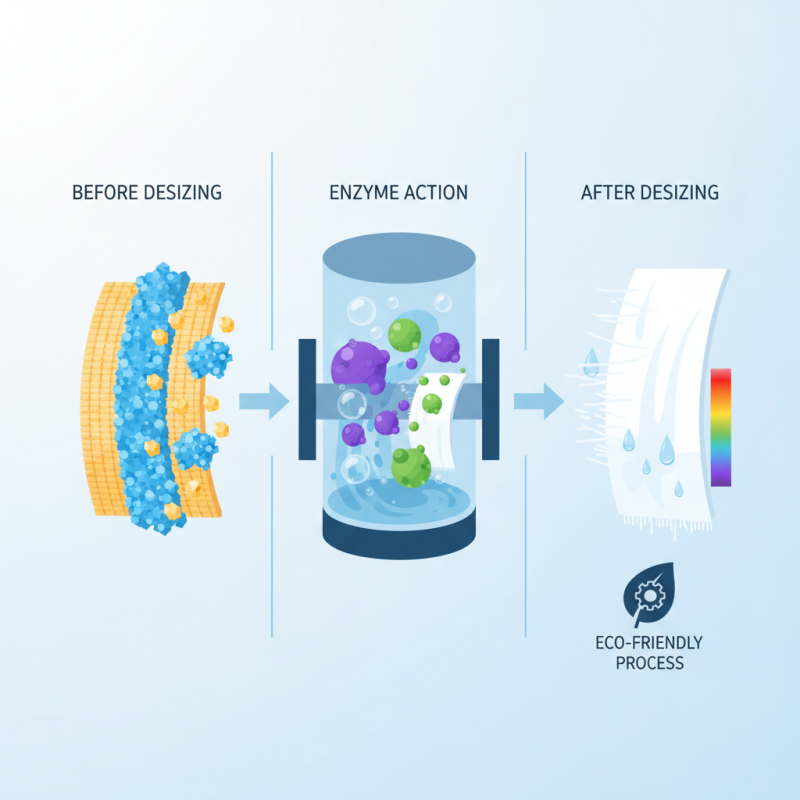
Desizing is a crucial step in textile processing. It involves removing size materials applied to fabrics before weaving. The role of desizing enzymes is significant in this process. These enzymes effectively break down sizing agents, such as starches. By doing so, they prepare the fabric for further treatments.
desizing enzymes target specific compounds. They convert larger, complex molecules into smaller, more manageable ones. This process improves the quality of the final textile product. It also enhances the fabric's absorbency and dye uptake. However, the efficiency of desizing enzymes can vary. Factors such as temperature and pH levels can impact their effectiveness.
It is important to consider the environmental aspects of using desizing enzymes. While they are often more eco-friendly than traditional methods, improper use can lead to concerns. This highlights the need for careful implementation in textile production. Understanding how desizing enzymes work can lead to better practices in the industry.
What is Desizing Enzyme?
Desizing enzymes play a crucial role in the textile industry. They help remove sizing agents from fabrics after weaving. Sizing agents can improve the weaving process but remain on the fabric. This residue can create issues during dyeing and finishing. Removing it ensures better absorption of colors and chemicals.
The desizing process involves natural enzymes like amylase. These enzymes specifically target starch-based sizing agents. They break down the starch into simpler sugars. This reaction usually occurs in a warm, aqueous environment. The fabric then must be rinsed to wash away the by-products. However, this process is not always perfect. Sometimes, residues remain, which can lead to color inconsistencies.
Using desizing enzymes offers advantages such as reducing water and energy consumption. However, achieving optimal results can be challenging. Factors like temperature and pH levels significantly influence the enzyme activity. The industry must continuously adapt to improve these processes. There remains a need for better formulations to enhance the efficiency of desizing enzymes.
What is Desizing Enzyme and How Does It Work? - What is Desizing Enzyme?
| Enzyme Name | Source | Optimal pH | Optimal Temperature (°C) | Application Area |
| Alpha-Amylase | Bacterial | 6.0 - 7.5 | 60 - 80 | Textile Industry |
| Pectinase | Fungal | 4.0 - 6.0 | 30 - 65 | Food and Beverage |
| Cellulase | Fungal | 5.0 - 6.5 | 50 - 70 | Textile and Paper Industry |
| Amylase | Plant/Animal | 6.5 - 7.5 | 50 - 75 | Textiles and Brewing |
| Laccase | Fungal | 4.0 - 9.0 | 30 - 70 | Textile and Environmental |
The Role of Desizing Enzymes in Textile Processing
Desizing enzymes play a crucial role in textile processing, particularly in preparing fabrics for dyeing and finishing. These enzymes help remove size materials applied during weaving. Size materials can hinder dye absorption, leading to uneven color application. According to a recent industry report, effective desizing can improve dyeing efficiency by up to 20%.
The effectiveness of desizing enzymes varies by type and application. Amylases are commonly used for starch-based sizes, while proteases tackle protein-based sizes. Each enzyme has a specific pH and temperature range where it performs optimally. Miscalculating these parameters can result in less effective sizes removal, and inconsistency in fabric quality may occur.
Furthermore, the environmental impact of using desizing enzymes should not be overlooked. Enzymatic processes can reduce chemical waste, but enzyme overuse may complicate wastewater treatment. An industry study indicated that enzymes could cut water usage by 15%, but this still requires careful management. Balancing efficiency and sustainability remains a challenge for textile manufacturers today.
Mechanism of Action: How Desizing Enzymes Work
Desizing enzymes play a crucial role in the textile industry. They primarily aid in removing sizing agents that are applied during the weaving process. This is essential for achieving optimal fabric quality. Reports indicate that the desizing process can reduce water consumption by up to 30%. This is significant, especially in regions facing water scarcity.
The mechanism of action for desizing enzymes involves several biochemical reactions. These enzymes, such as amylases, act on starch-based sizing agents. When these enzymes come into contact with the starch, they break it down into simpler sugars. This reaction occurs under specific temperature and pH conditions. Ideally, the process takes place between 60-70°C and a pH of around 7. The complete removal of starch can enhance dye uptake by up to 20%. However, not all fabrics respond equally to these enzymes. Some materials may retain residues, leading to uneven dyeing.
Understanding the limitations of desizing enzymes is vital. Variations in fabric composition can affect the efficacy of these enzymes. Certain natural fibers may require different enzyme types for optimal results. The industry sees a continuous need for innovation to address these challenges. Despite advancements, inconsistencies in enzyme performance are common. This calls for more research into selecting the right enzymatic solutions for various textile applications.
Types of Desizing Enzymes Used in Industry
Desizing enzymes play a crucial role in textile processing. These enzymes help in removing size materials from fabrics after weaving. Different types of desizing enzymes are used in the industry, each tailored for specific applications.
Amylases work on starch-based sizes, which are common in cotton textiles. They break down starch into simple sugars, making it easy to wash away. Cellulases target cellulose-based sizes. They improve fabric softness and enhance dye uptake. Another type, proteases, focuses on protein-based sizes. They help in treating wool and silk fabrics effectively.
Tips: Always test enzymes on a small fabric sample. This helps avoid unwanted results. Monitor the temperature and pH levels during the desizing process. Proper conditions will ensure optimal enzyme activity.
Using enzymes can be efficient, but it requires careful consideration. Not all enzymes work well with every fabric type. Sometimes, the speed and effectiveness of desizing can be inconsistent. Users must continuously evaluate their processes for improvements. Each fabric may react differently, requiring adjustments to enzyme concentration or application time.
Benefits of Using Desizing Enzymes in Fabric Production
Desizing enzymes play a crucial role in fabric production. They help remove sizing agents used in the weaving process. This removal is essential for ensuring that fabrics are ready for dyeing and finishing. Without effective desizing, the fabric may not absorb dyes properly. This can lead to uneven colors and reduced quality.
Using desizing enzymes offers several benefits. They are more environmentally friendly compared to traditional chemical methods. This can reduce the overall ecological footprint of textile production. Additionally, enzymes work at lower temperatures, saving energy during processing. However, not all fabrics respond equally well to enzymatic treatment. Some fibers might not release sizing efficiently, requiring further adjustments in the desizing process.
Moreover, the consistency of enzyme performance can vary. Factors like temperature and pH control are critical for optimal results. Sometimes, achieving the desired level of desizing can be tricky. Overdesizing or underdesizing may affect later steps in production. Manufacturers need to monitor the process closely to ensure quality fabric. The journey with desizing enzymes can be rewarding, yet it requires careful consideration and expertise.

