Top Tips for Choosing the Right Actuator Valve for Your Needs
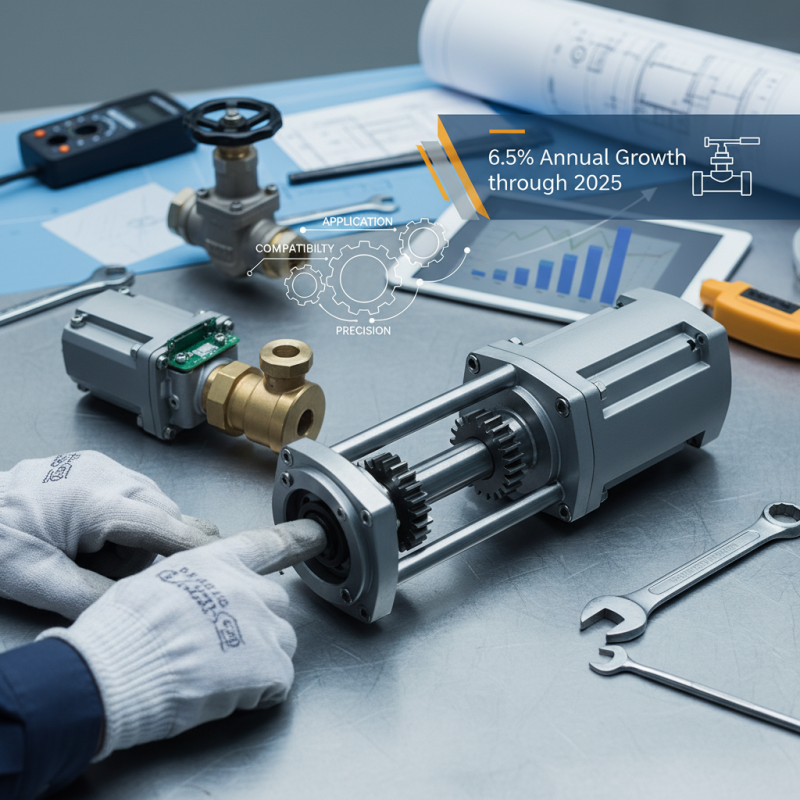
Choosing the right actuator valve can significantly impact efficiency in various industries. According to a recent report by the International Society of Automation, the actuator valve market is projected to grow by 6.5% annually through 2025. This growth underscores the importance of selecting the correct type for your specific needs.
Industry expert John Matthews, a senior engineer at ValveTech Solutions, emphasizes, "The right actuator valve can enhance system performance while reducing downtime." This insight reflects the crucial role actuator valves play in automation and control systems. However, many companies still struggle with this choice, often overlooking critical factors like application requirements, compatibility, and control precision.
An actuator valve must meet specific criteria for optimal performance. Companies may make mistakes by prioritizing cost over quality. Each application demands a tailored approach, and understanding the nuances is key to making an informed decision.
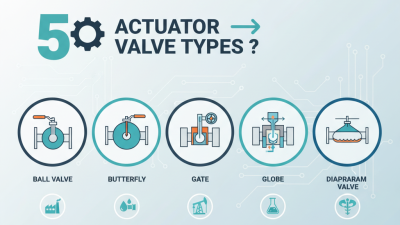
Understanding Actuator Valves: Types and Functions
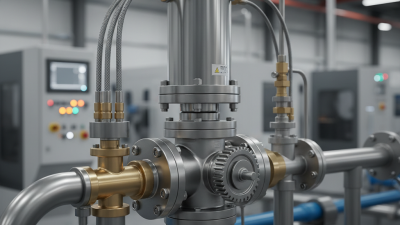
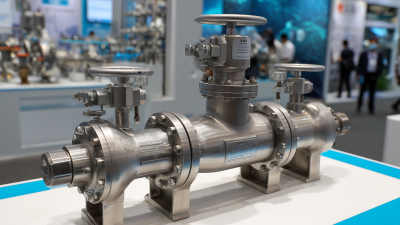
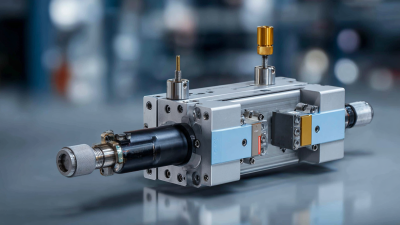
Actuator valves play a critical role in various industrial applications. They control the flow of fluids through piping systems. Understanding the different types of actuator valves is essential when selecting the right one for your needs. There are several types, including electric, pneumatic, and hydraulic actuators. Each type has unique functionalities and applications. Electric actuators are often easier to manage, while pneumatic ones typically offer faster operation.
Pneumatic actuators can be noisy. They require a consistent air supply. This can be a drawback in sensitive environments. Hydraulic actuators provide greater force but may need more maintenance. It's essential to assess the specific requirements of your system. Consider factors like the fluid type, operating pressure, and required speed. Often, people overlook these details, leading to inefficiencies.
When choosing an actuator valve, think about the installation space. Not all setups can accommodate large valves. Furthermore, operator safety should be a top priority. Improper selection may lead to leaks or failures. Reflect on how each option aligns with your operational needs. Explore, experiment, and learn from past choices to make the best decision.
Assessing Your System Requirements for Actuator Valves
When evaluating actuator valves, it’s crucial to understand your system's requirements. Consider the pressure and temperature conditions. High pressure systems need robust valves, while temperature extremes require specific materials. Each application demands precision. A mismatch can lead to failures.
Think about the flow rate as well. Different valves support different capacities. If your design demands high flow rates, ensure the valve can handle it. Some may not. Commonly, it's easy to overlook compatibility. For instance, a valve might not integrate well with existing systems.
Don't forget the actuation method. Electric, pneumatic, and hydraulic options all have distinct benefits and drawbacks. Electric actuators may be easier to control. However, they might lack power in heavy-duty scenarios. On the other hand, pneumatic options can provide high-speed operation but may require compressed air systems. Always reflect on what fits best for your specific needs.
Key Features to Consider When Selecting an Actuator Valve
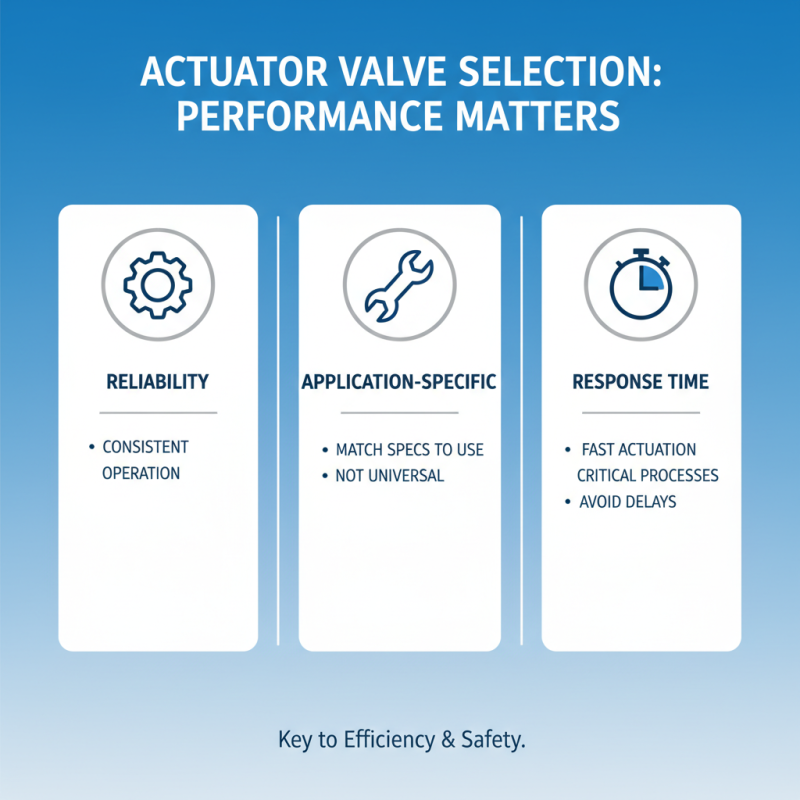
When selecting an actuator valve, consider its key features. These features can significantly impact performance and efficiency. Look for valve type compatibility, like electric or pneumatic options. Each type has distinct advantages depending on the application environment.
Operational performance is crucial. Pay attention to the valve's response time. Some valves react quickly while others are slower. This can affect process efficiency. If precise control is needed, response time might be a deal-breaker.
Durability is another aspect. Evaluate the material quality. High-quality materials ensure longevity and reliability. Consider the specific fluids the valve will handle. Corrosive or abrasive fluids can wear out a valve quickly. Always anticipate the service conditions. Proper selection can save costs in the long run.
Compatibility with Existing Infrastructure and Control Systems
When selecting an actuator valve, compatibility with your existing infrastructure is crucial. Consider the dimensions and mounting options. An actuator that doesn't fit can lead to costly delays. Take accurate measurements before making a choice. If your current system has specific requirements, failing to comply can result in inefficiencies.
Control systems must also be evaluated. Not all actuators work seamlessly with every control system. Check protocols and interfaces. Research if your current software can integrate with the new actuator valve. Sometimes, these details are overlooked, resulting in frustration down the line.
One common mistake is underestimating the power needs. Ensure your actuator can handle the required load. A valve that is too weak or too strong can disrupt functionality. Experimentation might seem tempting but may not yield satisfactory results. Think critically about each aspect before finalizing your choice.