How to Choose the Best Auto Labeling Machine in 2026?
Choosing the best Auto Labeling Machine in 2026 starts with the product, not the most impressive speed claim. A machine that labels 200 cartons per minute may still struggle with a short glass bottle, a tapered jar, or a flexible pouch. Match the equipment to the container shape, label material, adhesive, and required placement accuracy. Small details matter.
A useful evaluation begins with real production samples. Run your containers and labels through a supplier’s trial, then inspect alignment, wrinkles, missed labels, and changeover time. Check whether the quoted speed holds during normal operation, not only under ideal conditions. Also review cleaning access, operator controls, spare-part availability, and technical support. A neat specification sheet can hide a difficult setup; that deserves a closer look.
This guide explains how to compare machine types, key features, and total operating costs for different production needs. It also highlights questions to ask before requesting a quote, such as how quickly the line can switch between container sizes and who supports installation. No single model suits every factory. The best choice is the one that performs reliably with your actual products and leaves room for realistic future growth. Some trade-offs remain, and buyers should test them rather than assume.
What an Auto Labeling Machine Does and Where It Is Used
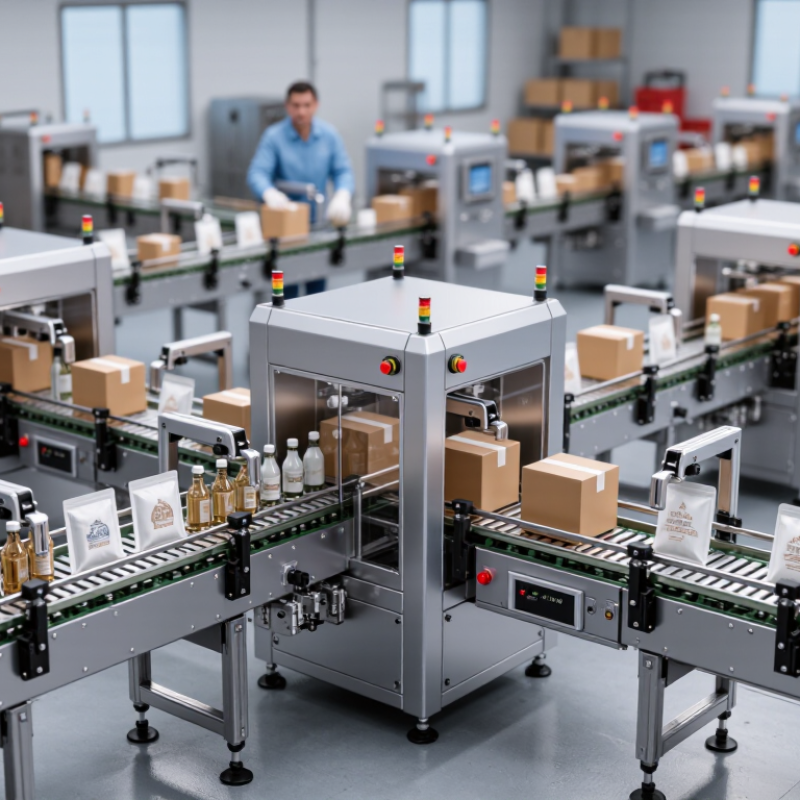
An automatic labeling machine applies labels to products or packages at a controlled position and speed. Depending on its setup, it may handle bottles, jars, cartons, trays, or pouches. Sensors detect each item as it moves along a conveyor. Rollers or applicators then press the label onto the surface, while adjustments help keep placement consistent. Some systems print dates or batch details during the same pass. That matters.
These machines are used in food and beverage production, personal care, household goods, and other packaging operations. A small producer might label glass jars one at a time, while a larger line applies labels to hundreds of containers per minute. The right setup depends on the product’s shape, surface, label material, and expected output. For example, a damp bottle may need a different label and application method than a dry carton. Not every time. In real production, containers can arrive slightly tilted, and labels may wrinkle if tension or pressure is poorly adjusted. Operators should check samples during a run, not just trust the initial settings. A machine can improve consistency, but it still needs careful setup and routine attention.
How to Choose the Best Auto Labeling Machine in 2026?
What an Auto Labeling Machine Does and Where It Is Used
How to read this chart: These are example label configurations, not industry-wide averages. Automatic labeling machines apply labels to products or packages; choose a machine based on package shape, label position, required output speed, and changeover needs. A front-and-back bottle setup uses two labels per item, while a single-panel carton setup uses one.
Which Auto Labeling Machine Type Fits Your Product and Packaging
The best auto labeling machine depends on product shape and where the label must sit. Cylindrical bottles often suit wraparound or rotary systems. Flat cartons and rectangular packs usually need front-and-back or top-and-side labeling. For tapered containers, test label placement carefully; a small angle can leave a visible wrinkle. Unstable pouches may require guided conveyors and gentle product handling.
Match the applicator to the package, label stock, and line speed—not speed alone. Pressure-sensitive systems offer flexible label changes, while sleeve systems can cover curved or irregular shapes. The International Federation of Robotics’ World Robotics 2024 report counted 4,281,585 industrial robots operating worldwide in 2023, 10% more than in 2022. This signals broader automation growth, not proof that a faster labeler will suit every line. Real packages tell more. Trial your actual containers, adhesive, and labels at production speed, then check placement accuracy and changeover time. I’ve seen overlooked bottle seams complicate otherwise promising trials.
Tips: Bring filled samples to the supplier. Test wet, cold, or dusty surfaces if they occur in your process. Confirm conveyor clearance, sensor position, and label-roll changes before purchase. A short trial may expose a problem the specification sheet misses.
How to Compare Machine Features, Speed, Accuracy, and Compatibility
Choosing an auto labeling machine starts with the label, container, and line—not the advertised top speed. Compare throughput using your actual bottle or carton, label stock, and conveyor spacing. A machine rated for 120 units per minute may run slower when labels wrinkle or containers arrive unevenly. Test changeovers too: measure the time needed to switch label rolls, adjust guides, and restore accurate placement.
Accuracy needs a repeatable test. Run several batches, then inspect label position, skew, missed applications, and rejected units. Ask for results under conditions close to yours, not only a short demonstration. Deloitte and MAPI’s 2019 Smart Factory Study found that 86% of surveyed manufacturing executives expected smart-factory initiatives to drive competitiveness within five years. That broad finding supports evaluating data access and integration, but it is not a label-machine performance guarantee. Check compatibility with your existing sensors, conveyors, controls, and inspection systems. Test the real line. Not just brochures. I would also leave room for a less-than-perfect result: containers vary, operators make adjustments, and one test may not reveal every fault. Compare verified performance, service access, and format flexibility alongside speed.
How to Assess Safety, Maintenance, Support, and Total Cost in 2026
Choosing an auto labeling machine in 2026 means looking beyond its speed and label accuracy. Safety deserves a close inspection on the actual production floor. Check access doors, emergency stops, pinch points, and how safely operators clear a jam. Ask for a demonstration using the containers and label stock you actually run. A guarded machine can still create awkward tasks if routine adjustments require reaching into tight spaces. Small details matter.
Maintenance affects both uptime and long-term cost. Ask how often rollers, sensors, and applicator parts need cleaning or replacement, and whether operators can perform routine tasks without specialist tools. Request a sample maintenance schedule and a clear list of recommended spare parts. Then check how quickly technical support responds, what remote help covers, and whether training is available for shift staff. A fast reply is useful. A usable fix matters more.
Compare total cost over several years, not just the purchase price. Include installation, training, spare parts, consumables, service visits, and likely downtime. Ask suppliers to explain their assumptions; production estimates can look precise while downtime figures remain guesses. Your own line data is usually a better starting point. Even then, forecasts can miss a change in product mix or staffing. Leave room for uncertainty before deciding.

