
Back
Contact us

How to Choose a Sandwich Cake Machine in 2026?

Choosing a Sandwich Cake Machine in 2026 means looking beyond its advertised speed. The right model should suit your recipes, daily output, available floor space, and staff experience. A machine that works well for soft sponge layers may struggle with dense cake, sticky filling, or uneven sheets. Small details matter.

Start with the product. Check the machine’s usable belt width, layer thickness controls, filling system, and cutting options. Ask the supplier to demonstrate your own batter and filling, not just a polished sample. Watch the cake pass through the line. Are the layers even? Does cream spill at the edges? Can an operator reach the parts that need cleaning? These observations reveal more than a brochure can.

A simple buying rule: test the machine with your real recipe. Compare finished cakes for weight, appearance, and consistency. Then review changeover time, service access, spare-parts availability, and operator training. A lower purchase price can lose its appeal if adjustments take too long or cleaning disrupts production. No machine removes every production trade-off.

A named expert quotation was not provided with the source material, so this introduction avoids inventing one. In a purchasing decision, verified references and a practical product trial offer stronger evidence than an unsourced endorsement. Be cautious, too: one successful test may not reflect a full production shift. Ask what happens on a busy day. That answer matters.
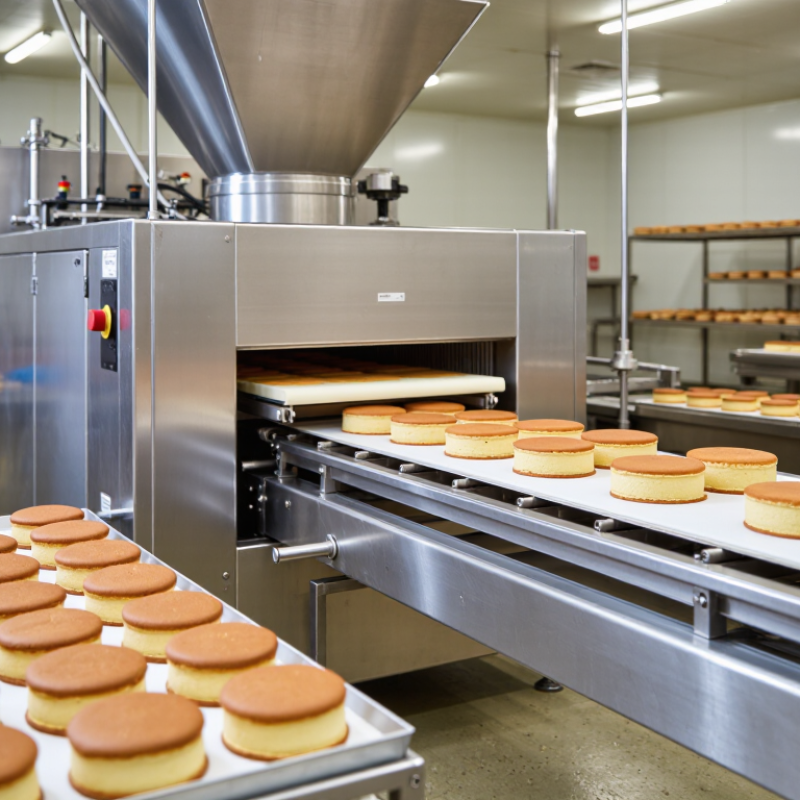
How to Choose a Sandwich Cake Machine in 2026?

Understanding Sandwich Cake Machines and Their Main Types

How to Choose a Sandwich Cake Machine in 2026?

Understanding Sandwich Cake Machines and Their Main Types

A sandwich cake machine places filling between cake layers, helping produce consistent portions at a steady pace. Its main types differ by automation and how they handle the product. Manual or semi-automatic machines suit smaller batches: operators position layers and control filling, making recipe changes straightforward. They also require more hands-on work. That matters.

Automatic depositing and sandwiching machines meter cream or jam, align layers, and repeat the process with less operator input. Some handle individual cakes; others connect to conveyors for continuous production. Integrated lines may add feeding, filling, stacking, and cutting functions. They can improve throughput, but need more floor space and careful setup. For delicate sponge, a rough transfer can crush edges or shift the filling.

The wider equipment market offers useful context, not a direct forecast for this niche. Grand View Research’s 2022 Bakery Processing Equipment Market report valued that global market at USD 12.8 billion and projected a 5.1% compound annual growth rate from 2023 to 2030. When comparing machines, check cake dimensions, filling viscosity, changeover time, cleaning access, and output at your actual recipe. Ask suppliers for a production trial using your own layers. A catalog speed may not match a sticky filling or uneven sponge. I would leave room for doubt: advertised capacity alone cannot predict a reliable line.

Defining Production Needs, Cake Sizes, and Required Output

Before comparing machines, define the cake you actually plan to make. Record its length, width, thickness, number of layers, and filling type. A soft cream layer behaves differently from a firm jam layer during feeding and cutting. Measure finished cakes after cooling, not just the baking tray. Small size changes can affect alignment, portion weight, and packaging.

Then estimate output from real orders, not an optimistic sales target. Note peak-hour demand, working hours, cleaning time, and product changes between batches. A machine’s stated hourly capacity may assume steady feeding and one cake format. Ask how output changes when operators switch sizes or refill ingredients. Check whether the line can handle your largest cake without awkward manual adjustments. Leave some capacity in reserve. It helps. Consider available floor space, too, including room for trays, staff movement, and routine maintenance. These details are easy to miss. A written trial using your own cake samples can reveal uneven filling, crushed edges, or inconsistent slices before purchase. No estimate is perfect; production plans change, and a little spare capacity may be more useful than a machine sized exactly for today.

Comparing Machine Capacity, Functions, and Automation Levels

When comparing sandwich cake machines in 2026, start with the cakes you actually sell, not the largest capacity listed. Check output per hour alongside cake diameter, layer thickness, and filling volume. A machine rated for high output may still slow down if workers must load trays by hand or adjust each cake. Ask for a trial using your own batter and filling. Watch the edges.

Functions matter because small inconsistencies become obvious in stacked cakes. Look for controlled depositing, even layer alignment, and adjustable portioning. If the machine handles cream or jam, check how easily product-contact parts can be removed and cleaned. A few minutes saved during production can be lost during cleanup. Test that, too.

Automation should match your staff and order pattern. Semi-automatic equipment may suit varied cake sizes, while a more integrated line can reduce repetitive handling on steady, large runs. Compare setup time, changeover steps, and how quickly an operator can spot a misfeed. Do not assume more automation means less supervision. It can make faults harder to notice. I would be cautious about buying to a peak-output figure; real shifts include pauses, refills, and uneven batches. A slightly lower rate may be the more reliable choice.

How to Choose a Sandwich Cake Machine in 2026? — Comparing Machine Capacity, Functions, and Automation Levels
Machine Configuration Typical Capacity Profile Core Functions Automation Level Staff Involvement Best Suited For Key Checks Before Purchase
Manual or bench-top filling setup Low; usually operated in batches, with output limited by manual loading, filling, and stacking. Filling is applied with a hand-operated tool or simple dispenser. Operators position cake layers and assemble the sandwich cakes. Low High; operators handle most product movement and assembly. Small bakeries, test kitchens, short runs, and businesses with frequent product changes. Check that the filling can be dispensed consistently and that the working area suits the cake size and layer format.
Semi-automatic sandwiching machine Medium; more consistent and repeatable than manual assembly, but output depends on operator loading and product handling. Can meter or deposit filling onto cake layers; some configurations also assist with layer alignment or stacking. Medium Moderate; operators typically load layers, monitor the cycle, and remove or transfer finished products. Growing bakeries that need improved portion consistency without installing a complete production line. Confirm filling-dose adjustment, cake-size range, cleaning access, and whether the machine handles the required layer count.
Automatic in-line sandwiching system High relative to batch-based setups when integrated with a steady supply of cake layers and downstream handling equipment. May combine conveying, filling deposit, layer placement or stacking, and transfer between production stages. Functions vary by line configuration. High Lower routine handling per unit; staff are still needed for setup, quality checks, replenishment, cleaning, and changeovers. Large-scale production with stable recipes, repeatable product sizes, and sufficient upstream and downstream line capacity. Check line speed compatibility, changeover time, controls and guarding, cleaning procedures, and integration with existing equipment.
Custom-configured production line Designed around the required product mix and target output; actual capacity must be confirmed through a product trial. Can combine selected filling, conveying, stacking, inspection, and packaging steps according to the process requirements. Variable; determined by the selected equipment and level of line integration. Variable; depends on how much loading, monitoring, and product transfer are automated. Producers with multiple formats, specific handling needs, or a planned expansion of production. Request a trial using the actual cake layers and filling, and verify output, product quality, waste, and cleaning requirements.

Capacity is shown as a relative production profile rather than a fixed units-per-hour figure. Actual output varies with cake diameter and thickness, layer count, filling type and dose, operator workflow, and the equipment configuration. Compare supplier-rated capacity only when the test product and operating conditions are clearly stated.

Checking Food Safety, Cleaning, Durability, and Maintenance

When choosing a sandwich cake machine, inspect the food-contact surfaces closely. Stainless steel should feel smooth, with no rough seams where batter or crumbs can collect. Check that guards stay in place and that hot plates cannot be touched accidentally during normal operation. Ask how the machine controls and displays temperature. Uneven heating can leave cakes underdone in the center, even when the edges look ready. Small details matter.

Cleaning should fit the pace of a real kitchen. Look for removable trays, accessible corners, and parts that can be washed without soaking electrical components. Confirm the maker’s cleaning instructions before using detergents or tools; abrasive pads can damage finishes. Let hot parts cool, then clear crumbs and grease before they harden. That takes minutes. It can prevent a longer cleanup later.

Durability is more than a heavy frame. Open and close the lid several times, checking for wobble, stiff hinges, or a handle that feels loose. Ask whether wear parts, such as seals or heating elements, can be replaced, and how service is arranged. Keep a simple maintenance log for cleaning, inspections, and repairs. I would not assume a machine is low-maintenance just because its exterior looks sturdy; daily use often reveals the weak points.

Evaluating Total Cost, Supplier Support, and Purchase Fit

A sandwich cake machine should be judged by the cost of producing saleable cakes, not its purchase price alone. Add installation, molds, energy use, cleaning time, spare parts, and operator training. The U.S. Department of Energy’s Operations & Maintenance Best Practices guide reports potential maintenance-cost reductions of 25–30% from predictive maintenance programs. That is a broad industrial benchmark, not a promise for bakery equipment. Ask suppliers which parts wear fastest, how quickly replacements ship, and what maintenance data the machine records.

Supplier support has a real production value. Request a written response-time commitment, remote troubleshooting details, and a sample spare-parts list with prices. Check whether technicians can train staff on your actual cake thickness, filling, and daily output. Deloitte’s 2024 manufacturing outlook highlights persistent workforce and skills challenges, making simple controls and clear training materials practical buying criteria. A polished demo is not the same as a reliable shift. Watch a full production run, including changeover and cleaning.

Purchase fit depends on your own line. Measure available floor space, door clearance, electrical supply, and the distance to cooling and packaging. Compare expected hourly output with demand during peak weeks, not just average orders. Ask for test results using your batter and fillings; sticky layers can behave differently from a supplier’s sample. I would still leave room for doubt: a lower-cost machine may fit today, yet create costly bottlenecks when recipes or volumes change.