Back
Contact us

How to Choose a Carbon Fiber Production Line Supplier

Choosing a Carbon fiber production line supplier is a strategic manufacturing decision, not a simple equipment purchase. Carbon fiber demand is expanding across aerospace, wind energy, automotive, hydrogen storage, and sporting goods. The International Energy Agency reported nearly 14 million electric cars were sold worldwide in 2023. This growth increases pressure for lighter, stronger, and more energy-efficient components.

The aerospace signal is also significant. Boeing’s Commercial Market Outlook 2024–2043 forecasts demand for 43,975 new commercial airplanes over the next two decades. Such aircraft rely heavily on advanced composites, although demand forecasts differ between reports. That difference matters. A reliable supplier should explain assumptions, not merely display impressive charts.

Look beyond the machine price. Examine precursor compatibility, oxidation-furnace stability, carbonization temperature control, surface treatment, sizing accuracy, and production-line integration. Ask for measured data from comparable lines. Check tensile strength, modulus, yield rate, energy use, and maintenance frequency. Small details matter. A loose thermocouple connection can disrupt an entire production run.

An experienced Carbon fiber production line supplier should provide process validation, factory acceptance testing, operator training, spare-parts planning, and traceable quality records. ISO 9001 certification supports quality management, but certification alone proves little. Visit an operating reference plant if possible. Watch how workers handle alarms, fiber breaks, and furnace maintenance.

No supplier is perfect. That is worth admitting. A lower-cost line may reduce initial investment, yet create hidden losses through unstable output or difficult servicing. A premium proposal may also contain unnecessary features. Compare total cost, proven performance, scalability, safety controls, and technical support. The best decision combines published industry evidence with direct engineering verification.
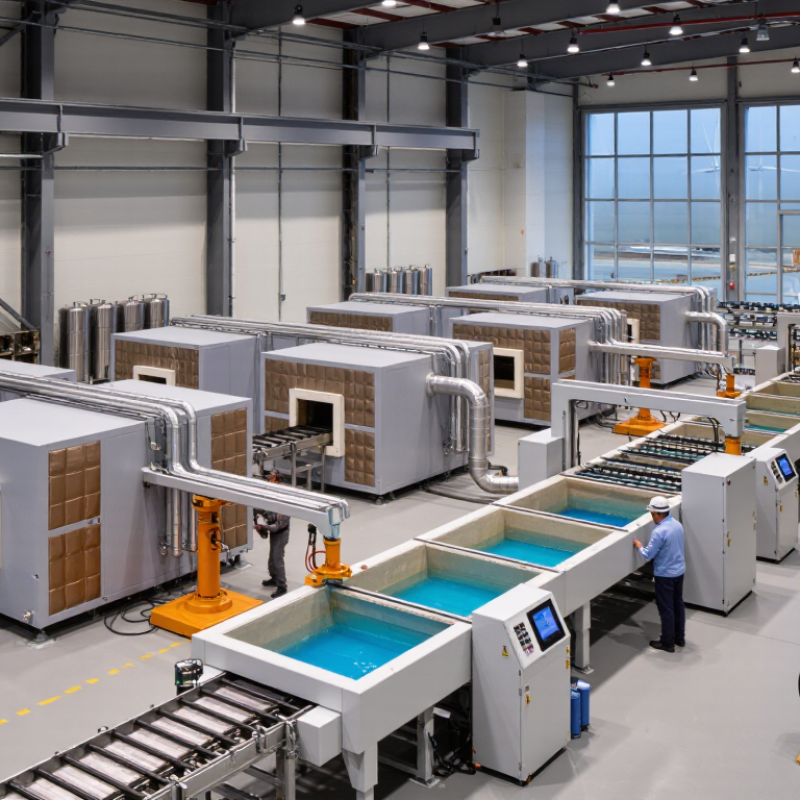
How to Choose a Carbon Fiber Production Line Supplier

Define the Required Carbon Fiber Production Capacity and Product Range

How to Choose a Carbon Fiber Production Line Supplier

Defining production capacity is the practical starting point for selecting a carbon fiber production line supplier. Estimate annual output from confirmed customer orders, not optimistic sales forecasts. A line rated for 3,000 tonnes may perform differently under your material, staffing, and maintenance conditions. Ask for demonstrated output using comparable precursor, tow size, and target tensile properties. Request records showing stable operation, not only short pilot runs.

Your product range also determines the equipment structure. Standard tow and specialty tow may require different tension control, oxidation, carbonization, and surface-treatment settings. List each planned grade, filament count, width, strength target, and acceptable variation. Include future products, but avoid buying unused capacity too early. A modular line can reduce this risk. It may also create more setup work. That detail is easy to underestimate.

During supplier discussions, calculate capacity by process stage. One slow furnace can limit the entire line. Check cycle time, furnace length, line speed, energy use, and changeover duration. Ask how operators handle broken filaments, uneven tension, and temperature drift. These problems appear during real production. Insist on factory acceptance testing with measurable criteria, such as yield, uptime, and property consistency. Keep room for doubt. Your initial product plan may change after customer trials, so flexible tooling and accessible control systems can be more valuable than impressive maximum capacity.

How to Choose a Carbon Fiber Production Line Supplier - Define the Required Carbon Fiber Production Capacity and Product Range

Planning reference for comparing production-line capacity, product scope, and supplier requirements

Carbon Fiber Production Line Capacity and Product-Range Definition Matrix
Evaluation dimension Entry / pilot line Small industrial line Medium industrial line Large industrial line Supplier information to request
Typical annual output 50–300 metric tons/year 300–1,000 metric tons/year 1,000–3,000 metric tons/year More than 3,000 metric tons/year Rated output, guaranteed output, operating hours, utilization assumptions, and line availability
Primary use case Process development, samples, and qualification batches Specialty grades and regional customer supply Regular industrial production and multiple customer programs High-volume automotive, energy, pressure-vessel, or aerospace programs Reference applications, installed capacity, production history, and qualification support
Precursor compatibility Usually one precursor family, commonly PAN-based precursor One or two qualified precursor specifications Multiple precursor lots with controlled recipe windows Multiple precursor specifications with dedicated process control Precursor requirements, tow spread, stabilization behavior, and allowable lot variation
Common tow sizes 1K–12K 3K–24K 12K–50K 24K–50K and selected large-tow formats Supported filament count, line-speed range, tension limits, and conversion requirements
Target tensile strength Approximately 3.5–4.5 GPa for development grades Approximately 4.0–5.0 GPa for standard industrial grades Approximately 4.5–5.5 GPa, depending on grade and test method Grade-specific performance, including high-strength or high-modulus products Test standard, gauge length, specimen preparation, average values, and minimum guaranteed values
Target tensile modulus Approximately 220–250 GPa Approximately 230–280 GPa Approximately 240–300 GPa Grade-dependent; high-modulus grades may exceed 300 GPa Guaranteed modulus range, test method, coefficient of variation, and process capability data
Product forms after carbonization Spools of carbon fiber tow Tow, chopped fiber, and basic sizing options Tow, chopped fiber, milled fiber, and application-specific sizing Multiple tow formats, chopped or milled fiber, and customized surface treatment Product specifications, spool dimensions, sizing chemistry, packaging, and changeover procedure
Process sections required Oxidation, carbonization, surface treatment, sizing, and winding Complete line with improved tension and atmosphere control Complete line plus automated monitoring and heat-recovery options Integrated production, redundancy, advanced controls, and emissions-management systems Process-flow diagram, equipment list, control architecture, and included utilities
Typical line speed Approximately 1–10 m/min Approximately 3–20 m/min Approximately 5–30 m/min Project-specific; speed depends on tow size, residence time, and product grade Speed by process zone, stable operating window, ramp-up time, and output calculation basis
Quality-control checkpoints Linear density, tensile properties, and visual defects Add sizing content, filament breaks, tow width, and lot traceability Add process capability, uniformity, ash content, and moisture control Automated data collection, statistical process control, and full batch genealogy Inspection plan, sampling frequency, calibration records, certificates, and nonconformance process
Facility planning indicators Compact layout; utilities can be shared with a pilot facility Dedicated ventilation, cooling water, electrical supply, and process-gas systems Separate production, storage, laboratory, maintenance, and waste-handling areas Redundant utilities, emissions control, fire protection, and material-flow separation Utility-load list, floor plan, exhaust requirements, gas consumption, cooling load, and safety zoning
Scalability requirement Modular equipment and room for additional ovens or winders Expansion capability of approximately 25–50% Parallel lines, additional conversion capacity, and utility expansion Redundant production trains and planned capacity expansion zones Expansion drawings, spare-capacity assumptions, interfaces, and future equipment compatibility
Acceptance criteria Successful trial run and repeatable laboratory results Performance test at an agreed production rate Continuous production test with agreed yield and product-property limits Capacity, quality, energy, emissions, reliability, and availability guarantees Factory acceptance test, site acceptance test, performance-guarantee protocol, and remedy clauses
Best supplier fit Supplier with strong pilot-scale process-development support Supplier able to provide standard equipment with application engineering Supplier with proven scale-up, automation, and commissioning capability Supplier with large-line references, lifecycle service, and process-guarantee resources Relevant project references, service coverage, spare-parts plan, training scope, and response time
Planning note: The capacity bands and performance ranges are indicative engineering benchmarks, not universal guarantees. Actual output depends on precursor specification, tow size, residence time, product grade, operating schedule, yield, maintenance, and local utility conditions. Require the supplier to state guaranteed values separately from nominal or theoretical capacity.

Assess Supplier Expertise, Technology, and Equipment Compatibility

How to Choose a Carbon Fiber Production Line Supplier

A supplier’s expertise should appear in production details, not polished presentations. Ask how they control precursor tension, furnace temperature, line speed, and fiber alignment. These variables affect tensile strength, modulus, surface quality, and production stability. A credible supplier should provide process records, test methods, and clear acceptance criteria. Vague promises are warning signs.

Technology must match your actual manufacturing goals. Review the complete line, including unwinding, oxidation, carbonization, surface treatment, drying, and winding systems. Check whether the controls can record temperature curves and tension changes continuously. Equipment compatibility also matters. Confirm the line can handle your precursor type, tow size, target output, factory power, ventilation, and available floor space. Small mismatches can create costly delays.

Request a pilot run with your material. Observe thread handling, alarms, maintenance access, and product consistency. Ask for factory acceptance testing and commissioning support. Reliable suppliers explain limitations instead of hiding them. A neat spreadsheet is not enough. Experienced engineers should discuss spare parts, operator training, calibration, and future upgrades. I would also inspect similar installations, although customer references may not reveal every difficulty. One uncomfortable question remains: can the supplier support the line five years later? Their answer may matter more than the initial price.

Verify Production Line Quality, Automation, and Safety Standards

How to Choose a Carbon Fiber Production Line Supplier

A reliable supplier should prove production quality with measurable data, not attractive showroom samples. Ask for test results covering fiber tension, resin impregnation, curing temperature, and line speed. Request samples made with your intended materials. Inspect their surface finish, void content, dimensional stability, and repeatability. Small defects often reveal weak process control.

Automation should support operators rather than confuse them. Check whether the system records temperature, tension, pressure, alarms, and production batches. Clear screens matter. A practical demonstration should include startup, material changes, fault recovery, and manual override. Incomplete data logging is a warning sign. A polished demonstration can still hide difficult maintenance procedures.

Tips: Walk through the line with an experienced technician. Look for guarded moving parts, emergency stops, interlocked doors, fire protection, ventilation, and effective dust extraction. Confirm electrical documentation and training records. Ask which safety standards the equipment follows and how compliance is verified in your region. Do not accept vague promises. A supplier should provide risk assessments, maintenance schedules, spare-parts guidance, and commissioning support. One detail is easy to overlook: observe noise, heat, and operator posture during a full production cycle. The line may meet specifications, yet still create daily problems.

Compare Installation Support, Training, Maintenance, and Spare Parts

How to Choose a Carbon Fiber Production Line Supplier

Installation support should be judged on site, not in a sales presentation. Ask whether engineers will verify furnace alignment, tow tension, resin flow, and exhaust balance. Request a written commissioning schedule with acceptance tests and response times. The International Energy Agency reported over 14 million electric car sales in 2023. This growth increases pressure for stable, repeatable composite production. A poorly tuned line can waste expensive fiber within hours.

Training must reach operators, maintenance staff, and process engineers. Good training uses real alarms, damaged filaments, thermocouple checks, and restart procedures. Classroom slides are not enough. Ask for bilingual manuals, recorded sessions, and skill assessments. Uptime Institute’s 2023 Global Data Center Survey found that 60% of organizations experienced an outage during the previous three years. Carbon fiber plants face different risks, but the lesson is similar: recovery capability matters.

Maintenance planning should include lubrication points, calibration intervals, inspection methods, and remote diagnostics. Spare parts deserve equal scrutiny. Request a critical-parts list, local stock details, shelf-life guidance, and guaranteed delivery times. Include heaters, sensors, tension controllers, seals, and drive components. A low purchase price may conceal long delays later.

No supplier can promise zero downtime. That claim deserves questions. My own evaluation would also leave room for doubt: projected savings often assume perfect operation, while real factories train new staff, change materials, and make mistakes.

Evaluate Total Cost, Delivery Terms, and Supplier Reliability

Choosing a carbon fiber production line supplier requires more than comparing the lowest quotation. A credible assessment begins with the complete ownership cost. Ask for itemized pricing covering installation, commissioning, training, tooling, utilities, spare parts, and software updates. Small omissions matter. Compare energy consumption, maintenance intervals, labor requirements, and expected output quality. Calculate the cost per usable kilogram, not just the machine price. A cheaper line may become expensive after repeated adjustments.

Delivery terms need equal attention. Request a detailed schedule with factory acceptance testing, packaging, shipment, installation, and production trials. Define responsibility for transport damage, customs documentation, insurance, and site preparation. A delayed curing oven can hold an entire facility inactive. Ask for realistic lead times based on similar projects, not optimistic promises. I would also check whether critical components have confirmed availability. Dates sound convincing. Evidence is stronger.

Supplier reliability should be tested through references, technical records, and service procedures. Speak with operators who have used comparable equipment for several years. Ask how failures were diagnosed, how quickly technicians responded, and whether spare parts arrived as promised. Review acceptance criteria before signing, including temperature uniformity, tension control, line speed, and reject rates. An experienced supplier will document these details clearly. Still, no supplier is perfect. Leave contingency funds and extra commissioning time. That uncomfortable margin may protect the first production batches.