Why Choose a Continuous Furnace for Your Manufacturing Needs?
In today's competitive manufacturing landscape, the choice of equipment can significantly impact efficiency and output. Industry expert James Anderson, renowned for his insights on manufacturing technology, once stated, "A Continuous Furnace helps manufacturers streamline processes and improve product quality." This highlights the importance of selecting the right systems for production.
A Continuous Furnace offers numerous advantages. It allows for uninterrupted operation, which means higher throughput and reduced labor costs. Manufacturers can achieve consistent heating, leading to uniform product quality. However, not all firms leverage these benefits. Some hesitate due to initial investment concerns or a lack of understanding.
Choosing a Continuous Furnace entails careful consideration. Each production line has unique demands. Companies must evaluate their specific needs and how a Continuous Furnace can meet them. Misalignment can lead to inefficiencies, making it essential to consult with industry experts before investing. The right choice can transform operations, driving growth and innovation.
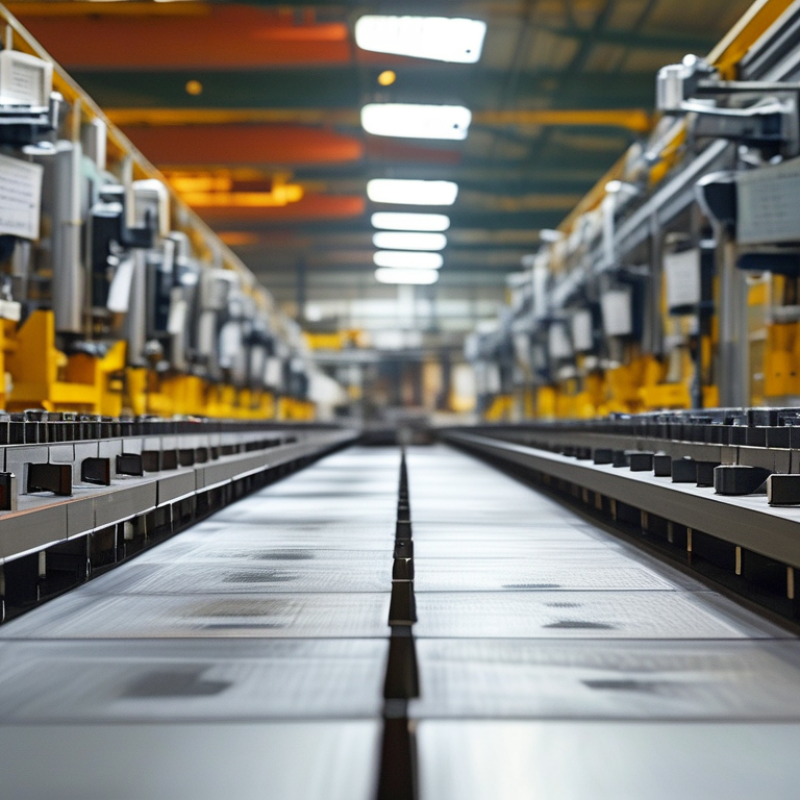
Benefits of Continuous Furnaces in Manufacturing Processes
Continuous furnaces are increasingly favored in manufacturing due to their efficiency and effectiveness. They offer significant advantages over batch processing systems. For example, a recent report by the National Association of Manufacturers indicates that continuous furnaces can increase production rates by 20-40% compared to traditional methods. This enhancement leads to reduced cycle times, allowing companies to meet high demand swiftly.
Energy efficiency is another key benefit. Continuous furnaces often utilize advanced combustion and heating technologies, reducing energy consumption by about 30%. This reduction not only cuts costs but also minimizes the environmental impact of manufacturing processes. However, implementing a continuous furnace system can require a substantial upfront investment. Companies must weigh the long-term savings against initial financial strains.
Moreover, continuous furnaces provide consistent product quality. The controlled environment ensures uniform heating, minimizing material defects. This reliability is crucial in industries like metals and ceramics. Despite these advantages, some manufacturers struggle with the transition due to existing operational habits. Changing processes can be challenging, but the long-term benefits greatly outweigh the temporary discomfort. Advancements in training and technology can help ease this transition.
Key Differences Between Continuous and Batch Furnaces
When considering manufacturing, continuous furnaces stand out for their efficiency and adaptability. They operate non-stop, providing a steady stream of output. This contrasts sharply with batch furnaces, which process materials in set quantities, causing periods of inactivity. For operations requiring high throughput and consistency, choosing a continuous furnace can lead to significant productivity gains.
One key difference lies in temperature control. Continuous furnaces maintain a uniform temperature throughout the process. In contrast, batch furnaces can experience temperature fluctuations as they cycle between heating and cooling phases. This stability in continuous systems often results in better-quality finished products, reducing waste and rework.
Tips for choosing the right furnace include evaluating your production volume and desired throughput. If you have fluctuating demand, a batch furnace may suffice. However, high-volume requirements often favor continuous systems. Think about your cooling and heating needs, too. Continuous furnaces typically have faster heat-up times, which might align better with aggressive production schedules.
Reflect on maintenance as well. Continuous furnaces require regular upkeep to ensure optimal performance, while batch systems may have different maintenance needs due to their operating cycles. Consider these factors in your decision-making process to find the best fit for your manufacturing needs.
Cost Efficiency and Energy Savings with Continuous Furnaces
Continuous furnaces have become essential in modern manufacturing, particularly for their cost efficiency and energy savings. These systems operate steadily, allowing for uninterrupted production. This means that your workforce can focus on quality and consistency rather than stopping and starting.
Using a continuous furnace can significantly reduce energy consumption. By maintaining a constant temperature, manufacturers minimize energy waste. This leads to lower utility bills and a reduced carbon footprint. Some facilities have reported energy savings up to 30%. This is a substantial amount when considering the scale of industrial operations. The savings can be reinvested into other vital areas of your business.
However, transitioning to a continuous furnace isn't without challenges. Initial setup costs can be high, and there might be a learning curve for your team. It's important to weigh the upfront investment against long-term savings. Monitoring efficiency regularly ensures you're maximizing the benefits. Analyzing operations can reveal areas for further improvement, making the system work even better.
Applications of Continuous Furnaces in Various Industries
Continuous furnaces play a crucial role in several industries. These systems offer consistent heating, which ensures uniform product quality. In metal processing, continuous furnaces are used for annealing steel and aluminum. The process enhances material properties while maintaining efficiency. This method reduces waste and energy consumption, making it an environmentally friendly option.
In the ceramics industry, continuous furnaces are essential for firing products. They allow for precise temperature control, crucial for achieving desired outcomes. However, the investment can be significant. Companies must evaluate whether the benefits outweigh the costs. Additionally, ongoing maintenance is necessary, which can strain resources.
Food processing also utilizes continuous furnaces. They are ideal for baking and drying processes. The uniform heat distribution guarantees even cooking. Yet, operators might face challenges with scaling up production. Continual monitoring is critical to prevent any quality issues. Balancing efficiency and quality remains a challenge that many manufacturers encounter.
Why Choose a Continuous Furnace for Your Manufacturing Needs? - Applications of Continuous Furnaces in Various Industries
| Industry | Application | Temperature Range (°C) | Advantages |
| Metallurgy | Heat Treatment of Metals | 600 - 1200 | High Efficiency & Consistency |
| Glass | Continuous Glass Melting | 1400 - 1600 | Reduced Scrap & Waste |
| Ceramics | Firing of Ceramic Products | 800 - 1300 | Uniform Heating & Lower Energy Costs |
| Food Processing | Cooking and Drying | 100 - 300 | Consistency in Quality & Safety |
| Electronics | Soldering and Component Assembly | 200 - 400 | High Throughput & Efficiency |
Factors to Consider When Choosing a Continuous Furnace
Choosing a continuous furnace requires careful consideration of several factors. One important aspect is the type of materials being processed. Different materials have unique thermal requirements. For instance, metals and ceramics need distinct temperature profiles for optimal results. Understanding these specifications can greatly impact efficiency.
Energy efficiency is another critical factor. Continuous furnaces can offer significant energy savings compared to batch systems. However, selecting the right furnace also involves analyzing the operational costs. Consider maintenance requirements and energy consumption in long-term production scenarios. An inefficient furnace can lead to unexpected costs.
Lastly, throughput capacity must align with production goals. A furnace that cannot handle the required volume can lead to delays. Conversely, an oversized furnace may waste energy. Balancing these aspects is essential for a successful investment. Manufacturers should evaluate their unique production needs and troubleshoot any gaps before committing to a continuous furnace.

