Back
Contact us

China Best Pallet Transfer Conveyor Manufacturers?

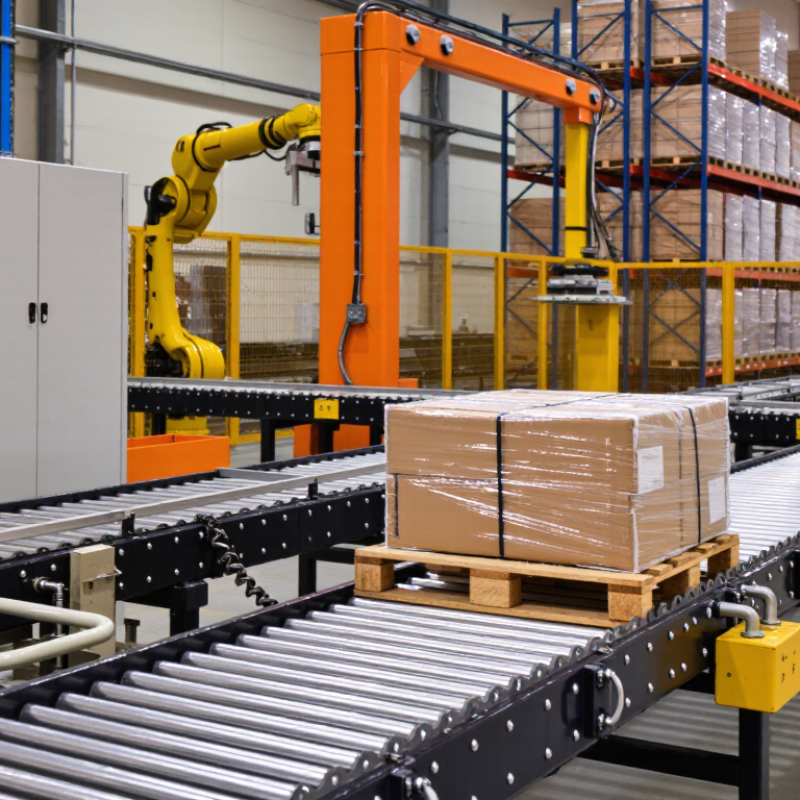
Choosing among China’s best Pallet Transfer Conveyor manufacturers requires more than comparing catalog prices. The real test appears on the factory floor, where loaded pallets move between production lines, storage zones, and robotic stations. A dependable supplier should demonstrate experience with pallet weight, transfer direction, conveyor speed, and available floor space.

John Paxton, a recognized material-handling authority and former MHI executive, expressed a useful principle: “Automation works best when it supports people and improves the entire process.” That idea applies directly to Pallet Transfer Conveyor selection. Strong manufacturers should explain their design decisions, not merely present attractive drawings. They should provide load calculations, motor details, PLC compatibility, sensor layouts, guarding plans, and maintenance guidance.

Small details matter.

Ask how the conveyor handles misaligned pallets. Check whether rollers remain stable under uneven loads. Examine the welding quality around frames and transfer tables. Request videos of similar installations, then verify the customer references independently. A serious Chinese manufacturer should also clarify testing procedures, spare-part availability, installation support, and response times after delivery.

However, no supplier is perfect. A polished showroom cannot replace a careful technical audit. Some quotations may omit controls, safety devices, or commissioning costs. That can distort the final comparison. Buyers should therefore assess lifecycle reliability, not only the initial purchase price. The best partner may not offer the lowest bid. It should offer a practical system that keeps moving, remains serviceable, and fits the customer’s actual operating conditions.

China Best Pallet Transfer Conveyor Manufacturers?

Types of Pallet Transfer Conveyors in China

China Best Pallet Transfer Conveyor Manufacturers?

Types of Pallet Transfer Conveyors in China

Chinese pallet transfer conveyors commonly use chain transfers, roller transfers, turntables, and shuttle units. Chain transfers move pallets sideways between parallel conveyor lines. They suit heavy loads and frequent transfers. Roller transfers provide smooth movement for stable, flat-bottom pallets. Turntables rotate pallets through 90 or 180 degrees. Shuttle conveyors travel laterally across several lanes, saving floor space in dense warehouses.

MHI’s 2024 Industry Report indicates that robotics adoption may increase from 38% to 65% within five years. This trend is influencing pallet-transfer designs in Chinese factories. Automated lines now often combine sensors, variable-speed drives, and programmable controls. A practical design still depends on pallet weight, dimensions, transfer frequency, and available clearance. Choosing the fastest model is not always wise. Poor alignment can cause vibration, product damage, and unexpected stoppages. Real production trials remain valuable.

Tips: Ask for load testing with your actual pallets. Check transfer accuracy at low speed. Confirm spare-part availability and control-system compatibility. Review safety guarding before installation. Do not judge equipment only by its catalog capacity. The real weakness may appear during dusty operation or uneven loading.

Key Features of Leading Chinese Manufacturers

Leading Chinese pallet transfer conveyor manufacturers distinguish themselves through practical engineering, stable production, and responsive project support. Experienced suppliers usually begin with pallet dimensions, load weight, transfer speed, and available floor space. Their engineers then select roller spacing, conveyor height, drive systems, and transfer mechanisms. This prevents costly adjustments after installation.

Strong manufacturers provide configurable systems for warehouses, assembly lines, and distribution centers. Useful features include heavy-duty frames, synchronized lifting units, guarded moving parts, and variable-speed controls. Many factories use laser cutting, robotic welding, and documented quality checks. Each conveyor should receive load testing before shipment. Clear drawings and inspection records also improve communication with overseas buyers.

Support matters after delivery. Reliable suppliers offer installation guidance, spare-parts lists, troubleshooting videos, and operator training. They should explain maintenance intervals in plain language. Export experience helps with packaging, technical documents, and safe transport arrangements. However, no manufacturer gets every project right. Some quotations look attractive but hide control upgrades or complex installation work. Buyers should verify testing methods, response times, and previous applications. A factory visit or live video inspection can reveal details that brochures miss, such as uneven welds, exposed cables, or poor finishing. Performance is built in the details.

China Best Pallet Transfer Conveyor Manufacturers? - Key Features of Leading Chinese Manufacturers

Evaluation Dimension Common Capability of Leading Chinese Manufacturers Typical Technical Data or Standard Why It Matters for Buyers Recommended Verification
Product Portfolio Designs and produces chain transfer conveyors, roller transfer conveyors, lift-and-transfer units, turntables, shuttle systems, and pallet positioning modules. Suitable configurations are available for straight transfer, 90-degree transfer, parallel-line transfer, accumulation, and warehouse interface applications. A broader product range makes it easier to build a complete pallet-handling line from one engineering source. Request layout drawings, application references, and a configuration list matched to the pallet dimensions.
Load Capacity Heavy-duty designs commonly use structural steel frames, powered rollers, chains, bearings, and reinforced lifting mechanisms. Many industrial pallet-transfer units are engineered for approximately 500–2,000 kg per pallet; higher capacities require project-specific calculations. Correct load selection prevents frame deflection, drive overload, premature bearing wear, and unstable pallet movement. Check the rated load, safety factor, pallet center of gravity, load distribution, and maximum allowable point load.
Pallet Compatibility Equipment can be customized for common wooden, plastic, and steel pallets, including non-standard pallet footprints. Typical designs accommodate pallet widths and lengths around 800–1,300 mm, subject to conveyor type and layout. Accurate pallet compatibility reduces skewing, jamming, and transfer failures at line junctions. Provide pallet drawings showing dimensions, runners, openings, underside clearance, weight, and surface condition.
Transfer Accuracy Uses guide rails, stopper cylinders, sensors, mechanical centering devices, and controlled lifting or chain movement. Positioning accuracy is commonly engineered within approximately ±5–10 mm, depending on the pallet, speed, and sensor arrangement. Reliable positioning is essential for robotic picking, wrapping, labeling, storage, and automated loading. Ask for the guaranteed positioning tolerance under the actual pallet load and operating speed.
Throughput Drive selection and conveyor spacing are configured according to pallet weight, transfer distance, accumulation requirements, and cycle time. Typical pallet transfer applications operate at roughly 10–30 pallets per hour; high-speed systems require a detailed cycle-time study. Throughput data helps determine whether the conveyor can support production output without becoming a bottleneck. Request a cycle-time calculation covering loading, transfer, positioning, release, and safety-reset time.
Drive and Control System Common systems include geared motors, variable-frequency drives, photoelectric sensors, PLC controls, emergency stops, and HMI interfaces. Industrial control panels are commonly designed for 380–400 V AC, three-phase, 50 Hz power, with final voltage confirmed for the destination country. Compatible controls simplify integration with conveyors, warehouse management systems, robots, and production-line PLCs. Confirm PLC protocol, I/O list, control-panel rating, motor protection, fault codes, and remote-support capability.
Safety Design Leading suppliers normally include emergency-stop circuits, guarding, pinch-point protection, overload protection, warning labels, and safety interlocks. Electrical safety documentation may reference IEC 60204-1 or the applicable local equivalent; machinery safety requirements depend on the destination market. Proper safeguarding protects operators and reduces commissioning, compliance, and liability risks. Review the risk assessment, safety-circuit diagram, guarding design, emergency-stop response, and user manual.
Manufacturing Quality Established factories commonly use CNC cutting, robotic or controlled welding, machining, powder coating, assembly inspection, and load testing. ISO 9001 certification is a useful quality-system indicator, but it does not replace product-specific inspection and performance testing. Consistent fabrication improves alignment, service life, repeatability, and ease of installation. Verify the certificate scope and validity, factory process controls, material records, inspection reports, and welding quality procedures.
Frame and Surface Finish Carbon-steel frames with powder coating are widely used; stainless-steel or corrosion-resistant finishes can be specified for harsh environments. Finish selection depends on humidity, washdown exposure, temperature, chemicals, and indoor or outdoor installation conditions. The correct material and coating reduce corrosion and maintenance costs over the conveyor life cycle. Specify material grade, coating system, coating thickness requirement, surface preparation, and environmental conditions.
Customization Ability Project-based engineering commonly covers conveyor height, transfer direction, roller or chain pitch, pallet stops, guarding, sensors, and line interfaces. Custom designs should be based on a complete technical specification rather than a catalog model alone. Customization is important when connecting different conveyor elevations, pallet sizes, robots, racks, or automated storage systems. Evaluate the supplier’s general arrangement drawings, 3D models, interface drawings, and design-change process.
Testing and Commissioning Professional suppliers conduct no-load testing, loaded testing, sensor checks, control-system testing, and trial operation before shipment or installation. Factory acceptance testing should use representative pallets and the agreed operating sequence wherever practical. Pre-shipment testing reduces installation delays and identifies mechanical or control issues earlier. Agree on FAT procedures, acceptance criteria, test records, punch-list handling, and site acceptance responsibilities.
Documentation Complete project documentation may include assembly drawings, electrical schematics, spare-parts lists, operating instructions, maintenance schedules, and certificates. Documentation should identify motors, sensors, bearings, drives, PLC components, lubrication points, and recommended replacement intervals. Clear documentation improves operator training, preventive maintenance, troubleshooting, and future modifications. Make document delivery and language requirements part of the purchase specification and contract.
Export and Installation Support Experienced exporters can provide packing plans, shipping dimensions, installation guidance, commissioning support, and remote troubleshooting. Export readiness depends on the destination voltage, language, customs requirements, packaging method, and local safety regulations. Strong support reduces the risk of damage, incorrect assembly, extended downtime, and communication delays. Confirm Incoterms, spare-parts availability, installation scope, response time, warranty terms, and technical-support channels.
Total Cost of Ownership Competitive purchase prices are often combined with modular construction, standard drive components, and locally available replacement parts. Total cost should include equipment, controls, shipping, installation, commissioning, energy use, wear parts, maintenance, and downtime risk. The lowest initial quotation may not provide the lowest long-term operating cost. Compare lifecycle cost, warranty coverage, motor efficiency, spare-parts pricing, maintenance access, and expected service intervals.
Supplier Selection Score Preferred suppliers demonstrate verified engineering capability, stable manufacturing processes, suitable safety documentation, and relevant project experience. Recommended weighting: Technical fit 30% · Quality 20% · Safety and compliance 15% · Delivery 15% · Service 10% · Cost 10% A weighted evaluation prevents price from becoming the only decision factor for a safety-critical material-handling system. Use the same checklist and evidence requirements for every shortlisted supplier before issuing a purchase order.

How to Evaluate Pallet Conveyor Suppliers

When evaluating pallet conveyor suppliers in China, inspect more than catalog photos. Ask for factory videos, production records, and recent installation references. A reliable supplier should explain pallet dimensions, maximum loads, transfer speed, and operating cycles clearly. Vague answers deserve caution.

Request a technical drawing before discussing the final price. Check roller spacing, frame thickness, motor capacity, sensors, guarding, and emergency stops. Ask how the conveyor performs with uneven pallets and dusty warehouse floors. Run a factory acceptance test using your actual pallet weight. Small details matter. Also review control-system documents, spare-parts lists, maintenance intervals, and warranty conditions. Clear documents often reveal real engineering discipline.

Supplier references should include similar layouts, not only large showcase projects. Speak with operators if possible. Ask about delivery delays, commissioning support, noise, and recurring faults. A responsive engineer after installation can be more valuable than a polished sales presentation. No audit is perfect. I would not approve a supplier after one factory visit alone. Compare test results, communication quality, and corrective actions over several weeks. The strongest manufacturer usually welcomes difficult questions and records changes honestly. That behavior suggests experience, technical knowledge, and dependable after-sales responsibility.

Manufacturing Standards and Quality Control

China Best Pallet Transfer Conveyor Manufacturers?

Manufacturing Standards and Quality Control

A reliable pallet transfer conveyor begins with controlled design, not attractive photographs. Manufacturers should document load ratings, transfer speed, pallet dimensions, and operating cycles before production. These details guide motor selection, frame thickness, and roller spacing. In practical inspections, engineers check welded joints, shaft alignment, chain tension, and surface flatness. A small alignment error can cause pallet vibration, noise, or repeated stoppages.

Quality systems should follow documented procedures, including material verification and process records. ISO 9001-based controls can improve traceability, but certification alone does not guarantee strong equipment. Steel grades should match approved drawings and purchase records. Critical welds require visual inspection, while load-bearing parts may need additional testing. Guards, emergency stops, sensors, and electrical enclosures must be checked during functional trials. Safety details matter.

Factory acceptance testing should simulate real pallet loads and repeated transfers. Inspectors can record noise, stopping accuracy, cycle time, and motor temperature. Measurements should be compared with agreed tolerances. Not every production line performs perfectly. Paint may look excellent while a hidden bearing remains poorly lubricated. That risk deserves honest review. Clear corrective-action reports, replacement procedures, and spare-parts support reveal more about reliability than polished sales language. Experienced buyers also request inspection photos, test data, and shipment records before approving final delivery.

Applications and Selection Considerations

China Best Pallet Transfer Conveyor Manufacturers?

Pallet transfer conveyors support production lines, warehouses, and distribution centers. They move loaded pallets between conveyors, lifts, storage systems, and wrapping stations. Common applications include 90-degree transfers, accumulation zones, pallet sorting, and automated storage retrieval systems. In cold storage, sealed bearings and corrosion-resistant surfaces matter. In food handling, cleanable designs reduce residue around rollers and frames.

Selection should begin with real operating data, not a catalog picture. Record pallet length, width, weight, bottom construction, and hourly throughput. A conveyor rated for 1,500 kilograms may still fail when loads are uneven. Check transfer time, motor duty cycle, noise, and available floor space. MHI’s 2024 Annual Industry Report found that 55% of supply chain professionals planned to increase technology investment. That supports automation, but higher automation also demands better controls and maintenance planning. ISO 13849-based safety design, guarded pinch points, emergency stops, and documented risk assessments should be discussed with the manufacturer. Energy use deserves attention too. A faster line is not always a better line.

Tips: Request a layout simulation and a sample pallet test. Ask for measured cycle time, not estimated capacity. Inspect welds, cable routing, sensors, and access panels. The wrong pallet reference can distort the whole proposal. Leave space for cleaning and repairs. Also, question the promised return on investment; labor savings may look attractive, while downtime costs remain hidden. A practical acceptance test should include misaligned pallets, restart cycles, and peak-load conditions.