Choosing the China Best Microwave Oven Baffle Die Supplier? This decision requires more than comparing catalog prices. It involves tool steel, forming accuracy, press compatibility, delivery discipline, and after-sales support. A baffle die may appear simple, yet a small edge error can create uneven airflow, poor fit, or repeated assembly delays.
Industry data supports careful supplier evaluation. Fortune Business Insights reported that the global microwave oven market was valued at approximately USD 10 billion in 2023, with continued growth expected through the decade. Grand View Research also identifies appliance manufacturing as a major precision-component application, where tooling quality affects production efficiency. These reports do not rank die suppliers directly. However, they show why stable tooling matters in a competitive appliance market.
An experienced China-based supplier should explain material grades, heat-treatment records, dimensional tolerances, and trial-stamping results. Look for inspection evidence, not only polished photographs. Ask whether the Microwave Oven Baffle Die has been tested with your sheet thickness and production speed. A practical review may include CMM reports, sample parts, die-life estimates, and corrective-action records.
No supplier is perfect. Even a well-equipped factory can face design changes, material variation, or shipping pressure. That is why transparent communication matters. The strongest candidate combines engineering experience with measurable quality control. Still, buyers should verify every claim independently. Factory audits, reference checks, and sample validation remain necessary before placing a large order.
China Best Microwave Oven Baffle Die Supplier?
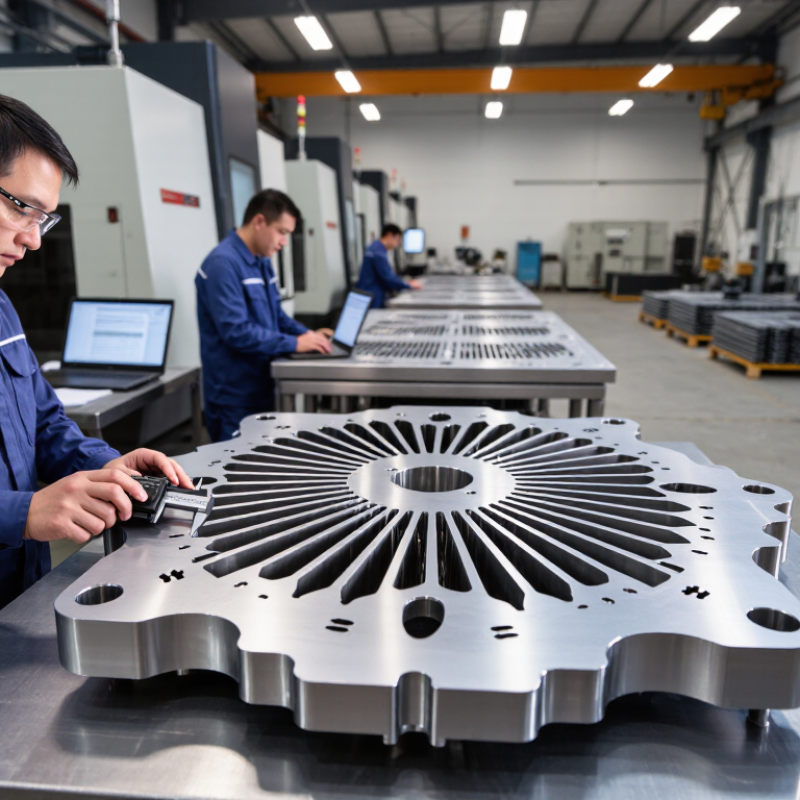
A microwave oven baffle die is a precision stamping tool that shapes thin metal sheets into protective airflow components. The baffle usually includes curved surfaces, ventilation openings, mounting holes, and folded edges. Its geometry helps guide air and protect internal parts from heat and grease. During production, the die controls forming depth, hole position, surface quality, and repeatability. A reliable supplier should understand sheet thickness, material springback, press capacity, and die maintenance. Small errors can create sharp burrs, uneven gaps, or difficult assembly.
In practical die development, engineers often begin with 3D drawings and material samples. Trial stamping then reveals problems that software may miss. A perfect first trial is uncommon. Sometimes the bend radius needs adjustment. Sometimes the blank holder pressure is too high. These details affect production speed and component consistency. An experienced supplier should provide inspection records, sample parts, and clear correction plans. Precision matters.
Tips: Check the die’s forming accuracy, cutting clearance, cooling approach, and replacement-part design. Ask how the supplier controls burrs after repeated stamping cycles. Also review communication during trials. Fast replies are useful, but careful technical questions are better. A low price may hide future maintenance costs.
A microwave oven baffle die is a precision tool used to blank, pierce, and form thin metal sheet into a baffle. The baffle helps distribute microwave energy and protect internal components. Tool-steel selection usually balances wear resistance with toughness.
The chart shows representative heat-treated hardness ranges for commonly used tool-steel categories. Higher hardness can improve wear resistance, while tougher grades may better withstand forming shocks and impact.
China Best Microwave Oven Baffle Die Supplier?
Key Criteria for Choosing a Chinese Baffle Die Supplier
Choosing a Chinese baffle die supplier requires more than comparing prices. In tooling projects, small errors can create uneven edges, poor fitting, and repeated production delays. Ask for drawings, material specifications, tolerance records, and sample inspection reports. Real evidence matters.
Check the supplier’s engineering experience with progressive, stamping, or customized baffle dies. A capable team should review your part design and identify weak corners, difficult bends, or excessive material stress. Ask how they select die steel, heat treatment, guide components, and surface protection. These details influence service life. They also affect maintenance costs.
Quality control must be visible. Look for incoming material checks, machining inspections, trial-run records, and final dimensional reports. Traceable measurements are more reliable than general promises. Communication is equally important. Confirm response times, revision procedures, packaging details, and technical support after delivery. A supplier that explains problems clearly is often safer than one that only says “no issue.”
Price still matters, but the lowest quotation can hide unfinished engineering work. I have seen attractive offers become expensive after several corrections. No supplier is perfect. My own reviews sometimes focus too much on equipment and not enough on operator training. Ask to inspect recent samples, production capacity, and corrective-action records before making a decision.
Designing and manufacturing a microwave oven baffle die begins with the part, not the press. Engineers study the baffle’s profile, mounting holes, bend radius, and clearance around the waveguide. Grand View Research estimates that the global microwave oven market could grow at about 4% annually through 2030. That growth increases pressure on tooling accuracy and cycle time.
A practical die design uses CAD data, material tests, and forming simulation. The engineer checks blank size, draw depth, springback, and metal flow before cutting steel. Stainless steel sheet often requires sharp but controlled forming edges. Excessive clearance can create burrs. Too little clearance may damage the punch. The die is commonly machined by CNC milling and wire EDM, then heat-treated for wear resistance. Small details matter. A 0.1-millimeter mismatch can affect assembly.
Tryout follows machining. Technicians run sample sheets, measure critical points with a CMM, and adjust inserts or guide components. The World Steel Association reported global crude steel production of about 1.89 billion tonnes in 2023, showing the scale of the material supply behind appliance tooling. Yet material quality still varies between batches. That part is easy to underestimate. A reliable supplier records hardness, surface finish, and dimensional results for every trial. I would also review the design after production, because the first simulation is rarely completely right.
| Design and Manufacturing Dimension | Typical Specification or Practice | Engineering Purpose | Inspection or Validation Method |
|---|---|---|---|
| Baffle Function | Directs microwave energy within the waveguide and helps protect the magnetron from food particles and moisture. | Supports stable microwave transmission and protects critical components. | Dimensional inspection, assembly-fit verification, and microwave leakage testing at the appliance level. |
| Common Baffle Material | Cold-rolled low-carbon steel sheet is commonly used; aluminum may be selected for specific thermal or weight requirements. | Provides electrical conductivity, formability, and adequate service strength. | Material certificate review, thickness measurement, hardness check, and visual inspection. |
| Typical Sheet Thickness | Approximately 0.5–1.0 mm for many small stamped baffle components; the final value depends on appliance design and forming depth. | Balances rigidity, drawability, cost, and heat resistance. | Micrometer measurement at multiple locations and comparison with the approved drawing. |
| Die Structure | Progressive, compound, or single-operation stamping dies may be used according to geometry, production volume, and required operations. | Controls production efficiency, part handling, tooling cost, and dimensional consistency. | Die design review, tryout samples, cycle evaluation, and capability studies. |
| Material Feeding | Coil-fed or sheet-fed production; automatic feeding is suitable for higher-volume repeat production. | Maintains consistent pitch, reduces manual handling, and improves throughput. | Feed-length verification, pilot-release inspection, and monitoring of strip alignment. |
| Blanking and Piercing | The die may combine external contour cutting with mounting-hole or ventilation-hole piercing. | Creates accurate profiles and mounting features before forming. | Coordinate measuring machine, optical comparator, or calibrated gauges. |
| Forming and Bending | Forming stations establish the baffle profile, flanges, ribs, or locating features while controlling springback. | Improves stiffness and ensures reliable positioning inside the waveguide assembly. | Height gauges, profile templates, 3D scanning, and fixture-based fit checks. |
| Punch-to-Die Clearance | Clearance is selected according to sheet material, thickness, tensile strength, and the required cut-edge quality; it is not a universal fixed value. | Limits burrs, excessive rollover, tool wear, and dimensional variation. | Cut-edge microscopy, burr-height measurement, and trial-part dimensional checks. |
| Tooling Material | Tool steels are commonly selected for punches, dies, and wear inserts; hardened grades are used where wear resistance is critical. | Provides strength, wear resistance, and dimensional stability during repeated stamping. | Hardness testing, material traceability, and surface-condition inspection. |
| Die Surface Finish | Functional die surfaces are polished or ground as required; the finish should prevent galling and unwanted marks on the sheet. | Reduces friction, improves part appearance, and supports stable material flow. | Surface roughness measurement and visual inspection under controlled lighting. |
| Dimensional Control | Critical dimensions, hole locations, bend angles, and assembly interfaces are defined on the approved engineering drawing. | Ensures interchangeability and correct installation in the microwave oven assembly. | First-article inspection, gauge repeatability checks, and statistical process monitoring. |
| Burr Control | Cut edges should be free from sharp burrs that could interfere with assembly, handling, grounding, or coating. | Improves operator safety and prevents interference with adjacent components. | Tactile inspection, magnified visual inspection, and burr-height measurement. |
| Lubrication and Stamping Process | A compatible stamping lubricant may be applied when needed and must be controlled to avoid residue affecting later cleaning or coating. | Reduces friction, galling, tool wear, and forming defects. | Process-record review, surface cleanliness checks, and tool-wear monitoring. |
| Surface Treatment | Cleaning, deburring, plating, or protective coating may be specified according to corrosion, electrical-contact, and temperature requirements. | Improves corrosion resistance and maintains required surface performance. | Coating-thickness measurement, adhesion testing where applicable, and salt-spray testing when specified. |
| Die Tryout | Initial trials verify feeding, cutting, forming sequence, part release, and production stability before approval. | Identifies tooling adjustments before mass production. | Trial-run records, sample approval, defect analysis, and corrective-action documentation. |
| Production Press Selection | Press capacity, shut height, stroke, bolster dimensions, and feeding method must match the die design and forming load. | Prevents overload, improves die life, and maintains repeatable production conditions. | Press setup verification, tonnage monitoring, and preventive-maintenance records. |
| Final Part Inspection | Inspection normally covers dimensions, holes, profile, burrs, surface condition, cleanliness, and assembly fit. | Confirms that finished baffles meet functional and assembly requirements. | Sampling inspection, 100% visual checks for critical defects, and documented release criteria. |
| Supplier Evaluation Criteria | Relevant experience, tooling design capability, material traceability, inspection equipment, process control, maintenance support, and sample approval performance. | Helps reduce launch risk and supports consistent quality over the tooling life cycle. | Technical audit, capability review, quality-document assessment, and pilot-order performance evaluation. |
Note: Specifications shown as typical ranges or practices are reference values only. Final requirements should be confirmed through the approved product drawing, material standard, tooling trial, and applicable appliance safety requirements.
For a China best microwave oven baffle die supplier, quality begins with controlled tooling, not attractive quotations. ISO’s 2023 Survey recorded more than 1.2 million ISO 9001 certificates worldwide. This figure shows quality systems matter, but certification alone proves little. Ask for material certificates, process records, and inspection evidence.
A reliable baffle die should use verified tool steel with suitable hardness and toughness. The working edges need stable clearance, clean forming surfaces, and controlled radii. These details reduce burrs, cracks, and uneven baffle shapes during high-volume stamping. Dimensional checks should follow documented tolerances, preferably supported by calibrated gauges or a coordinate measuring machine. ISO 2859-1 offers recognized sampling methods for batch inspection. However, sampling cannot replace first-piece approval and full checks on critical dimensions.
Safety also deserves attention. IEC 60335-2-25 covers safety requirements for household microwave ovens, while the die supplier must control the component’s fit, finish, and repeatability. Trial production should examine feeding marks, springback, tool wear, and surface scratches. Keep traceable records. Simple, but often missed.
In practice, I would request a tool-life estimate based on tested production data, not optimistic claims. A supplier may report 500,000 strokes, yet provide no evidence. That is a warning. Even experienced engineers can overlook maintenance intervals, because early samples look perfect. The die should be reviewed after real production, including cleaning, lubrication, and edge regrinding results.
China Best Microwave Oven Baffle Die Supplier? How to Evaluate Supplier Capability, Cost, and Support
A capable baffle die supplier should show more than attractive drawings. Ask for press capacity, die steel certificates, machining accuracy, and previous appliance tooling experience. For thin stainless steel, check burr height, springback control, and forming consistency. Request a trial report with measured dimensions, not only photographs. ISO’s Survey of Certifications 2023 recorded more than 1.26 million ISO 9001 certificates worldwide, but certification alone does not prove die-making skill. It is only a starting signal.
Cost needs a clear structure. Compare design, raw material, CNC machining, heat treatment, tryout, spare inserts, and shipping separately. A low quotation may exclude several trial adjustments. That becomes expensive later. Ask how many sampling rounds are included and who pays for modifications caused by supplier errors. In my experience, a slightly higher tooling price can reduce production stoppages, but this is not guaranteed. Review five-year maintenance records when available. Small details matter.
Support should be tested before purchase. Send a technical question about a wrinkled flange or uneven clearance, then measure the response quality and speed. The 2023 World Bank Logistics Performance Index highlights customs, tracking, and delivery reliability as major supply-chain factors. Therefore, confirm packaging, export documents, replacement-part lead times, and remote troubleshooting procedures. A supplier should provide 2D drawings, inspection data, and a controlled change process. Do not trust promises alone. Request evidence.