Back
Contact us

What Are the Best LED Garden Lights in 2026?

Choosing the best Led Garden Light in 2026 is less about brightness alone and more about how a garden feels after dusk. A path may need a soft, even glow, while a mature tree can look striking with a narrow beam aimed through its leaves. Small details matter. Check the light’s color temperature, weather resistance, power source, and adjustability before comparing prices. A fixture that looks beautiful in a product photo may cast harsh glare beside a low garden wall.

Lighting educator Randall Whitehead’s design approach suggests a useful principle: “Let light reveal the garden, not overpower it.” This is a guiding idea, not a verified verbatim quotation. It helps frame the choices ahead, from solar stakes for short borders to wired spotlights for larger trees and seating areas. We’ll look at brightness, beam spread, durability, installation, and running costs, then consider which options fit different gardens. There is no single winner for every space. A bright lamp can still be the wrong one. And solar performance can vary on shaded plots, even when the specifications look reassuring. The comparisons in this guide aim to make those trade-offs clearer, so you can choose lights that suit your layout, climate, and evening routines. One thing deserves a second look: more light does not always make a garden more welcoming.
What Are the Best LED Garden Lights in 2026?

How LED Garden Lights Work and Illuminate Outdoor Spaces

LED garden lights turn electrical energy into visible light through a semiconductor. When current passes through the LED, it releases photons. Little heat is produced compared with many older bulbs. That matters near leaves, timber edging, and small seating areas. The driver regulates current, while the housing helps protect electrical parts from moisture and dirt. Check the stated outdoor rating before choosing a location.

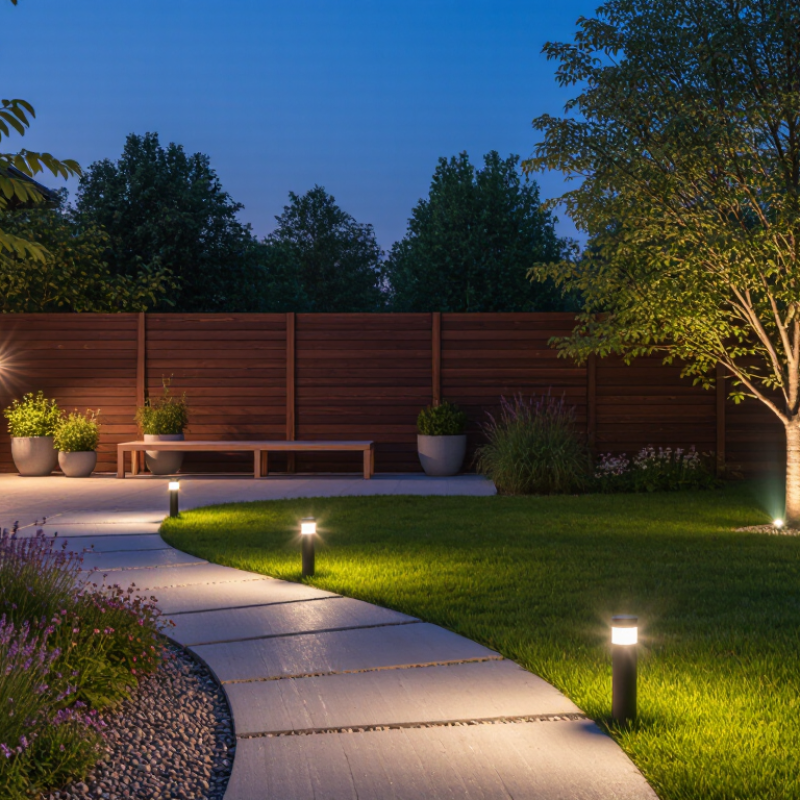
The light’s direction shapes how a garden feels after dusk. A narrow beam can pick out a tree trunk, while a wider lens spreads light across a path. Warm-white light often makes stone and foliage feel softer; cooler light can reveal edges more clearly but may look stark. Placement matters. A fixture aimed into someone’s eyes is distracting, even when its output seems modest. Test the angle at night, then adjust it.

Solar models collect energy during daylight and use stored power after sunset. Their runtime can vary with shade, season, and weather, so a cloudy week may bring dimmer evenings. Wired low-voltage systems offer more predictable output, but installation and cable routing need care.

One detail is easy to overlook: brighter is not always better. I would rather see a few gentle pools of light than a lawn washed flat. Still, taste differs, and my preferred balance may not suit every garden.

Which Types of LED Garden Lights Suit Different Garden Needs?

The best LED garden light depends on what needs to be seen after dusk. Shielded pathway lights suit steps and narrow walkways; they guide movement without shining directly into a neighbor’s window. For trees or textured walls, use adjustable spotlights with a narrow beam. Broad floodlights work better for larger areas, but can feel harsh when aimed too high. Small changes matter.

For patios and dining areas, warm LED string or wall lights create softer, more even illumination. Solar stake lights are convenient in sunny borders without nearby wiring, though shade and short winter days can reduce their output. For reliable light near a shed or entrance, wired low-voltage fixtures are often more consistent. The U.S. Department of Energy reports that LEDs use at least 75% less energy and can last up to 25 times longer than incandescent lighting; actual results depend on the fixture and use.

Keep light controlled. DarkSky and the Illuminating Engineering Society recommend outdoor lighting that is useful, targeted, low-level, and warm-colored, with 3000K or lower preferred. Motion controls can limit unnecessary lighting, while shields reduce glare and spill. I would still test a fixture after dark before installing several. A bright sample in a store can look surprisingly stark beside real plants.

What Are the Best LED Garden Lights in 2026? - Which Types of LED Garden Lights Suit Different Garden Needs?

Light type Best suited to Typical light output Power source Common color temperature Practical strengths and limits
Solar stake lights Marking flower beds, borders, and short garden paths About 5–100 lumens per light Rechargeable battery charged by a small solar panel Often 2700–4000 K Easy to install without wiring; brightness and operating time depend on sunlight, season, and battery condition.
Low-voltage path lights Regularly used walkways, steps, and garden entrances About 100–300 lumens per fixture Outdoor transformer and low-voltage cable, commonly 12 V Usually 2700–3000 K; other options are available Provides dependable, even illumination and timed control; requires cable layout and a suitable outdoor transformer.
LED spotlights Highlighting trees, sculptures, walls, or architectural details About 150–700 lumens per fixture Low-voltage wired, mains-powered, or solar models Commonly 2700–4000 K Adjustable aiming creates focused accents; narrow beams can cause glare if pointed toward seating areas or windows.
LED floodlights Broad coverage for larger areas, driveways, or security lighting About 700–3000 lumens per fixture Usually mains-powered; some models use solar power Often 3000–5000 K Covers a wide area and can support motion sensing; careful positioning helps avoid light spill and harsh glare.
LED wall lights Patios, exterior doors, garages, and boundary walls About 300–1200 lumens per fixture Usually mains-powered; battery and solar versions also exist Commonly 2700–4000 K Useful for fixed, practical illumination; installation may require suitable exterior wiring and a weather-rated fitting.
LED string lights Pergolas, fences, balconies, and relaxed outdoor dining areas Varies by bulb; typically decorative rather than task lighting Plug-in, low-voltage, battery, or solar Often 2200–3000 K Creates a warm, spread-out glow; usually needs secure supports and may not provide enough light for steps or detailed tasks.
LED bollard lights Wide paths, driveway edges, and larger landscaped gardens About 200–800 lumens per fixture Usually mains-powered or low-voltage wired Commonly 2700–4000 K Sturdy, freestanding fixtures can define routes clearly; they need a stable base and generally cost more to install than simple stakes.

Figures are typical indicative ranges, not guaranteed specifications. Actual brightness, color temperature, weather resistance, and runtime vary by fixture and installation. For exposed locations, check the product’s IP rating; IP65 is commonly selected where protection against dust and water jets is needed, while the appropriate rating depends on the installation conditions.

What Features Define a Quality LED Garden Light in 2026?

A quality LED garden light in 2026 should make its performance easy to verify. The U.S. Department of Energy’s Energy Saver guidance says LEDs use at least 75% less energy and can last up to 25 times longer than incandescent lighting. That is a broad comparison, not a promise for every outdoor fixture. Check the rated lumens, watts, color temperature, and stated operating life together; a bright beam alone tells little about efficiency. For independent photometric evidence, look for an LM-79 test report. It measures a complete solid-state lighting product’s electrical and light output.

Outdoor exposure matters. A fixture near sprinklers or damp soil needs a clearly stated IP rating, sturdy seals, and corrosion-resistant parts. Warm white light, around 2700–3000 K, often feels less harsh along a path than cool white light. Aim and shielding matter, too: a bare LED can glare into a window or wash out nearby plants.

Look closely. A vague “weatherproof” claim is not a test result. I would also question lifetime figures that lack test conditions; LM-80 data and TM-21 projections can help explain LED light-maintenance claims, though they do not guarantee the whole fixture will last equally long.

One trade-off remains: solar models are convenient, but shade and short winter days can leave them dim before dawn.

How to Compare the Best LED Garden Lights for Your Space

Choosing the best LED garden lights starts with the space, not the product label. Walk the garden after dusk and note where you need safe footing, gentle ambience, or a clear view of steps. Start at dusk. A narrow path often needs evenly spaced, low-glare fixtures, while a tree or textured wall may benefit from a focused beam. I sometimes misjudge brightness in a shop; a light that looks modest indoors can feel harsh beside a dark fence.

Compare brightness, color, power, and weather resistance together. Lumens describe light output, but beam angle and placement affect how bright an area feels. Warm white usually creates a softer mood; cooler light can make borders and work areas easier to see. Check the fixture’s weather-resistance rating and installation instructions, especially for exposed locations. Solar lights avoid wiring, but shade and short winter days can reduce runtime. Wired options are more consistent, though installation takes planning.

Look at practical details you will notice later: replaceable parts, adjustable heads, timers, and whether the panel or fixture is easy to clean. Test one light before buying a full set. Not every corner needs one. Mark the proposed positions with small stakes, then check for dark gaps and glare from seated eye level. I would also leave a little room for adjustment; plants grow, and yesterday’s perfect beam may hit leaves next season.

What Are the Best LED Garden Lights in 2026?

How to compare light output with the needs of your outdoor space.

These indicative lumen ranges reflect common product specifications, not a universal standard. Path and step lights usually need less output than accent spotlights or small-area floodlights. Compare lumen output alongside beam angle, weather resistance, power source, and dimming options.

How to Install and Maintain LED Garden Lights Safely

A safe installation begins with the power off. For plug-in garden lights, use an outdoor-rated outlet protected by a ground-fault circuit interrupter (GFCI). For hardwired fixtures, have a qualified electrician handle connections and follow local electrical requirements. Choose fittings and cables rated for outdoor exposure; check the instructions for suitable placement and burial depth. Keep connectors above puddles, and avoid running cables where a spade or mower could strike them. Small details matter.

The U.S. Department of Energy reports that LEDs use at least 75% less energy and can last up to 25 times longer than incandescent lights. That long life still depends on sensible care. Each season, switch off the power before cleaning lenses, then remove soil with a soft, dry cloth. Inspect cable jackets, seals, and connectors for cracks, corrosion, or water inside. Replace damaged parts rather than covering them with improvised tape. A weatherproof label is useful, but it cannot compensate for a poor connection.

Tips: Test the GFCI using its test button as directed by the manufacturer. Aim lights down toward paths or planting beds, not into eyes or neighboring windows. Leave a little slack in low-voltage cable near fixtures; tight bends can stress connections. I’d also recheck the layout after the first heavy rain—water often reveals what looked fine on installation day.