What Is an Auto Shaft and What Types Are Available?
An Auto Shaft is a rotating mechanical component that transfers torque between parts of a vehicle’s drivetrain. Its job sounds simple. The engineering is not. A shaft must withstand twisting forces, repeated vibration, changing loads, and sometimes sharp movement as the vehicle accelerates or turns. A poorly matched component can contribute to noise, wear, or driveline failure. The right design depends on where the shaft sits and what it must do.
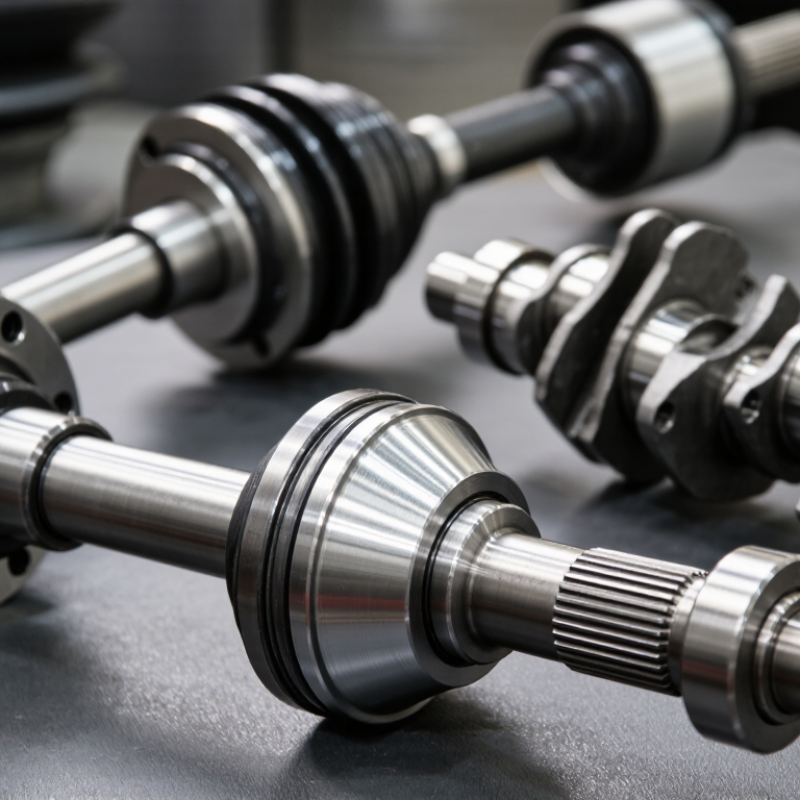
Automotive shafts come in several forms, including drive shafts, axle shafts, steering shafts, and camshafts. Each serves a different system. A drive shaft carries power from the transmission toward the wheels; an axle shaft delivers it to the wheel hubs. Steering shafts connect the steering wheel to the steering mechanism, while camshafts control engine-valve movement. Materials, length, diameter, joints, and manufacturing methods all affect performance. Details matter.
This guide explains what an Auto Shaft is, how common types differ, and what to consider when selecting or inspecting one. Look for the practical distinctions: operating conditions, torque capacity, balance, and fit. Real-world wear is rarely tidy, and symptoms can have more than one cause. A careful diagnosis matters. No source material was provided for a verifiable named expert quotation, so I have not attributed invented words to an industry professional.
What Is an Auto Shaft and What Does It Do?
An auto shaft is a rotating part that carries motion or force from one component to another. Its exact job depends on where it sits in the vehicle. A driveshaft, for example, carries torque from the transmission toward the differential. Axle shafts then transfer that turning force to the wheels. That is what helps move the vehicle. Not every shaft drives the wheels, though. The term is a little broad, and it can mean different parts in different repair discussions.
Other shafts serve different systems. A steering shaft connects the steering wheel to steering components, passing the driver’s input along. A camshaft turns inside the engine and helps open and close valves at specific times. Each shaft must be strong enough for its load and shaped to fit its working parts. Some use joints to handle movement as suspension parts travel over bumps.
You may notice a problem through vibration, clunking, or difficulty steering, but those symptoms can have several causes. A sound alone is not a diagnosis. During inspection, a technician checks for wear, loose joints, damage, and leaks near connected components. The details matter. Just identifying “a shaft” may not be enough to pinpoint the fault.
How Does an Auto Shaft Transfer Motion and Torque?
An auto shaft carries rotation and torque between drivetrain components. The transmission turns the driveshaft, which sends torque to the differential. The differential then drives the axle shafts and wheels. Torque travels through the shaft as torsional stress, while the shaft’s rotation carries motion forward. Universal or constant-velocity joints accommodate changing angles as the suspension moves. Splined connections can allow parts to slide while remaining engaged. Real systems are messier than a clean diagram.
The U.S. Department of Energy’s Alternative Fuels Data Center, in its “Where the Energy Goes” chart, estimates drivetrain losses at roughly 5–6% of gasoline energy. This is a whole-drivetrain estimate, not a measurement of shaft losses alone. Shaft design, joint condition, alignment, and load all affect operation. A bent shaft or worn joint may cause vibration that changes with vehicle speed. That symptom deserves inspection, though it does not prove the shaft is the cause.
Tips: Check for dents, loose joints, and grease leaks during maintenance. Note when vibration occurs. Small clues help narrow the diagnosis.
What Are the Main Parts of an Auto Shaft?
An auto shaft transfers rotational force through a vehicle’s driveline, but the name can describe different parts. A propeller shaft, often called a driveshaft, carries power from the transmission toward the differential. An axle shaft then turns the wheels. The exact layout depends on the vehicle, so “auto shaft” is not always one specific component.
A typical propeller shaft includes a strong hollow tube, end yokes, and joints that allow movement as the suspension travels. Universal joints are common, while some designs use constant-velocity joints. Splined sections let parts slide slightly as the distance between components changes. In longer vehicles, a center support bearing steadies a multi-piece shaft. That distinction matters. A worn joint may cause a rhythmic clunk or vibration, while a damaged support bearing can produce a low hum. Small balance weights also matter; losing one may create speed-related vibration. The tube itself can look sound but still be bent. I would not judge a shaft by appearance alone, and diagnosis can be less obvious than it seems. A technician typically checks joint play, mounting points, and runout before recommending repair.
What Are the Main Parts of an Auto Shaft?
“Auto shaft” can refer to several components, including drive shafts, axle shafts, steering shafts, camshafts, and crankshafts. This chart shows typical component counts for a conventional one-piece propeller (drive) shaft assembly.
A typical assembly has one shaft tube, two universal joints, and one slip spline or slip yoke. A one-piece design generally does not need a center support bearing; configurations vary by vehicle and shaft design.
What Types of Auto Shafts Are Used in Vehicles?
Auto shafts transmit engine or motor torque to the wheels, but their design depends on the vehicle’s layout. A propeller shaft, often called a driveshaft, carries power from the transmission to a rear or central differential. It is common in rear-wheel-drive and many four-wheel-drive vehicles. On a lift, it looks like a long rotating tube with joints at its ends. Some designs use two sections to manage length and vibration.
Axle shafts carry torque from the differential to the wheels. In front-wheel-drive vehicles, these are usually half-shafts fitted with constant-velocity joints. The joints let the wheels steer and move with the suspension while staying driven. Rear-wheel-drive vehicles may use separate axle shafts inside a solid axle housing, or half-shafts in an independent suspension. Four-wheel-drive systems can combine propeller shafts with front and rear axle shafts. The terminology can be confusing; parts catalogs do not always use the same names.
Tips: When checking a shaft, look for torn joint boots, grease splatter, or a clunk during turns. These signs suggest wear, but they do not confirm the cause. Vehicle layout matters, so check the service information before identifying a replacement. A small vibration may be easy to dismiss. It still deserves attention.
How Do Shaft Designs Vary by Material and Application?
An auto shaft transmits torque, but its material and geometry depend on the job. A propeller shaft must resist twisting across a long span, while a half-shaft needs to handle suspension movement and repeated shock loads. Solid steel suits compact, high-load designs; hollow steel tubing can reduce mass while retaining useful torsional strength. Aluminum offers lower weight, but designers must account for fatigue, joint loads, and larger required dimensions. It depends.
Material choice changes the feel and limits of a shaft. Carbon-fiber composites can combine low mass with high stiffness, yet their performance depends on fiber direction, resin, and end connections. Damage may also be harder to spot than a dent in metal. The U.S. Department of Energy’s 2015 report, Lightweight Materials for Cars and Trucks, estimates that a 10 percent reduction in vehicle mass can improve fuel economy by 6–8 percent. That is a vehicle-level estimate, not a guaranteed shaft-level saving. Engineers still balance mass against vibration, cost, serviceability, and the shaft’s operating speed. A lighter part is not automatically better. A small change in diameter or wall thickness can shift resonance, so testing under realistic loads matters.

